Update (April 2026): Added a new section covering the Coachella “Nine Inch Noize” performance, which my son and I watched live.
Some bands don’t just grow — they transform. When I first saw Nine Inch Nails live at Lollapalooza ’91, the show felt like barely controlled chaos. Thirty‑five years later, by contrast, the 2026 Nine Inch Nails live performance was the opposite — a meticulously designed experience where every light cue, every projection on the scrim, and every shift between stages felt intentional. Trent Reznor’s evolution from raw volatility to architectural precision isn’t accidental; decades of composing film scores have sharpened his sense of space, tension, and visual storytelling. Seeing those two extremes, separated by decades, revealed just how far he’s taken the idea of what a Nine Inch Nails show can be.
1991: Volatility and Raw Force
In 1991, a Nine Inch Nails live show felt dangerous. Not in a theatrical way — in a real way. The show was loud, sweaty, and unhinged, the kind of performance where you weren’t entirely sure the band would make it to the end of the set without destroying the stage or each other. Trent Reznor was a live wire, pacing, lunging, screaming, and at times literally throwing himself into band members and equipment.
The physical toll wasn’t just a vibe — it was documented. One of the touring guitarists later said the tour wrecked his knees and that he eventually needed back surgery because he walked with a limp for nearly a decade. Doctors kept asking him how long he’d played college football. His answer was always the same: “It wasn’t college football. It was Trent Reznor.” Over the course of the Lollapalooza tour, the band destroyed an estimated $40,000 worth of guitars, treating their gear with the same abandon they treated their bodies.
“Head Like a Hole” was the peak of that chaos. It was the moment where Trent became a wrecking ball, slamming into anything in his path. The aggression wasn’t choreographed or stylized; it was instinctive, messy, and cathartic. Minimal lighting and bare staging stripped the moment down to pure energy. It felt like watching a band trying to tear its way out of its own skin.
The show hit me like a shockwave. It was loud, visceral, and unforgettable. For that reason, it was the kind of performance that brands itself into your memory whether you want it to or not.

2026: Nine Inch Nails Live in a New Form
In 2026 Nine Inch Nails played at the American Airlines Center in Dallas, a venue I’ve been to more than a dozen times — and I’ve never heard it sound as good as it did that night. Whether NIN brought their own system or the arena finally treated the roof to cut down on the echo, the mix came through shockingly clean. Vocals were crisp, the low end was tight, and the usual cavernous reverb was almost nonexistent.
Our seats were mid‑arena, almost perfectly aligned with the B‑stage, which put us close enough to feel the intimacy of the opening and centered enough to take in the full scale of the production. A near ideal vantage point for a show built on precision.
If the 1991 performance felt like barely contained chaos, the 2026 version of Nine Inch Nails live was the opposite: a meticulously engineered experience where every light cue, projection, and staging choice served a purpose. Moreover, it didn’t feel improvised or volatile. Furthermore, it felt designed like the work of an artist who has spent decades refining not just his sound, but the entire sensory world around it.
The B‑Stage Opening: Intimacy by Design
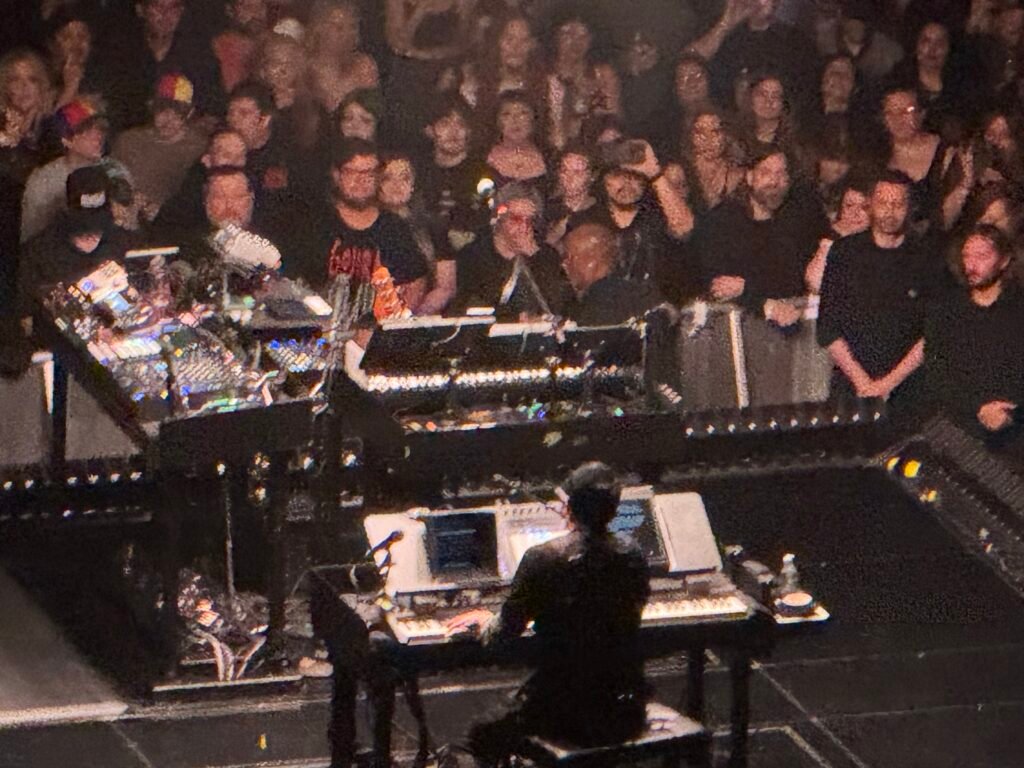
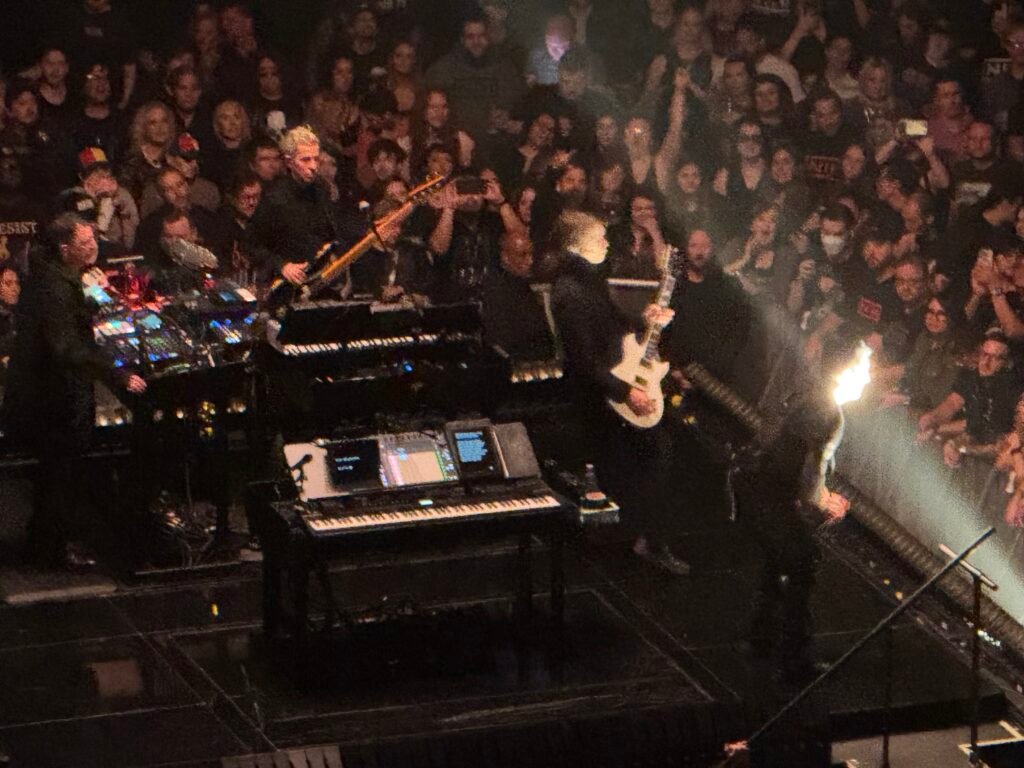
In contrast to the Lollapalooza show, the 2026 concert didn’t begin with a dramatic entrance or a blast of noise. Instead, the curtain dropped suddenly to reveal Trent Reznor alone on the B‑stage — a small, unassuming platform in the middle of the arena. Warm, full, bright lighting illuminated the entire stage and spilled into the crowd. Indeed, it felt almost vulnerable, like he was letting the audience in before the machinery of the show kicked into gear.
One by one, the other band members joined him. No fanfare. No theatrics. Just a slow, deliberate construction of sound and presence. It was the opposite of the 1991 energy, when the band exploded onto the stage. Here, Trent was building something — brick by brick, layer by layer.
Not surprisingly, my son noticed immediately the lighting technique and the mood they were conveying — how the warmth softened the space, how the angles kept the focus tight without feeling claustrophobic. He’s done lighting design for his school’s theater productions and has even been nominated for high school musical awards, so he sees things I don’t. His commentary wasn’t just interesting; it was educational. I was watching the show, but he was studying and dissecting it.
The Main Stage Reveal: Precision and Impact
After the B‑stage opening set of three songs, the lights snapped off. Total darkness. Then the main stage lit up, the full band was already in position — as if they had materialized out of the void. Totally, a clean, precise transition, the kind that only works when every cue is timed to the millisecond.
This was the first moment where I felt the difference between 1991 and 2026 in my bones. In 1991, the band stumbled into the chaos with us. In 2026, they appeared like a force of nature.
The Scrim: Copy of A Trent
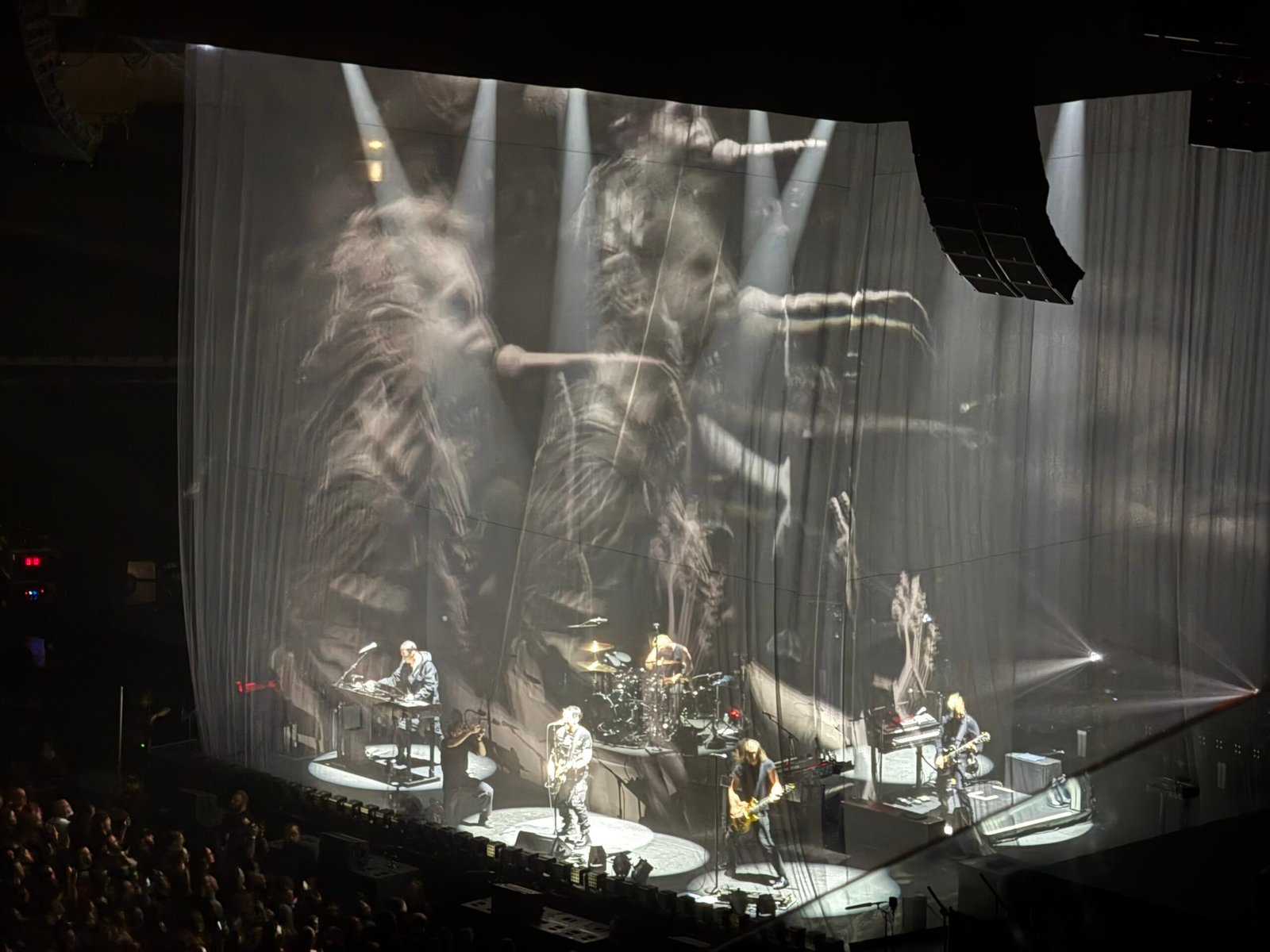
When the show shifted to the main stage, the scrim surrounding it came alive. Rear projections hit the surface and instantly transformed the band into silhouettes — sometimes sharp, sometimes fractured, sometimes multiplied. It wasn’t just a screen; it was a second stage, a shifting membrane between the performers and the audience.
“Wish” opened this segment, and the lighting was explosive. Pulsating beams shot outward from the stage in perfect sync with the song’s aggression, while abstract visuals rippled across the scrim. Even in the moment — with the volume swallowing everything — I turned to my son and said something like, “I’ve never seen anything like this.”
The scrim came alive to full affect during “Copy of A.” Multiple versions of Trent appeared across the surface, shifting between silhouettes and clearer images, echoing the track’s themes of replication and identity. During the show the effects frankly blew me away. On the trip home, my son explained how the projections were aligned with the rhythm and structure of the song and called it a “masterclass” in design and production.
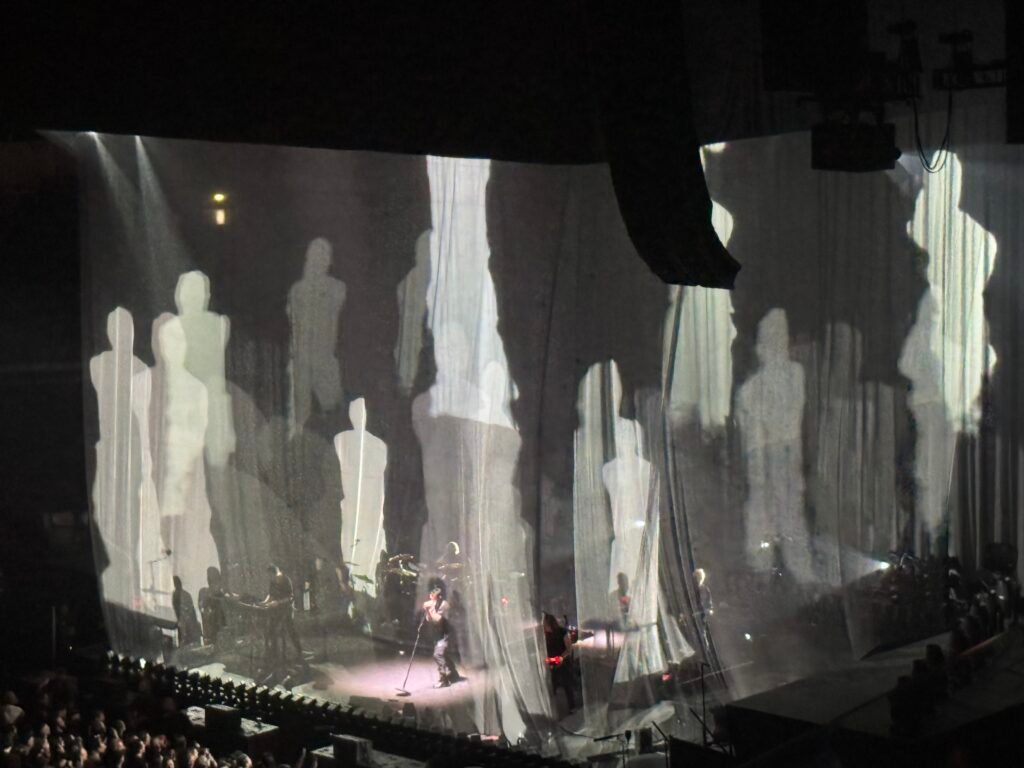
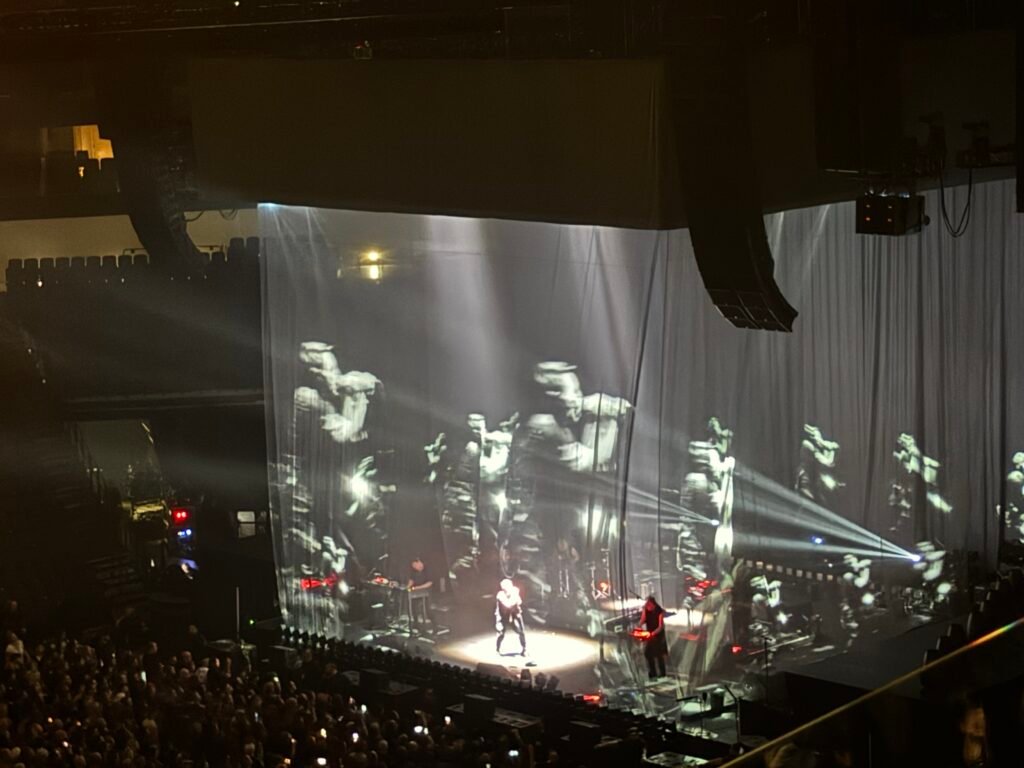
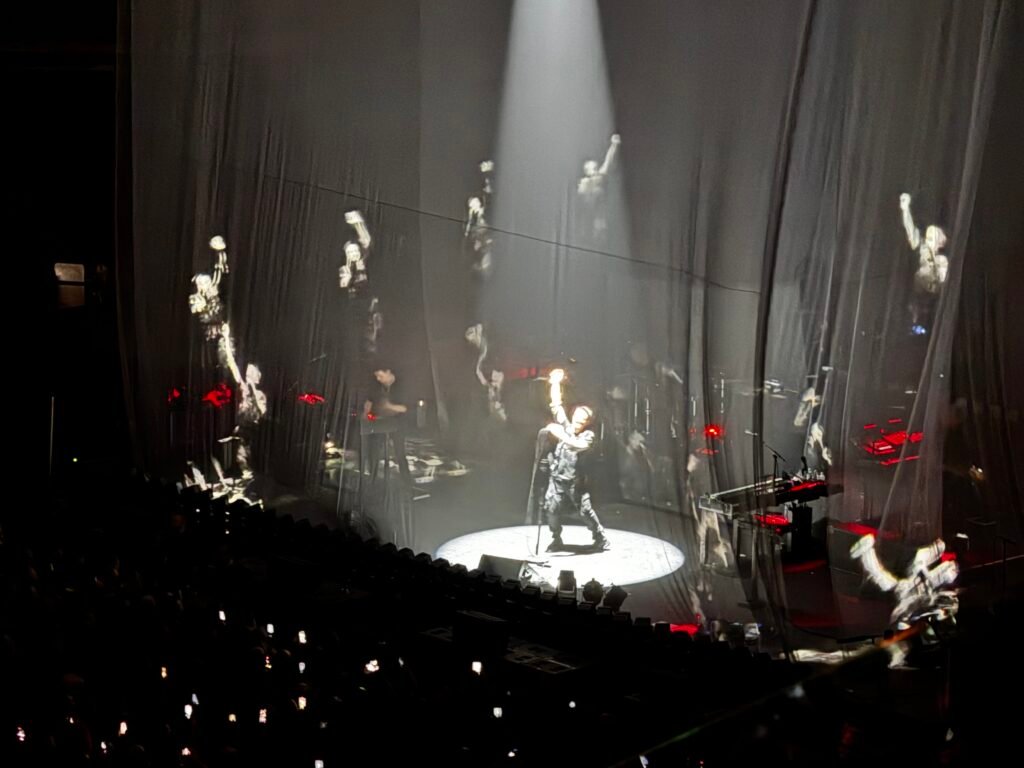
But the deeper analysis came later, on the DART ride home, when the adrenaline had settled. That’s when he broke down how tight the timing was — every pulse, every flash, every projection cue landing exactly on the beat.
The Boys Noize Segment: Fog, Color, and Atmosphere
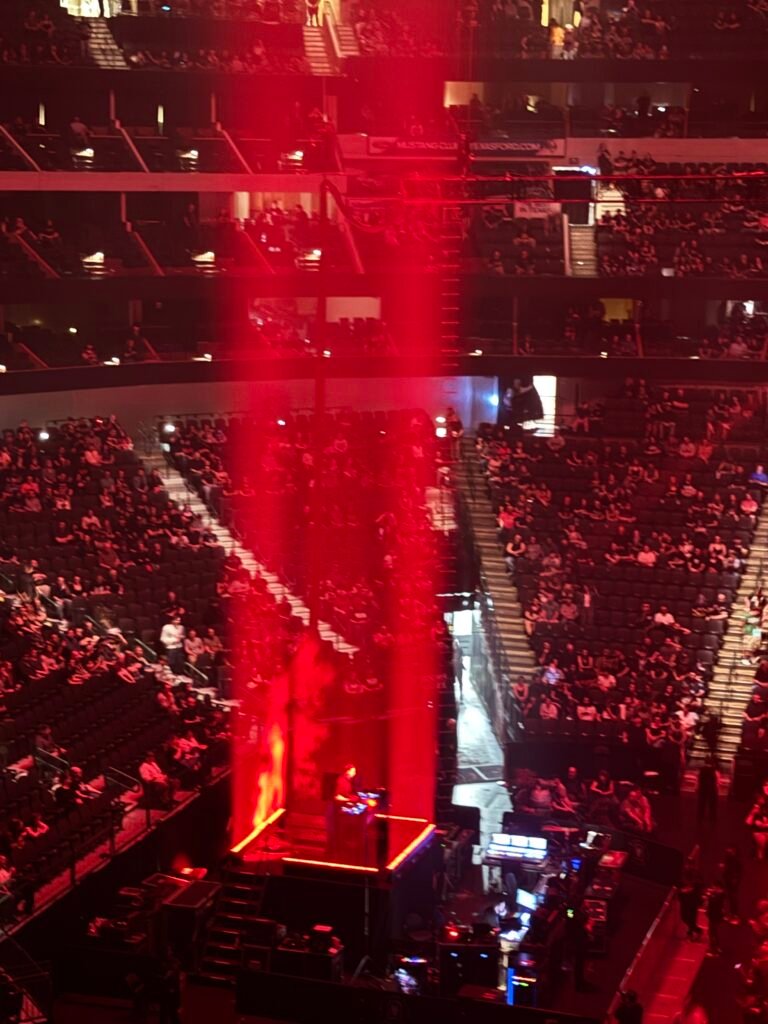
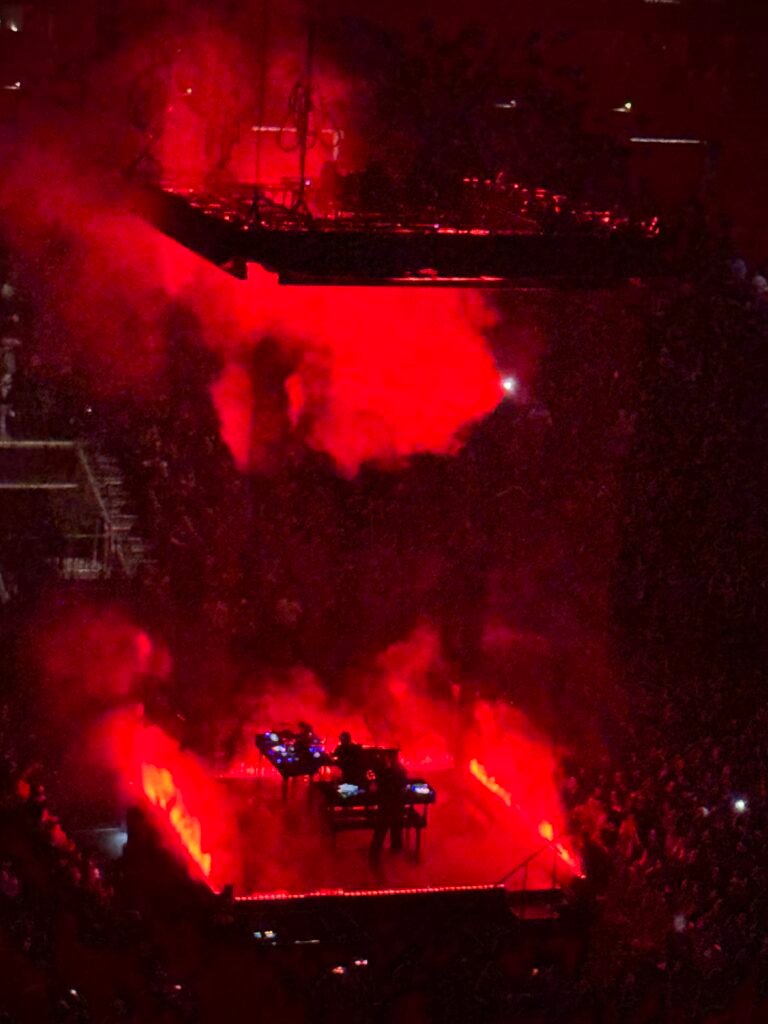
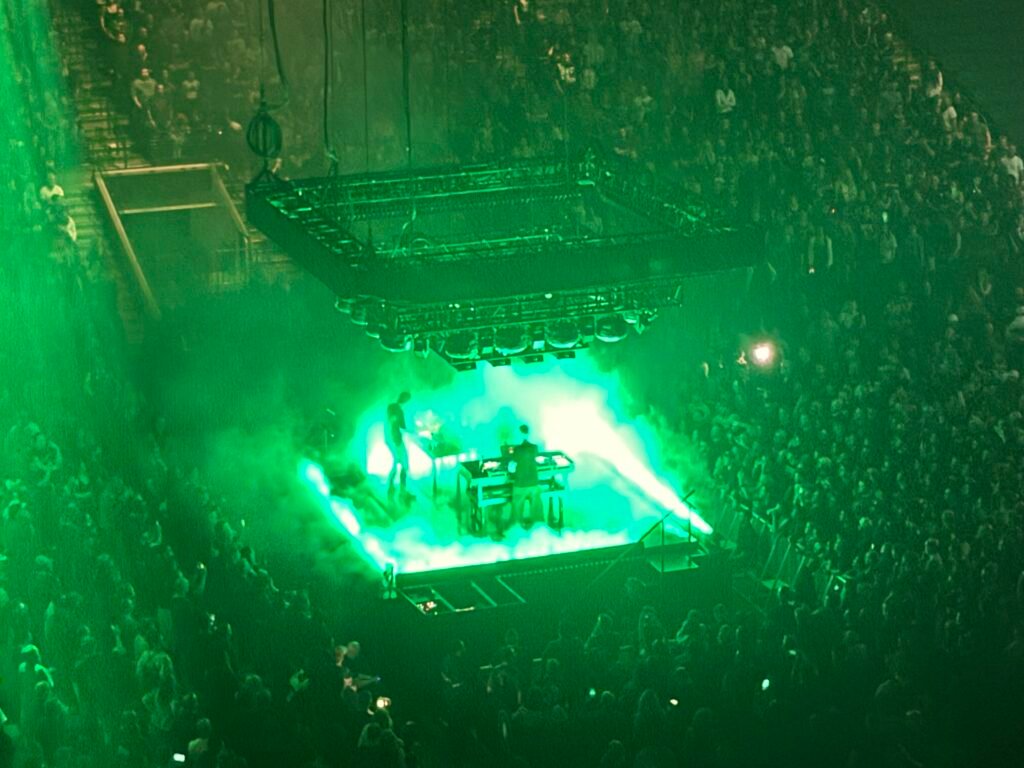
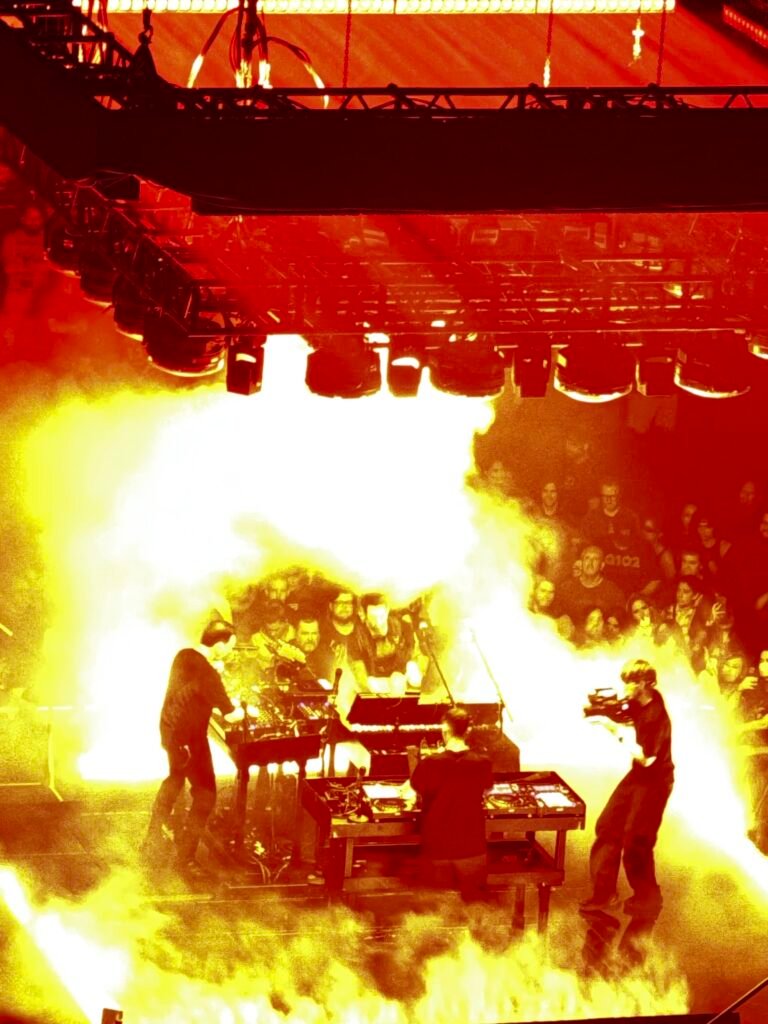
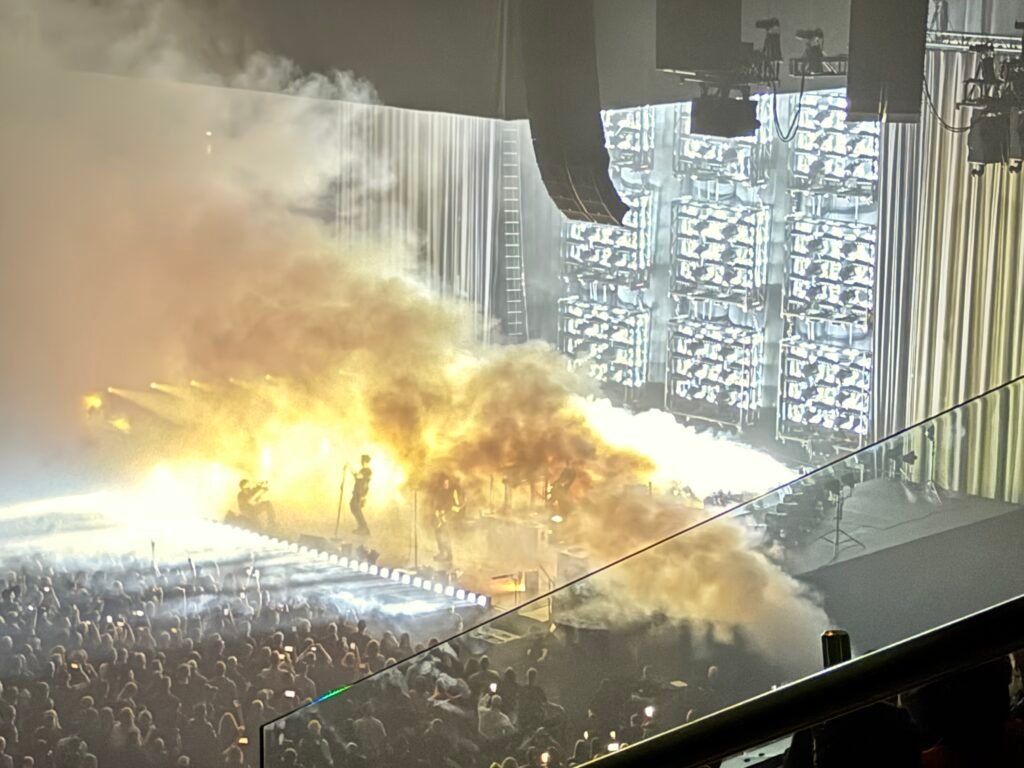
The second B‑stage segment shifted the tone completely. Boys Noize joined Trent, and the lighting changed from sharp and architectural to hazy and atmospheric. Alongside the lighting, heavy fog blurred the edges of the performers, and the colors — deep reds, greens, purples — blended into a mood rather than a pattern.
It felt like a preview of the Nine Inch Noize collaboration they were about to debut at Coachella. My son noted the fog density was intentional; it allowed the colors to diffuse in a way that made the stage feel dreamlike.
The White‑Light Finale: “Head Like a Hole” Reframed
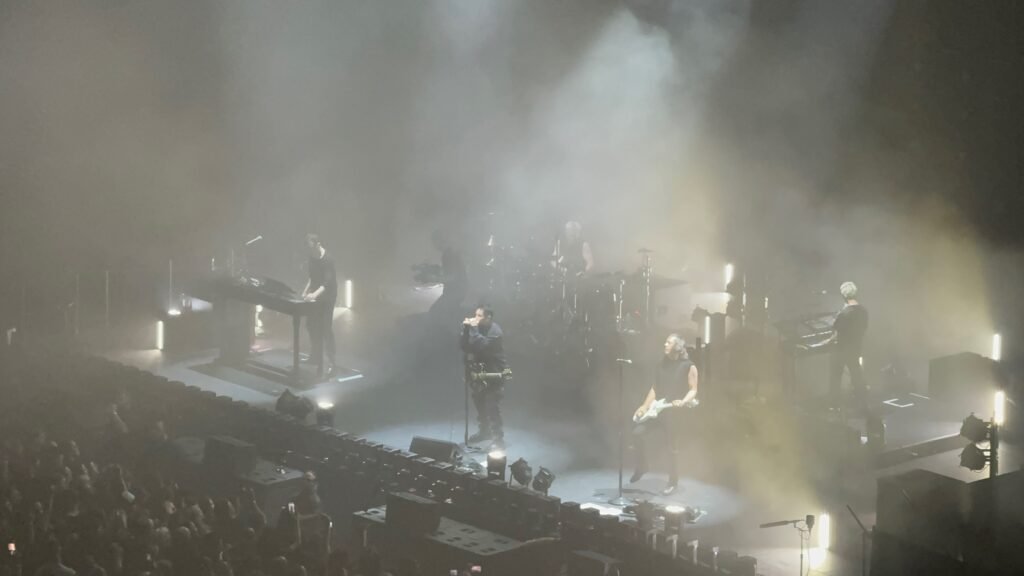
The full band returned to the main stage, this time without the scrim around it. The colors vanished and the haze cleared. What replaced them was a wall of white light — sharp, clean, overwhelming. It was almost like the lights were looking for a confession from the audience.
This six‑song stretch leaned heavily into older material, including “Head Like a Hole,” one of only two songs they played in 2026 that I also saw in 1991. In 1991, it was the moment where Trent became a wrecking ball — slamming into band members, knocking over equipment, treating the stage like a battlefield. In 2026, the aggression was still there, but it was channeled — sharpened into something deliberate.
Massive spotlights from far above the stage shot straight down in perfect sync with the music, creating a UFO‑like effect. Behind the band, multiple square banks of lights — each with twelve lamps — fired in rhythmic patterns. Thin strips of lighting along the stage edges flared at key moments, outlining the platform in bursts of white.
I also enjoyed this part because it was just pure execution. No tricks and no fancy lighting. And no projections or fog machine. Just timing, intensity, raw power, and great songs.
“Hurt”: A Single Spotlight
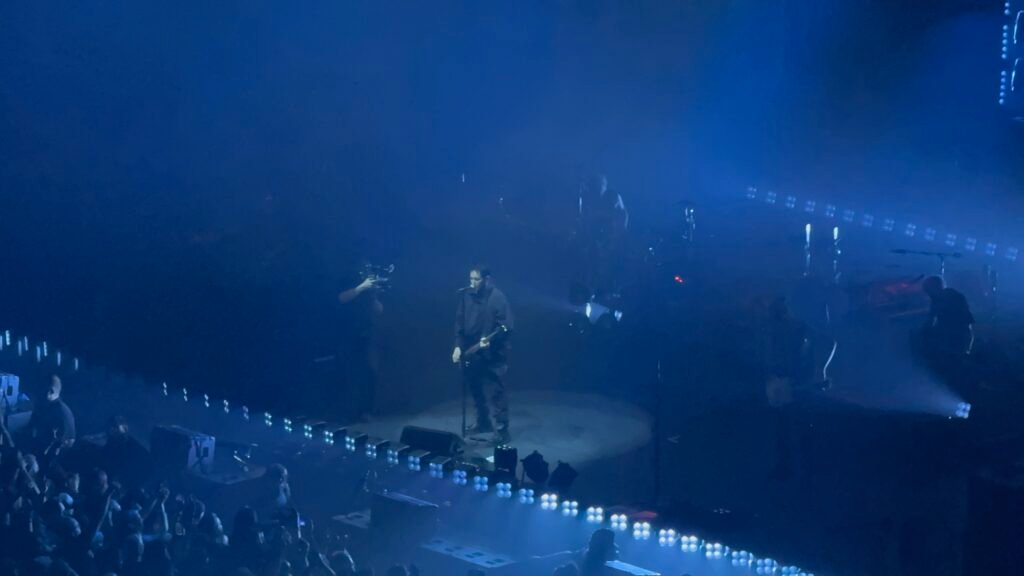
And then they closed with “Hurt.” Some of the most vulnerable lyrics ever written for a rock song. A song that the legend Johnny Cash sang in his dying days.
Trent stood alone again, just as he had at the beginning, under a single, tightly shaped spotlight. His acoustic guitarist was also under a solo spotlight. The rest of the band stayed in darkness until they began to play. It was a perfect bookend — the show beginning and ending with isolation, vulnerability, and control.
My son whispered, “That spotlight is so clean,” and he was right. It was surgical. Intentional. Emotional without being sentimental.
It was the moment that made me realize just how far Trent Reznor has evolved — from a young man tearing himself apart onstage to an artist who understands the power of restraint, silence, and precision.

Seeing Nine Inch Nails Live With My Son
I was twenty when I saw Nine Inch Nails in 1991, but my relationship with the band started earlier — at eighteen, when Pretty Hate Machine came out. My son is sixteen now, close enough in age that it feels like he’s discovering NIN at the same stage of life I did, but in a completely different era of the band.
He grew up with 21st‑century NIN — the era shaped as much by Trent and Atticus’s film scores as by the albums themselves. I grew up with The Fragile and everything before it, when the band still felt volatile and combustible. He was catching things I never would’ve noticed at his age — or maybe ever — and it turned the show into a two‑track experience. One was NIN. The other was getting a sharper picture of who he’s becoming.
Why These Two Nine Inch Nails Live Shows Matter
Seeing Nine Inch Nails live in 1991 and again in 2026 wasn’t just seeing the same band decades apart. It was seeing two completely different philosophies of performance — one built on chaos, the other on design. Of all the bands I’ve seen across decades, NIN is the one that changed the most.
Depeche Mode evolved their sound after the Rose Bowl concert, a fact driven home by the fact there are songs they haven’t played since. However, their concert performances were pretty similar over the decades. Jane’s Addiction, since they hadn’t made an album together in over 30 years was pretty much the same, but better sounding. The B‑52’s, know their niche and have embraced it but now with more technology. Similarly, OMD stayed inventive but within their established lane. However, NIN felt like two entirely different bands. And that contrast of Nine Inch Nails 35 years apart made both nights unforgettable. I know seeing Nine Inch Nails live was a memory that my son will always have.
Coachella Confirms It
The expanded “Nine Inch Noize” collaboration ended up being one of the true high points of Coachella and my son and I were lucky enough to watch it live as it happened thanks the wonders of live streaming. “Couchella” is the way to go for this guy.
The staging was incredible — a massive video wall behind them, an angled stage that gave everything a sharp, architectural feel, and faceless dancers in full‑body stockings who moved across the set like shifting silhouettes. It echoed the monochrome, fog‑heavy aesthetic we saw in Dallas, but Coachella pushed it into something closer to an immersive art piece than a typical festival set.
The entire performance was great, but the standout was Vessel, with Mariqueen stepping in and giving the moment an eerie, intimate presence that contrasted beautifully with all the precision around her. Even knowing it was a one‑off, the whole thing felt like a rare collision of worlds that landed exactly the way it was meant to. And since Coachella, I’ve found myself listening to the new album — especially the tracks from that set — every day, which probably says everything about how well this collaboration worked.