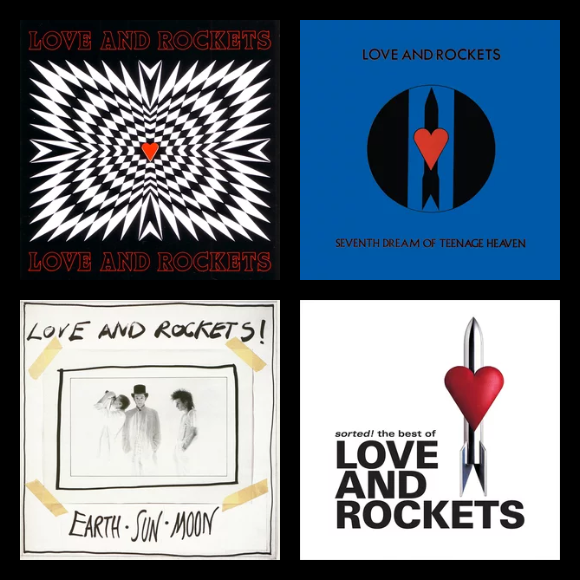
Growing Into Love and Rockets
I’ve always had a soft spot for Love and Rockets — even back in the mid‑’80s, when I bought Express without knowing anything about where they came from. I didn’t know the Bauhaus roots, the Tones on Tail detour, or the post‑punk lineage that shaped their sound. I just knew I liked their psychedelic undertones and unique sound, even if I didn’t yet understand their history. So being able to see Love and Rockets live for the first time opening for The Cure at Dodger Stadium was a treat.
But liking a band and understanding a band are two very different things.
In 1989, Love and Rockets were part of my musical landscape, but only in the surface‑level way that MTV rotation and radio singles allow. The deeper layers — the art‑school DNA, the gothic undertones, the experimental edges — were things I wouldn’t fully grasp until much later.
And that’s why this installment of the series feels different. This isn’t a story about nostalgia or rediscovery. It’s a story about fully understanding a band I’d liked for years.
1989 — Dodger Stadium: A Show Lost in the Echo
Here’s the truth: I don’t remember much about seeing Love and Rockets live in 1989.
I remember Dodger Stadium — my first and only time seeing a concert there. Of course, I remember The Cure being the gravitational pull of the entire day. I remember Pixies opening and blowing my mind in the way only Pixies could at that age. But Love and Rockets? The details are faint, almost impressionistic.
Not because they weren’t good — they were. But stadiums aren’t built for nuance, and Love and Rockets’ music is filled with layers and nuance. Their music thrives in texture, in mood, in the spaces between the notes. Dodger Stadium is all echo and vastness, a place where a band’s subtleties disappear into the crowd.
I enjoyed the set, but I didn’t absorb it. I didn’t have the musical vocabulary yet, or the history, or the context that would eventually make their sound feel like a fully formed world instead of an intriguing opening act.
Over the years — through regular listening, interviews, and the steady drip of 1st Wave — I learned the Bauhaus lineage, the Tones on Tail detour, the Peter Murphy connection, and how all those threads wove together into the band I’d eventually fall in love with. Bauhaus weren’t just another post‑punk group. They were widely considered the pioneers of goth and darkwave — the starting point for an entire aesthetic and sound. I’ve grown to appreciate the music of Bauhaus, but I’m definitely more partial to the Love and Rockets catalog.
But back then? Love and Rockets were simply the band playing before The Cure at a baseball stadium. A good band. A cool band. Just not a band that fully clicked with me given the environment.

So Alive: Seeing Love and Rockets Live Again in 2024
My wife and I went to the Toyota Music Pavilion that night to see Jane’s Addiction, but seeing Love and Rockets live for the first time in over 30 years is what got me there early. It was my first time in this fairly new venue, and right away I was glad the show was indoors. August in Texas is its own kind of punishment, and the idea of seeing this concert outdoors would’ve probably been a non‑starter.
Once inside that glorious air conditioning, though, the place felt built for music. The sound system is state‑of‑the‑art — clean, powerful, and detailed in a way that immediately stood out. It’s the kind of room where you can actually hear the layers in a band’s sound instead of watching them get swallowed by the night sky — a venue where their music could breathe, not a stadium swallowing the details or a cavernous echo chamber, but a space where mood and texture could stretch out and fill the air.
Looking back, I’m even more grateful we caught their set exactly when we did. Perry Farrell’s blowup cut the Jane’s Addiction reunion tour short not long after this show, which meant Love and Rockets lost a chunk of their dates as the opener. At the time, none of us there knew what was coming. We were just excited to see both legendary bands. But in hindsight, it makes that performance feel even more like a small, lucky window.
Love and Rockets Live On Stage in 2024
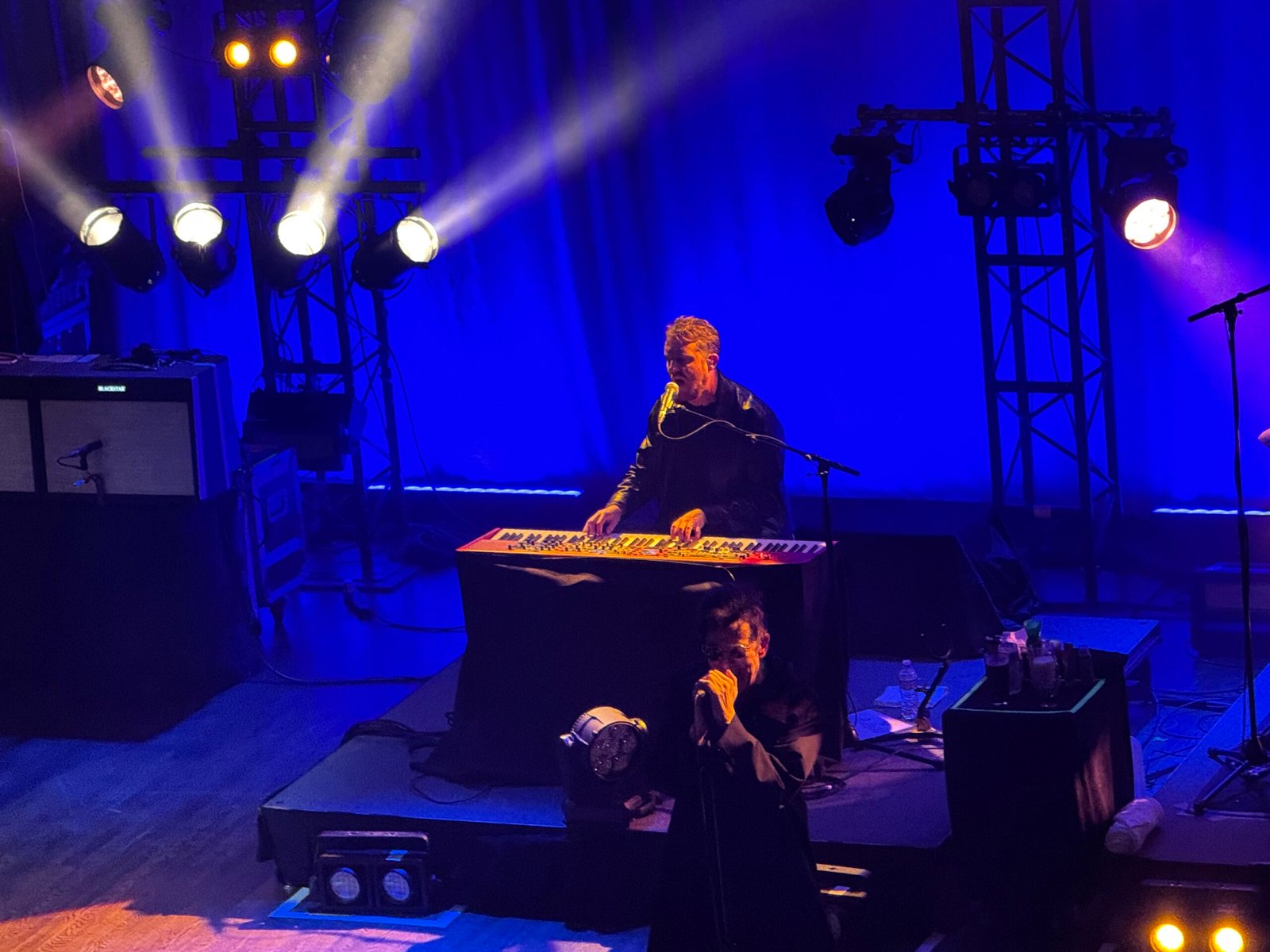
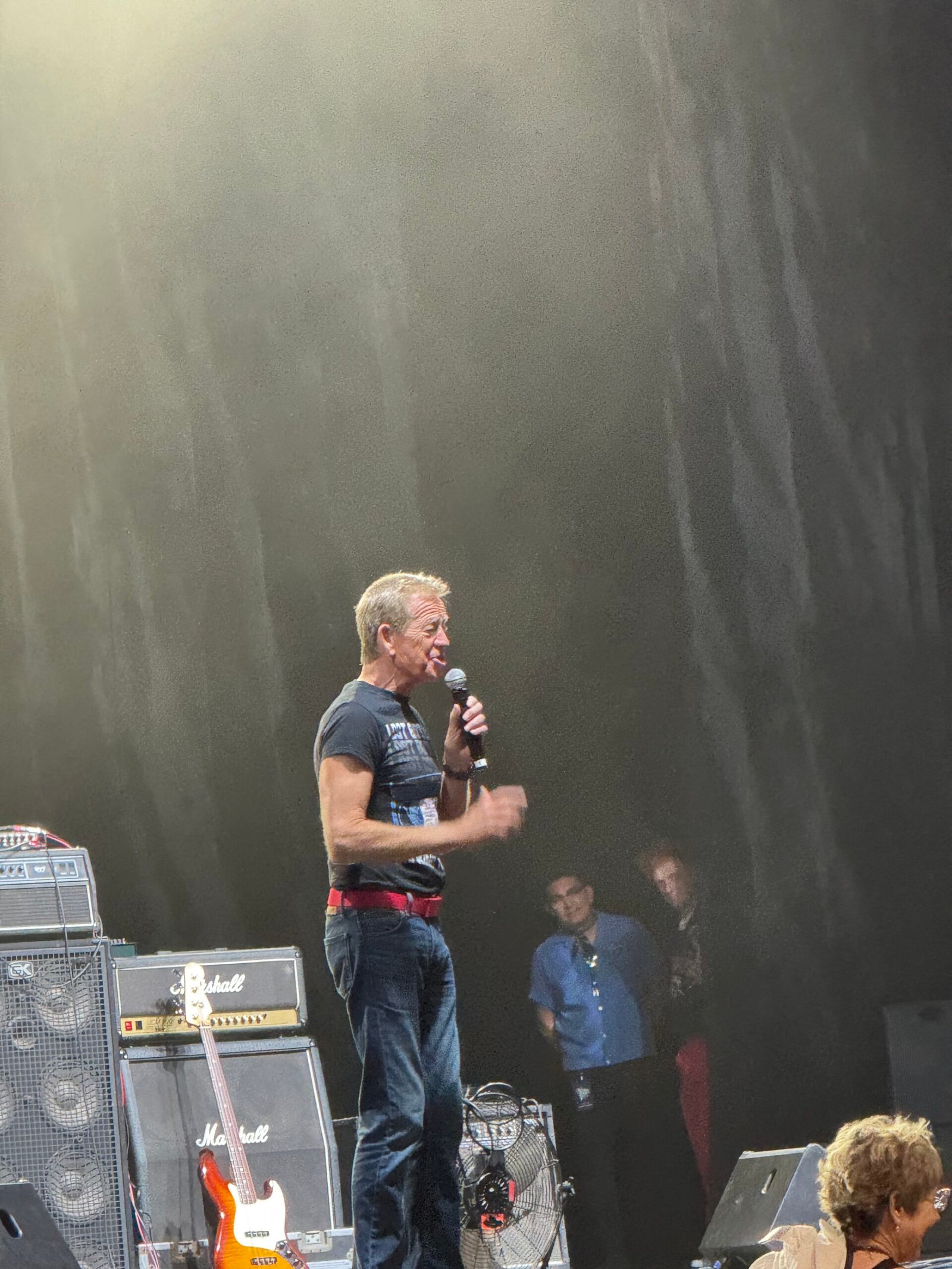
When Love and Rockets took the stage, they did it without any video screens, projections, or visual distractions. No elaborate backdrop. No multimedia. Just the band, some lights, and the music — which, for them, is exactly the right choice.
By the time they walked out, I thought I knew what to expect. I’d spent years hearing them on SiriusXM 1st Wave — not just the hits, but the interviews, the side‑project mentions, the occasional deep cut. I knew the band in a way I never could back in 1989.
But knowing about a band and really feeling a band are two different things.
When the Love and Rockets Deeper Cuts Took Over
A few songs in, I realized I was hearing them with a different level of appreciation. They played a couple of their alternative radio “hits” (“Kundalini Express” and “No New Tale to Tell”) among their first four songs, which were great.
But it really started with “Haunted When the Minutes Drag.” Slow. Hypnotic. Atmospheric. The kind of song that doesn’t just play — it envelops you.
There’s a line in the song that goes, “The word that would best describe this feeling would be ‘haunted’,” and that’s exactly how it felt in the room. Not spooky — more like something that makes the hair on the back of your neck tingle. Hearing and seeing it live, it felt like the entire crowd collectively was entranced. It was a sign that this wasn’t going to be a nostalgia set or a warm‑up act. It was a sonic world being built in real time.
A few songs later came “Mirror People,” and suddenly the set locked into a different groove — that beat that pushes everything forward, the fuzzy guitar giving it that warm, buzzing edge, and the way Daniel Ash and David J’s voices lock together in this almost weary harmony. There’s a line — “Quite content, now a little bit older” — that landed differently this time. It felt like a quiet acknowledgment of my own growing appreciation for Love and Rockets and the entire family tree that led to them.
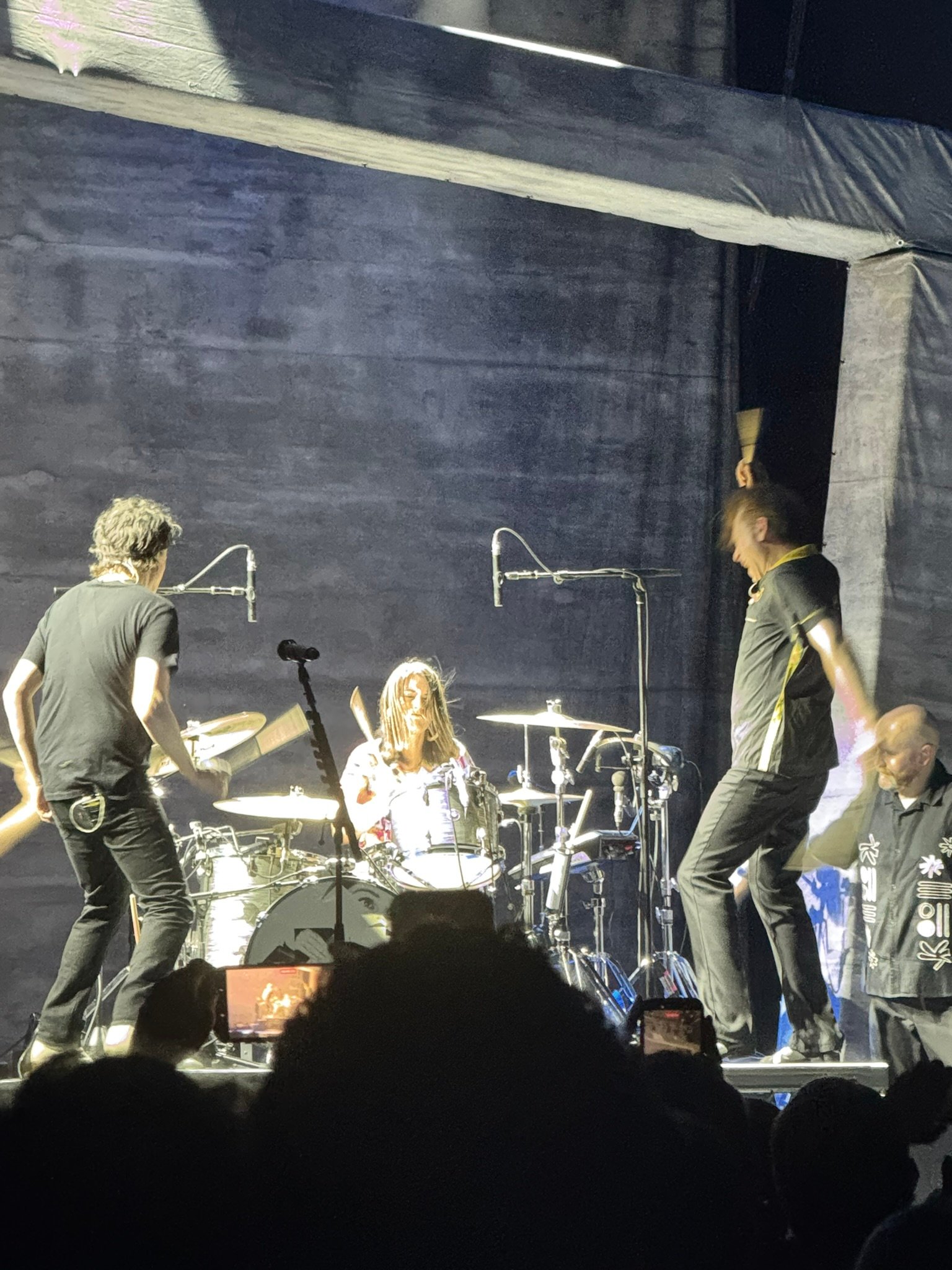
And then “Yin and Yang (The Flowerpot Man)” closed the set — a rockabilly‑psychedelic hybrid that felt like it was built to shake the walls of that venue. It rides on a relentless train‑beat rhythm led by drummer Kevin Haskins, with guitars mutating around it — fuzzy, sharp, buzzing, bending in and out of the groove.
Toward the end of the song, the whole thing starts to wobble in the best possible way — those discordant guitar stabs and strange, metallic sounds that feel almost like train brakes screeching as everything threatens to go off the rails. Through all of it, Daniel and David’s harmonization cuts through the chaos, grounding the swirl with something warm and human. It was the perfect final note — wild, hypnotic, and unmistakably them.
These weren’t the songs 1st Wave plays every day. These songs live in the deeper corners of their catalog and reward listeners who’ve lived enough life to appreciate complexity, layers, and mood.
How I Felt After Seeing Love and Rockets Live For The First Time in 35 Years
In 1989, I liked Love and Rockets. In 2024, I feel I understood them much better.
After the show, I went home and did what you do when a band suddenly clicks after decades: I dove in. I revisited their albums and explored Bauhaus and Tones on Tail with fresh ears. I pulled out the Daniel Ash signed CD I’d gotten through a crowdfunding project years earlier — a cool collectible at the time, but suddenly something that meant more.
And then I built a playlist — a personal map of the songs that hit hardest that night — and it’s one I still return to regularly. Over time I’ve added to it: things I’ve heard on Dark Wave on 1st Wave, tracks that surfaced on my streaming service at just the right moment, even a few live cuts that capture the raw edges I felt in the room. It’s become less of a souvenir and more of a living document — a reminder that this band keeps revealing new corners if you’re willing to keep listening.
This wasn’t rediscovery. It wasn’t reunion. Nor was it nostalgia. It was revelation.
How Time, Context, and Experience Changed the Way I Heard Them
Looking back, it’s not that Love and Rockets suddenly became a different band in 2024. They didn’t reinvent themselves or overhaul their sound, or chase trends, quite the opposite. The truth is much simpler:
I finally became the kind of listener who could appreciate what they were doing all along.
What struck me in 2024 was how confident they are in what they do. They don’t rely on video montages or elaborate light shows to fill space or manufacture emotion. They don’t need to. Love and Rockets have always trusted the music to carry the weight — the textures, the harmonies, the atmosphere. Seeing them on a bare stage with nothing but lights and sound made that confidence unmistakable. It felt like an invitation to actually listen, not just watch.
In 1989, I liked their music — genuinely. Express was in rotation. “No New Tale to Tell” was a favorite. But I didn’t have the context, the history, or the musical vocabulary to understand the deeper layers of what they were creating. Over the years, without even realizing it, I’d been slowly preparing myself for that 2024 show.
By the time I stood there at the Toyota Music Pavilion, I wasn’t just hearing songs — I was hearing the art and architecture behind them. The mood. The atmosphere. The hypnotic repetition. The way their music builds a world instead of chasing a hook.
Those qualities don’t always hit when you’re young. Love and Rockets is a band built for depth — for listeners who’ve lived enough life to appreciate complexity, subtlety, and texture.
So when those songs washed over me in 2024 — “Haunted When the Minutes Drag,” “Mirror People,” “Yin and Yang” — it wasn’t nostalgia. It was really appreciating and understanding their musicality.
Love and Rockets didn’t change. I did. And that’s why seeing them decades apart wasn’t just a comparison between the two shows — it was a realization of their brilliance.
A Look Back — and Ahead?
This piece joins the other stories I’ve written about seeing bands decades apart: OMD, Depeche Mode, Morrissey, The B-52’s — the ones where time, memory, and music all fold together in unexpected ways. And there are still a few candidates waiting in the wings. Thomas Dolby and Men Without Hats are touring again both of whom is saw last in 1988., and there are several other bands on my “if they come back, I’m there” list. Whether any of those turn into another decades‑apart story… well, that’s part of the fun.