Fogerty’s Fire, Cheap Trick’s Chaos, and ZZ Top’s Texas Swagger
The first weekend of October, Colton and I managed to see three Rock & Roll Hall of Famers across two concerts in two states. Turning an ordinary October weekend into a miniature tour of American rock history. Between Don Felder and The Guess Who earlier this year, Rush at Dickies Arena, and now John Fogerty, Cheap Trick, and ZZ Top, 2026 has quietly become my personal classic rock concert review cycle. And yes, The Guess Who still not being inducted remains one of the great mysteries of modern civilization. Them and Styx — I’ll die on that hill.
But this weekend wasn’t just about checking off legendary bands. It was about fathers and sons — onstage and off — and the way music becomes a thread that ties generations together.
Fogerty’s Life Story in Film, Baseball, and Guitar Work That Still Surprises
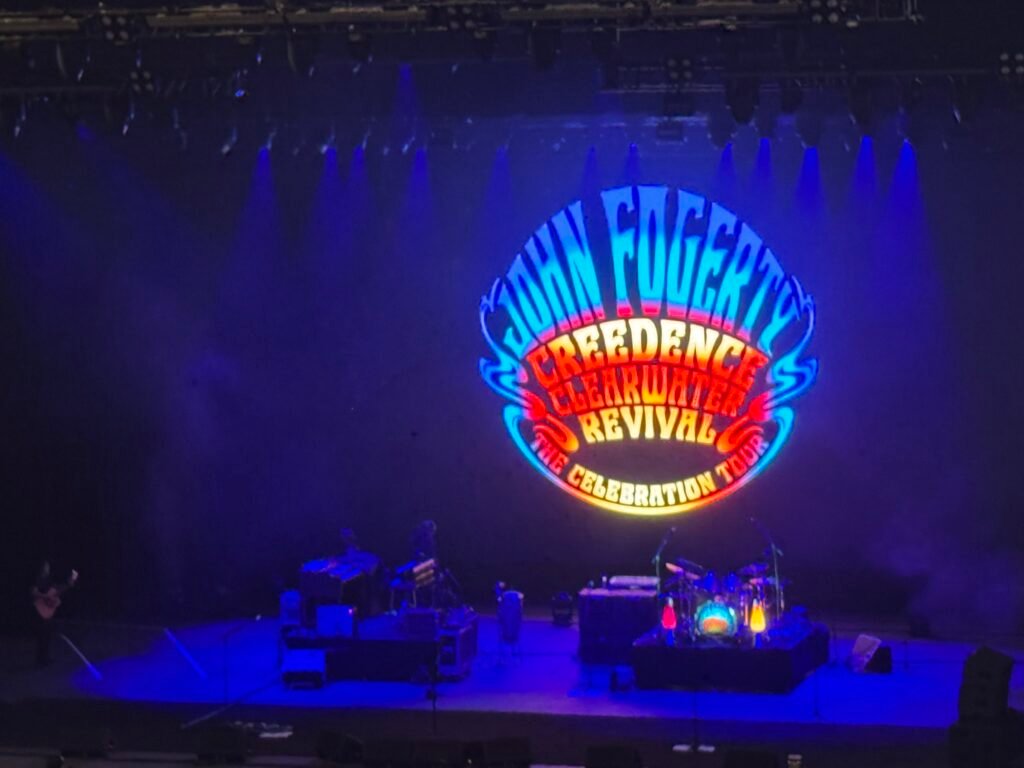
Two nights before ZZ Top and Cheap Trick took over Las Colinas, Colton and I headed north to WinStar to see John Fogerty, another Hall of Famer whose catalog is practically stitched into the fabric of American rock music. Lucas Oil Live is a fantastic venue, even if escaping the parking structure afterward feels like a FEMA training exercise. Once you’re inside, though, the room is built for big, cinematic staging and state of the art sound — which Fogerty used to full effect.
A Life Story Told in Film and Fire
The show opened with a retrospective video tracing Fogerty’s entire arc: the CCR rise, the implosion, the decades‑long legal battles, his mid‑’80s resurgence with Centerfield, and the improbable late‑life victory of finally regaining control of his songs. Seeing that story, really makes you appreciate how Fogerty persevered. He thanked his wife for her role in that fight — a moment that felt genuinely emotional.
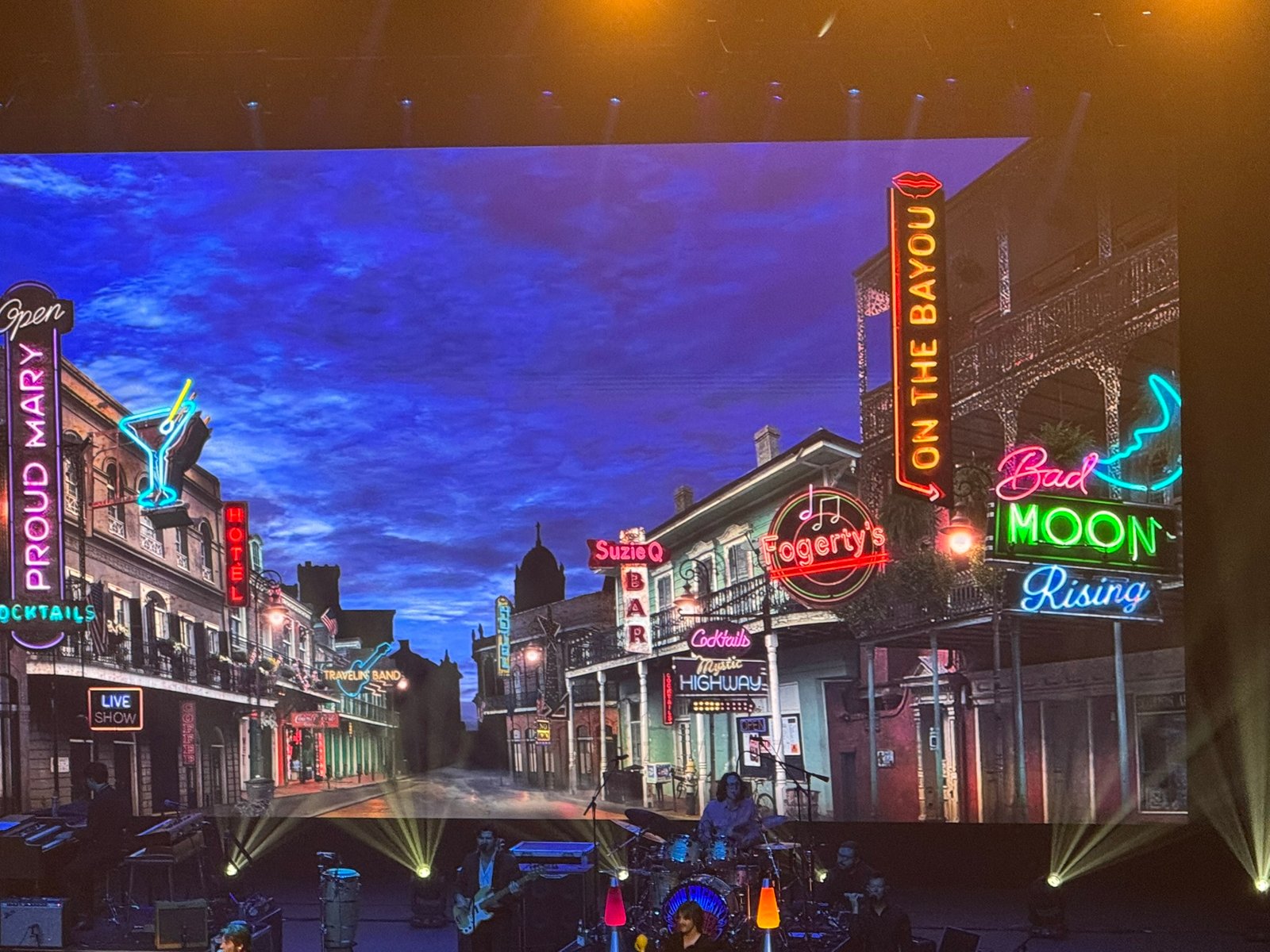
Throughout the night, the screen behind the band became a living scrapbook. For Centerfield, it turned into a golden‑age baseball montage. Images of Hank Aaron, Willie Mays, Mickey Mantle, Ted Williams among others played on the screen. Baseball is my favorite sport, and I’ve spent years building a memorabilia collection that includes autographed baseballs from many of the players flashing across the screen. It was a blast watching Fogerty play his baseball‑bat guitar while those clips rolled. ‘Merica!
Fogerty the Guitar God (A Revelation I Didn’t Expect)
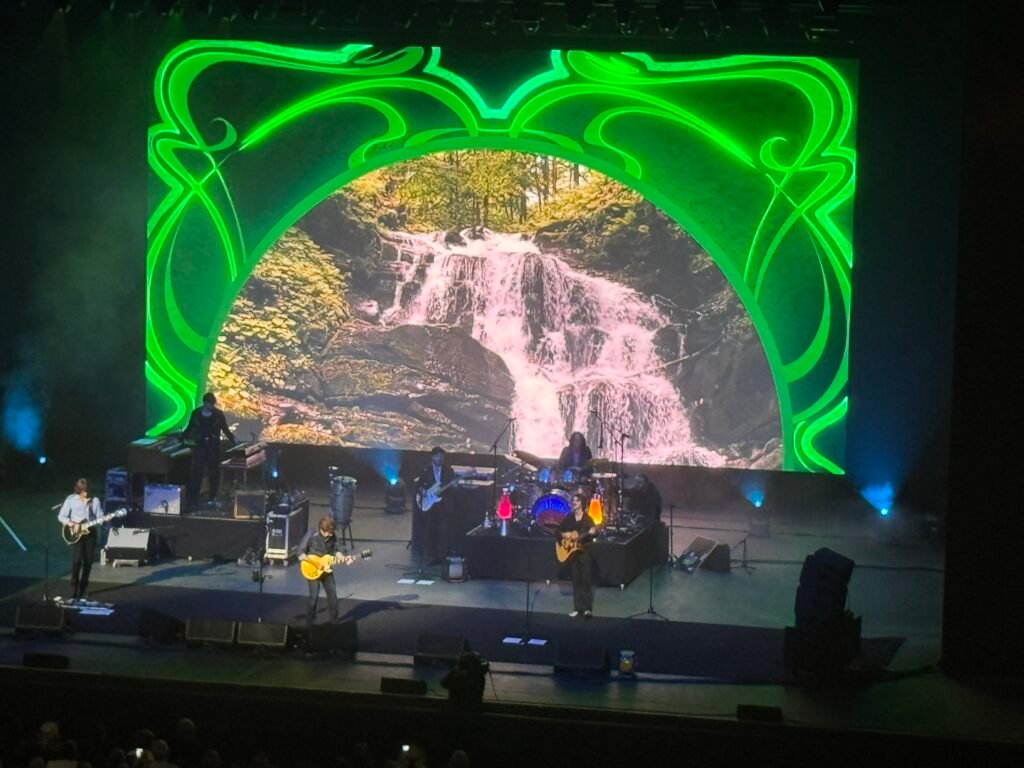
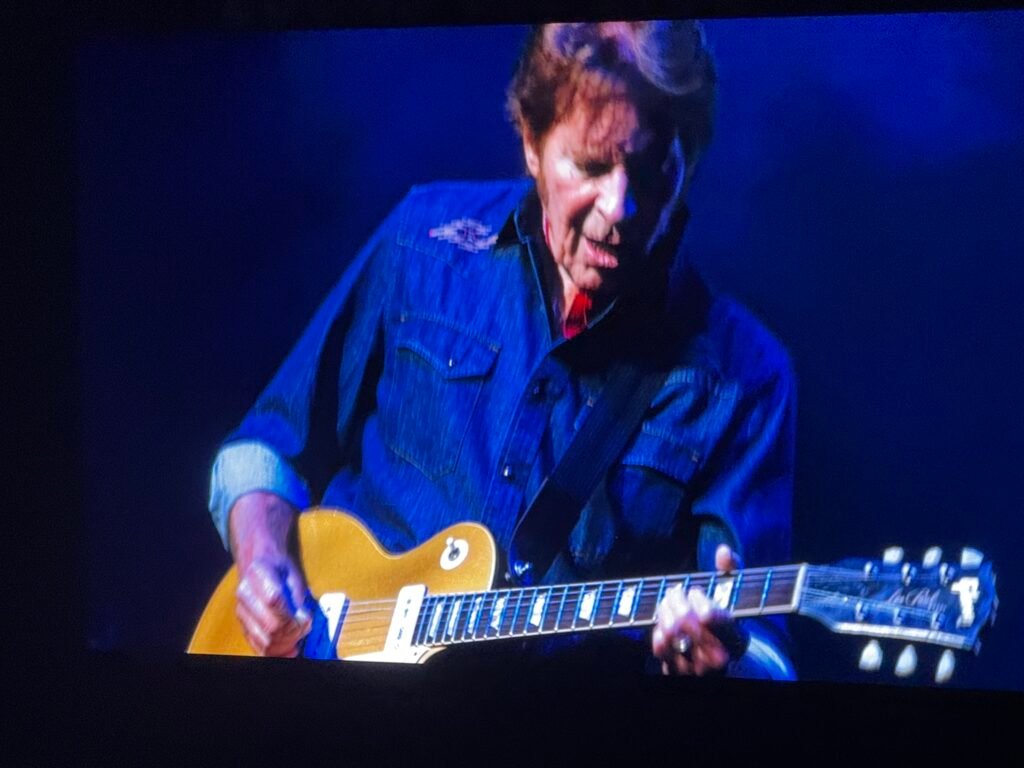
Fogerty also brought out his modified Rickenbacker 325 — the same guitar he played at Woodstock — and explained how he added a Gibson humbucking pickup to chase the tones Clapton and Page were getting. I’ll admit: I never really thought of Fogerty as a guitar god. Songwriter? Absolutely. Voice of an era? Without question. But a shredder?
That changed fast.
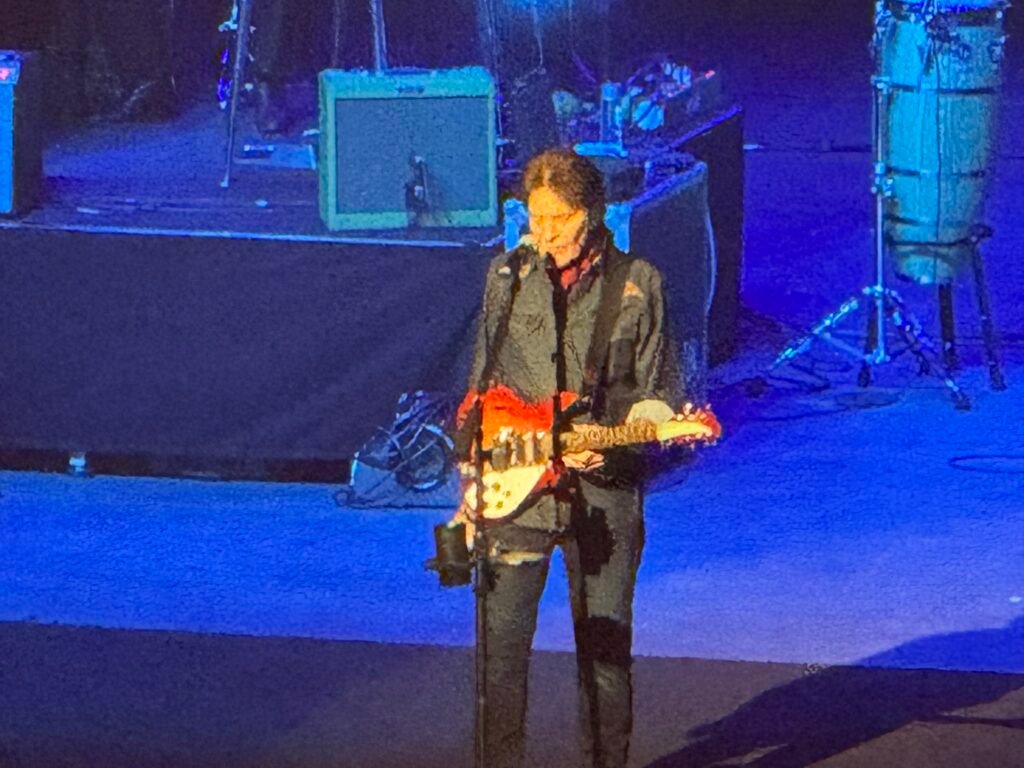
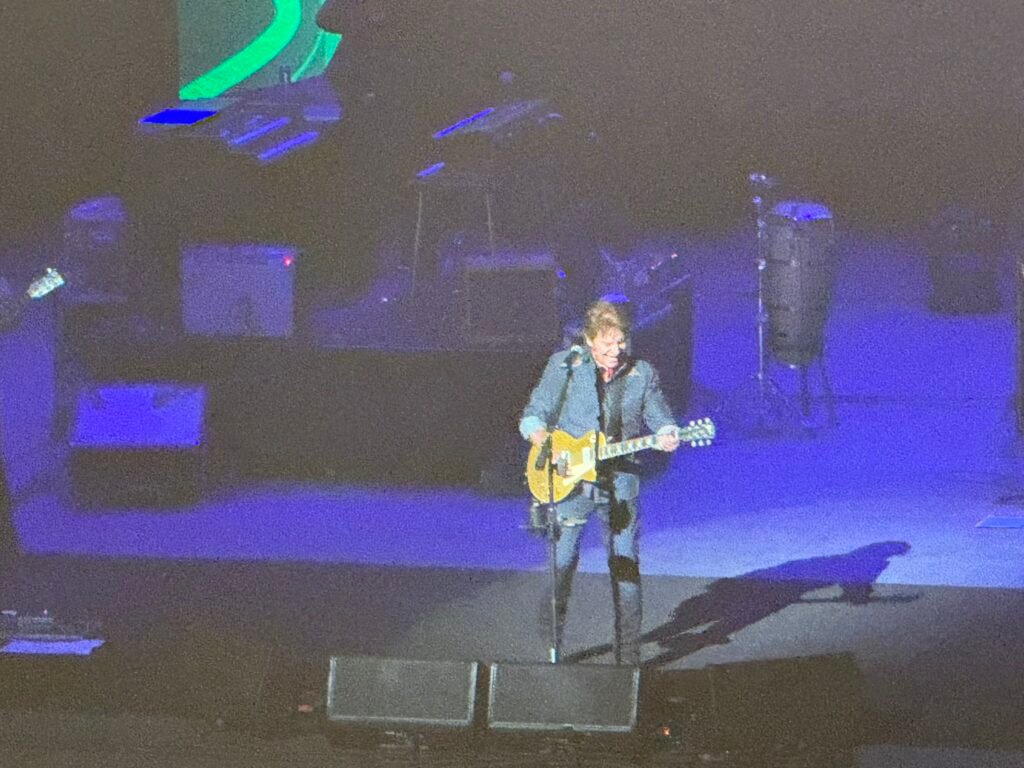
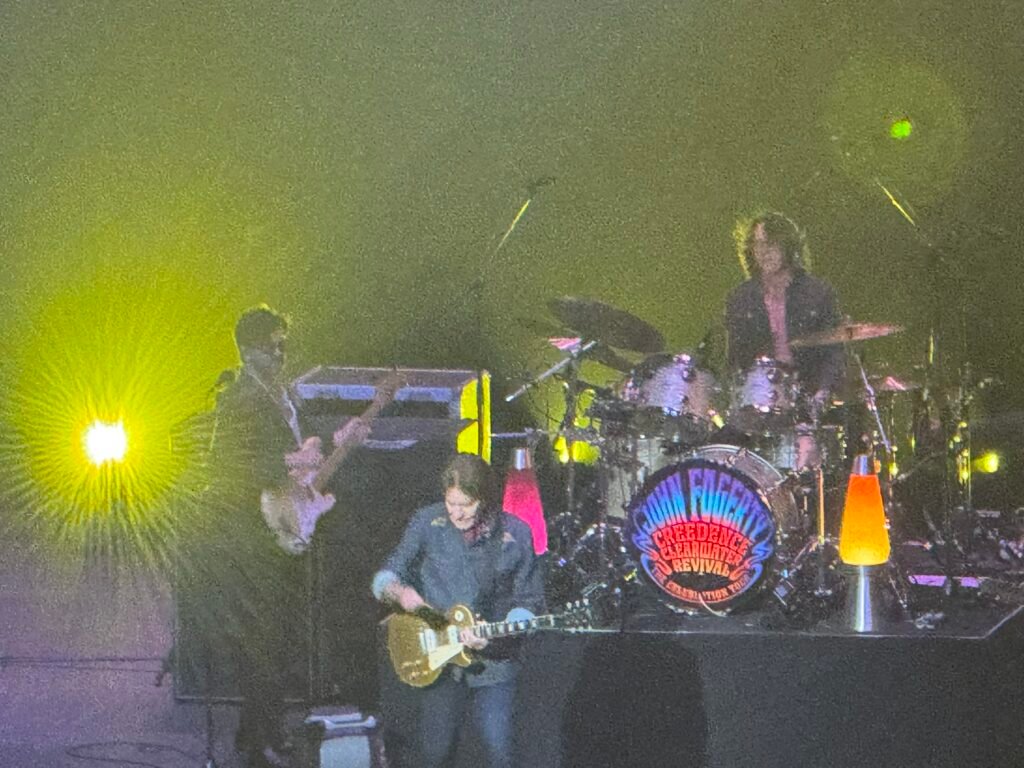
On The Old Man Down the Road, Fogerty and his son Tyler traded licks back and forth, turning the song into a father‑son duel that was both playful and legitimately impressive. John Fogerty covered the full stage, with some moves reminiscent of Michael J. Fox in Back to the Future. The kind of playing that makes you rethink everything you assumed about him.
And that father‑son moment wasn’t an isolated one. Fogerty’s band includes both of his sons, Shane and Tyler, continuing a theme that’s been running through my concert year. Peter Hook & The Light had Hooky’s son Jack Bates on bass. Squeeze had Glenn Tillbrook and his son Leon sharing the stage. Cheap Trick has Robin Zander’s son in the touring lineup. And here I am, watching it with Colton — building our own father–son concert lineage one show at a time.
Family, Legacy, and the Songs That Outlived the Battles
During Joy of My Life, the screen shifted to a montage of Fogerty family photos — decades of snapshots, vacations, kids, grandkids, and quiet moments. It was a softer counterpoint to the baseball nostalgia and the guitar fireworks, and the crowd responded with that warm, reflective hush that only happens when an artist lets you into their real life for a minute.
Fogerty’s set was 19 songs, 15 of them CCR classics. He knows exactly what people came to hear, and he delivers them with the energy of someone who’s waited half a lifetime to play these songs on his own terms. Fortunate Son closed the main set with fire, and the encore — Travelin’ Band and Proud Mary — was pure celebration.
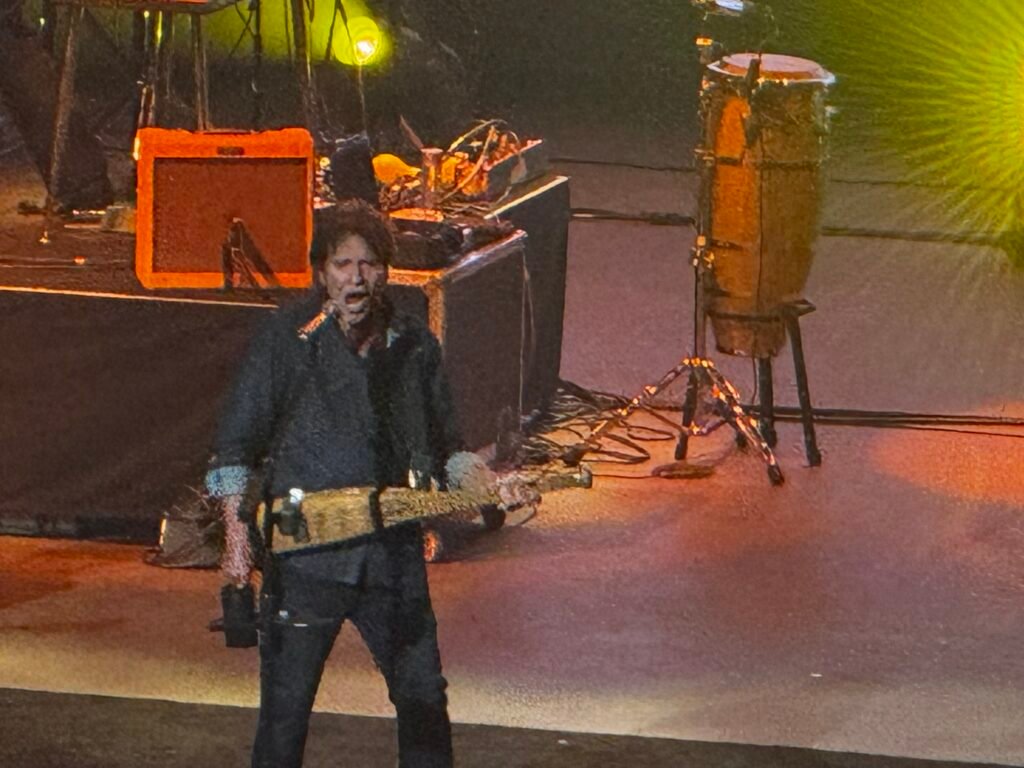
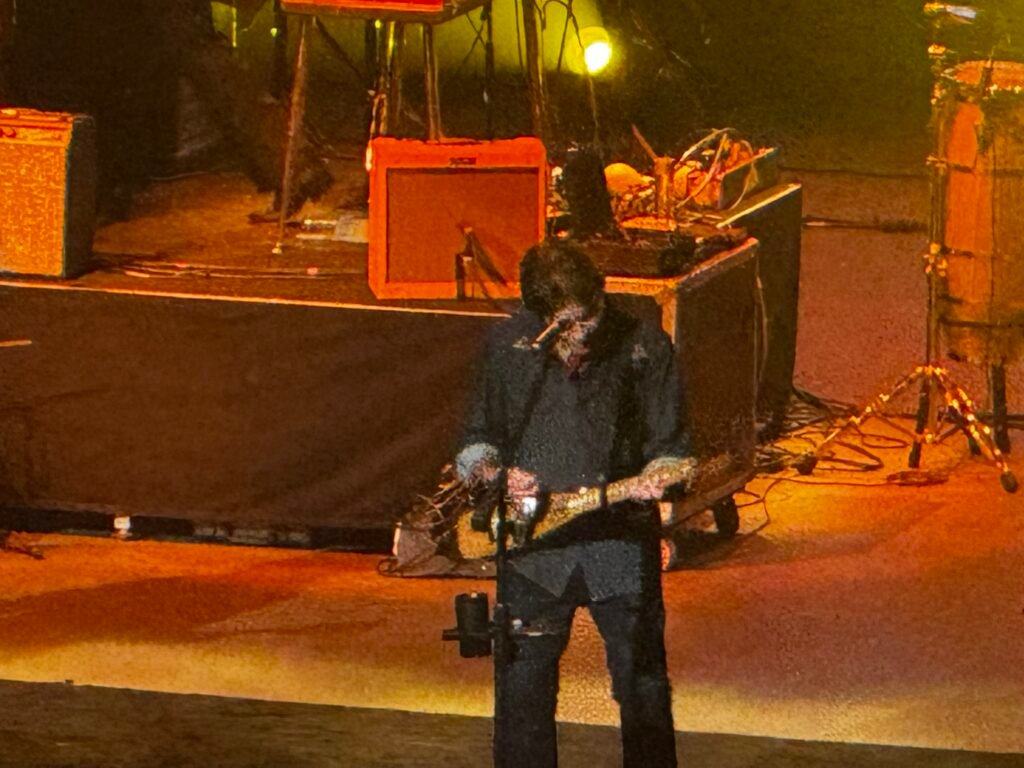
Fogerty set the tone for the weekend: legacy, family, and songs that have lived entire lifetimes.

Cheap Trick’s Original Lineup, Robin Zander’s Son, and the Uncle Dick Double‑Neck
Two nights later, Colton and I were back at Toyota Music Pavilion in Las Colinas. A venue we hadn’t visited since Lost 80s Live last summer to finally see Cheap Trick. A band I’ve somehow managed to miss for decades. They’re a rarity among classic rock groups: three of their four original members are still in the lineup, with only drummer Bun E. Carlos, no longer touring.
Another father–son pairing, with Robin Zander’s son Robin also in the band. Another chapter in the theme that’s been following us all year.
Their backdrop was a giant banner of the cover of their latest album, All Washed Up. A reminder that they’re still releasing new music instead of coasting on nostalgia. Not that nostalgia was in short supply — Rick Nielsen made sure of that. At one point he walked out with the Uncle Dick double‑neck guitar — a wonderfully bizarre instrument shaped like a person, the kind of stage prop only Rick Nielsen could pull off.
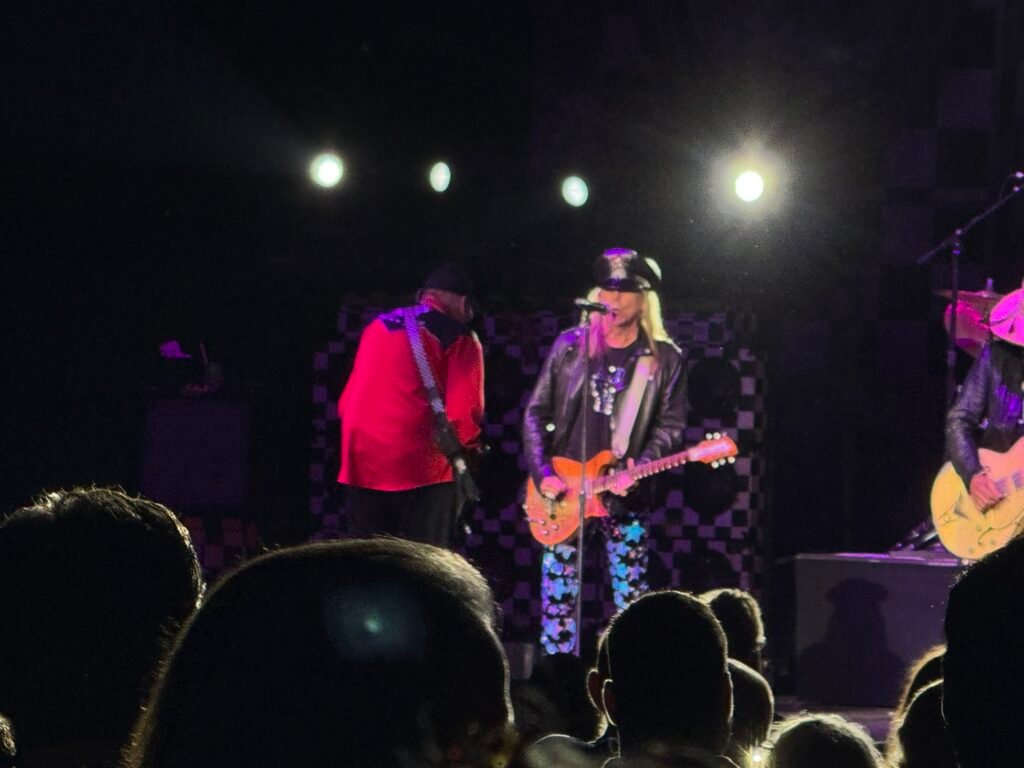
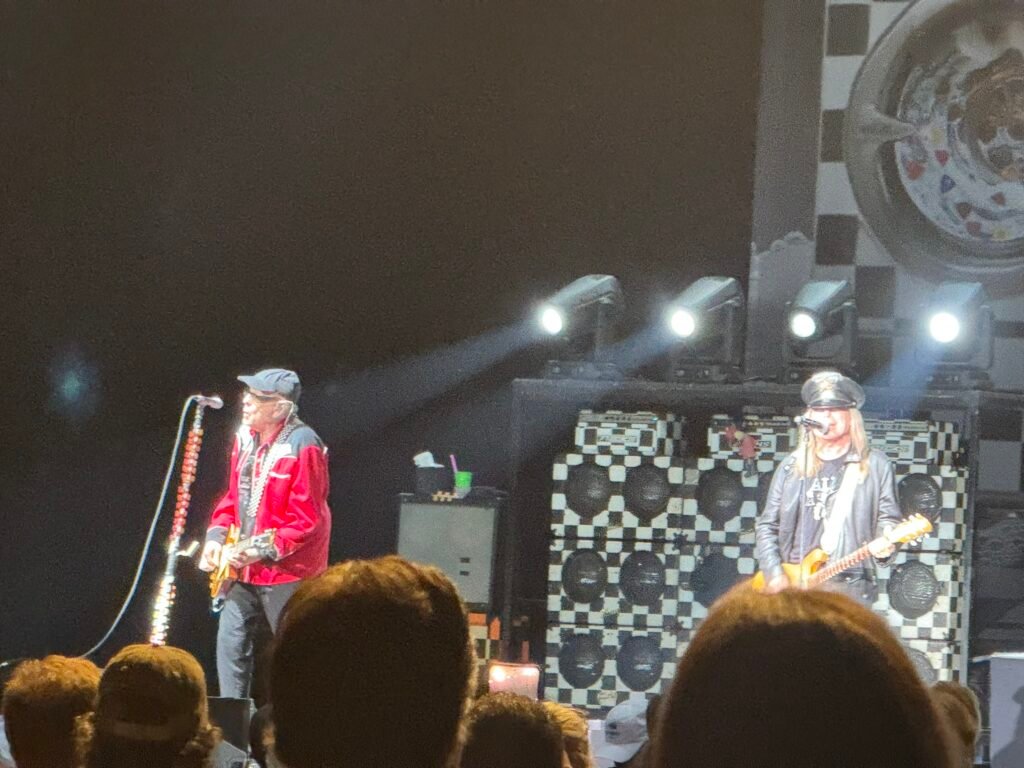
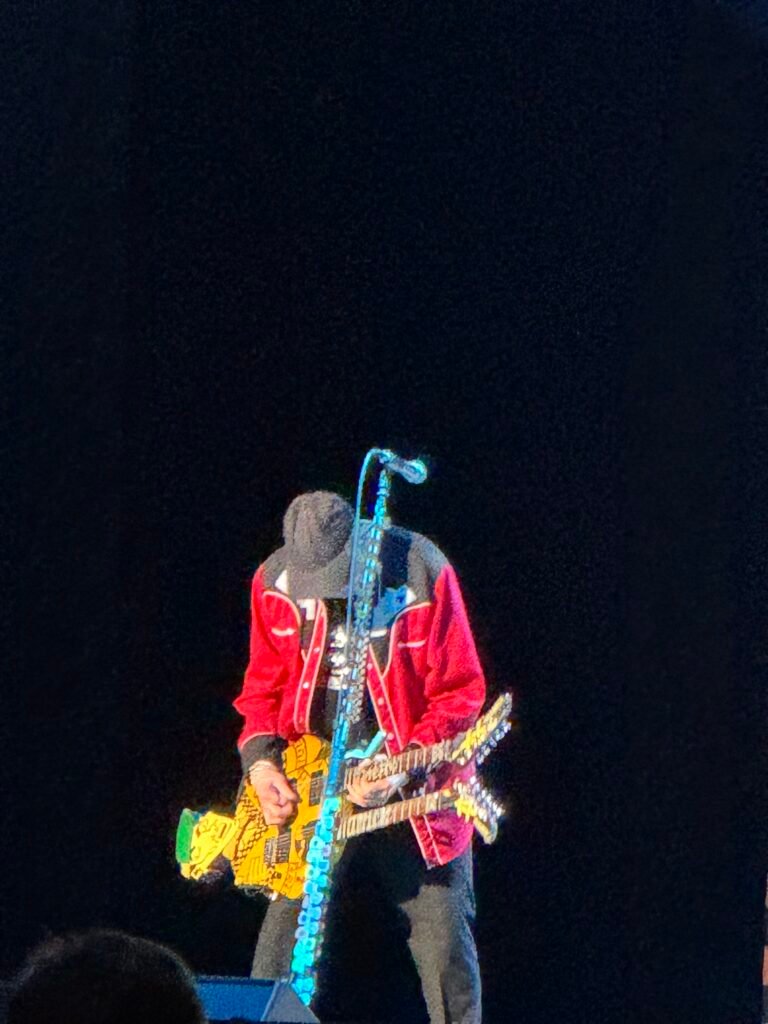
Dream Police arrived with flashing lights and sirens, turning the Pavilion into a brief melodramatic crime scene. Their 13‑song set was a tight run through the catalog, anchored by the classics like Surrender, and I Want You to Want Me. Zander’s voice still has that unmistakable timbre — slightly theatrical, slightly raspy, unmistakably Cheap Trick.
For me, finally seeing Cheap Trick live checked off a long‑standing box. For Colton, it was another chapter in our father–son concert streak. Another band from my era that he gets to experience in real time instead of through playlists and stories.

ZZ Top’s Texas Boogie, Seventeen‑String Bass, and MTV Memories
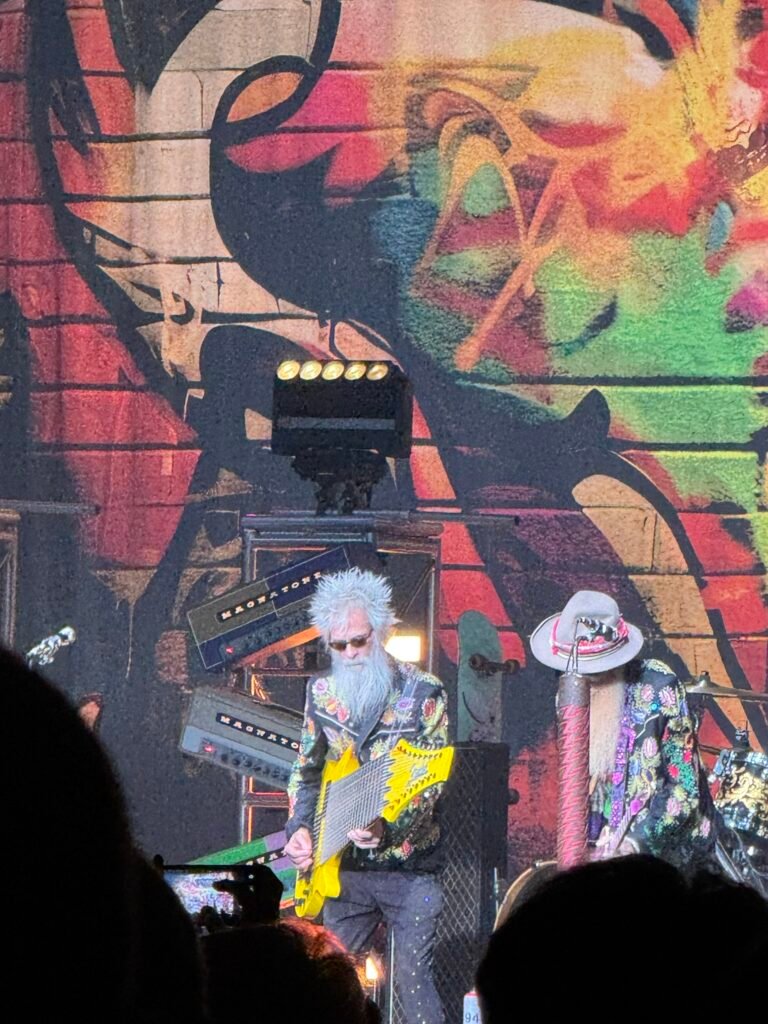
ZZ Top closed the night and being a home grown Texas band, they were well received.. With the recent passing of drummer Frank Beard, only Billy Gibbons remains from the original trio, but the band’s identity is still unmistakably intact. Elwood Francis, Dusty Hill’s longtime guitar tech, has stepped into the lineup with ease — and yes, he has the requisite beard.
They opened with Got Me Under Pressure with Elwood playing a massive, multi‑string mutant bass (seventeen strings, if I counted right). A couple of times during the set, you could actually feel the bass rumble through the Pavilion’s speakers — that low‑end thump that hits your chest before your ears.
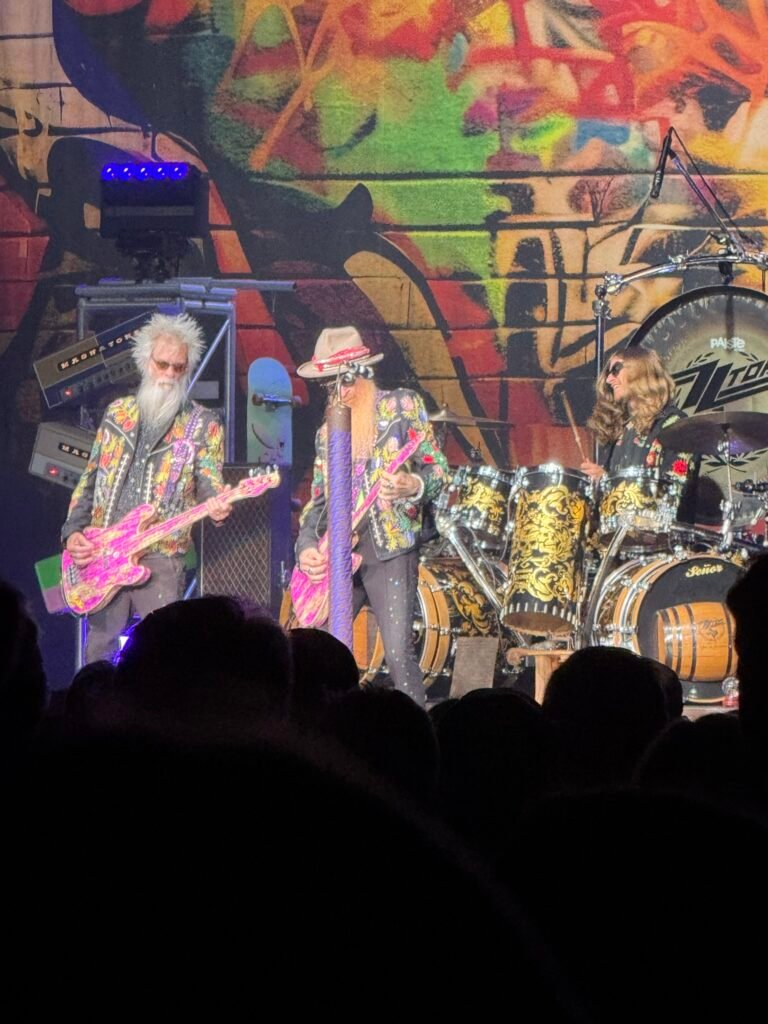
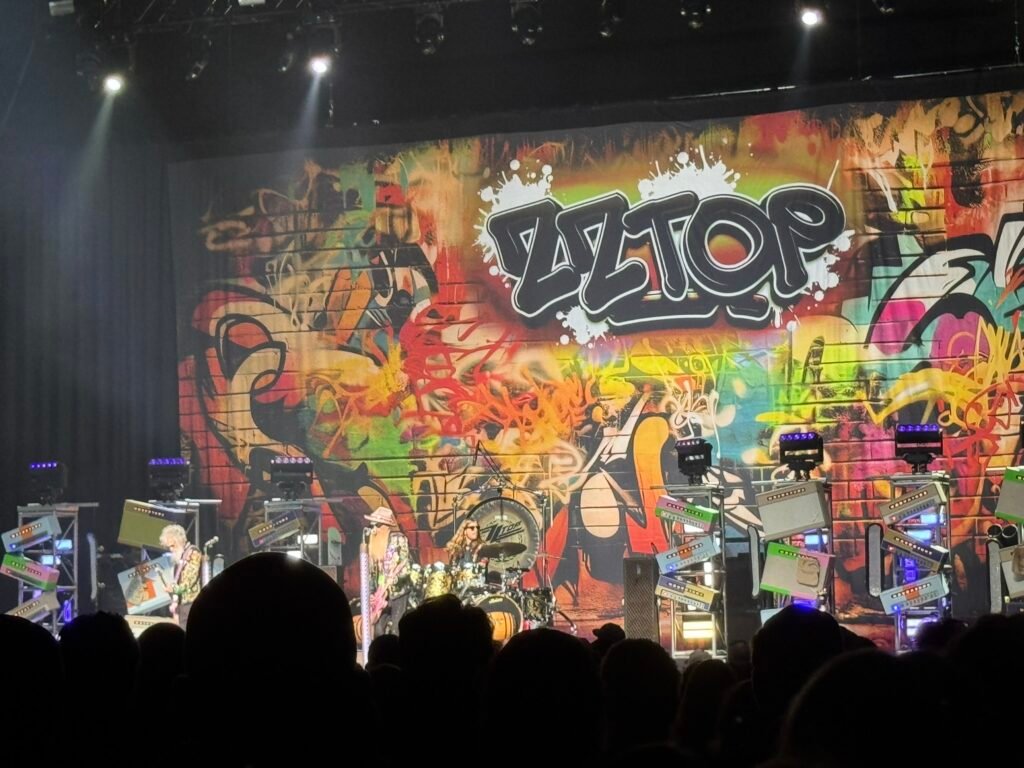
For me, ZZ Top will always be tied to the Eliminator era — middle school, MTV, and those iconic videos that were basically short films. Legs, Sharp Dressed Man, Gimme All Your Lovin’ — they were everywhere, and they were cool. I certainly wanted to grow a long beard at the time. Hearing those songs live decades later felt like flipping through a scrapbook of the early cable TV age.
Their cameo in Back to the Future Part III remains one of my favorite Easter eggs in movie history, cementing them as part of the pop culture fabric of the late ’80s and early ’90s.
Even now, they still do the famous choreographed moves — the slow, synchronized guitar swings, the sideways steps, the visual flourishes that have been part of their identity since at least the MTV boom. Some bands reinvent themselves every tour; ZZ Top just keeps being ZZ Top. And frankly, it works.
Their 14‑song main set was tight and confident, followed by a four song encore that ended with La Grange — the only possible closer, especially in Texas.

Why These Classic Rock Concert Reviews Matter: Legacy, Lineage, and the Memories That Last
Fogerty, Cheap Trick, and ZZ Top — three acts whose songs have lived entire lifetimes. Two of them featured fathers and sons sharing the stage, and the third is a Texas institution that helped define an era. And through all of it, Colton and I added another chapter to our own father–son concert tradition.
The venues change. The bands change. The lineups change. But the memories don’t. And that’s the part that matters most.