
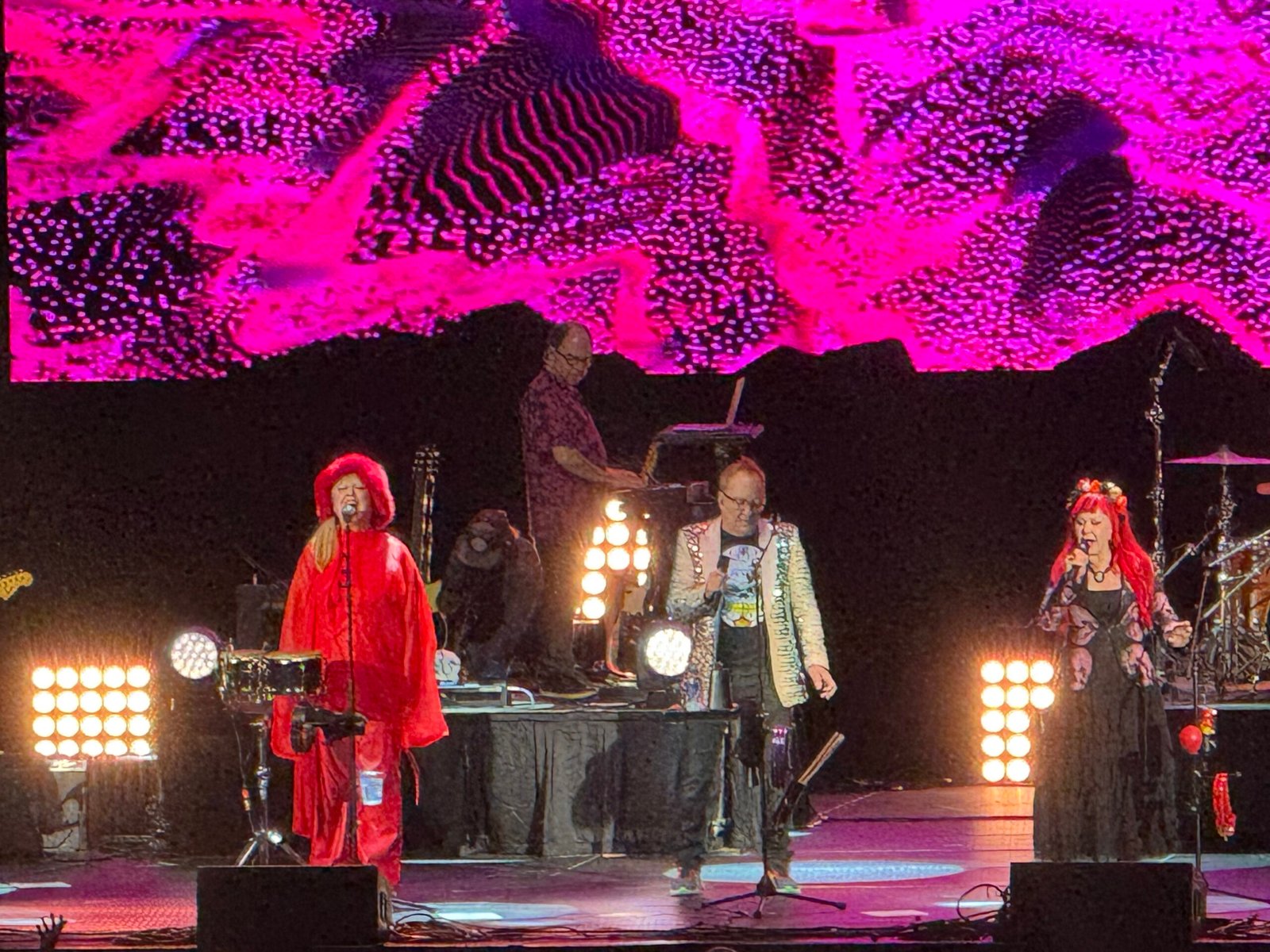
We Were Young and We Were Wild and We Were Groovin’
There’s a special kind of time travel that only happens with certain bands — the ones whose music don’t just soundtrack a moment but rewire you. It’s kind of a cosmic thing. My first B‑52’s concert in 1990 did exactly that. The B‑52’s have always been one of those bands for me. They’re not just a sound. They’re a mood, a color palette, a permission slip to be joyfully weird in a world that keeps trying to sand down the edges.
So when I saw them again in Austin, three plus decades later, it didn’t feel like revisiting a band. It felt like revisiting a former version of myself. The kid who walked into the Universal Amphitheatre in 1990 without knowing the night would become one of the earliest bookmarks in his concert‑going life.
Back then, the venue was still standing. Back then, the B-52’s were in the middle of a rebirth. In 1990, I was just stepping into adulthood, still wide‑eyed and taking it all in.
You don’t realize any of that in the moment. You only realize it years later, standing in a different city and a different decade, watching the same band light up a stage and outlast the venues, eras, and versions of your life.
This is the story of those two nights — the one I barely remember, and the one I’ll never forget — and everything that happened in the space between them.
1990: Cosmic Thing at Universal — The B‑52’s in Their Rebirth Era
A Venue Built for Big Hair and Bigger Sound
By the time I saw the B‑52’s in 1990, the Universal Amphitheatre had already lived several lives. It started as an outdoor music venue in the early ’70s. But in 1982, the whole place was enclosed and rebuilt into a state‑of‑the‑art indoor theater with pristine acoustics — a reinvention that mirrored the band I was there to see.
Tell It Like It T‑I‑IS: When Billy Joel Outshined the Headliner
My connection to the venue actually goes back even further. My parents saw several shows there in its early years — The Carpenters, Neil Sedaka, Paul Williams — and even the musical, Jesus Christ Superstar, which was the first show the Amphitheatre ever staged. One of those nights was a Janis Ian show in 1976, where a relatively unknown piano player who opened the evening turned out to be Billy Joel — months before The Stranger made him a household name.
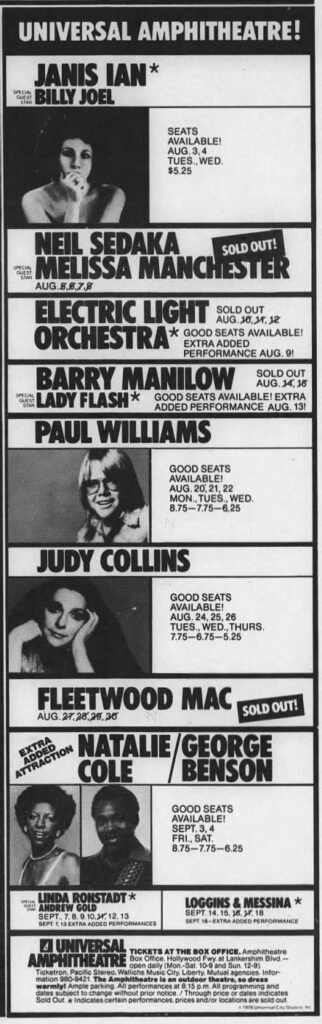
So by the time I walked into the same venue fourteen years later, I already thought of the Amphitheatre as a place where musical magic tended to happen — the kind of place where a virtual unknown could stroll onstage as the opener and leave as the unofficial headliner. In hindsight, it’s almost poetic that the venue eventually gave way to the Wizarding World of Harry Potter.
Ain’t It a Shame What Happened to the Amphitheatre
It was my second concert at the Universal Amphitheatre, I’d seen New Order there just a few months earlier and I’d be back a month later for the Smithereens, which ended up being the last show I ever saw there.
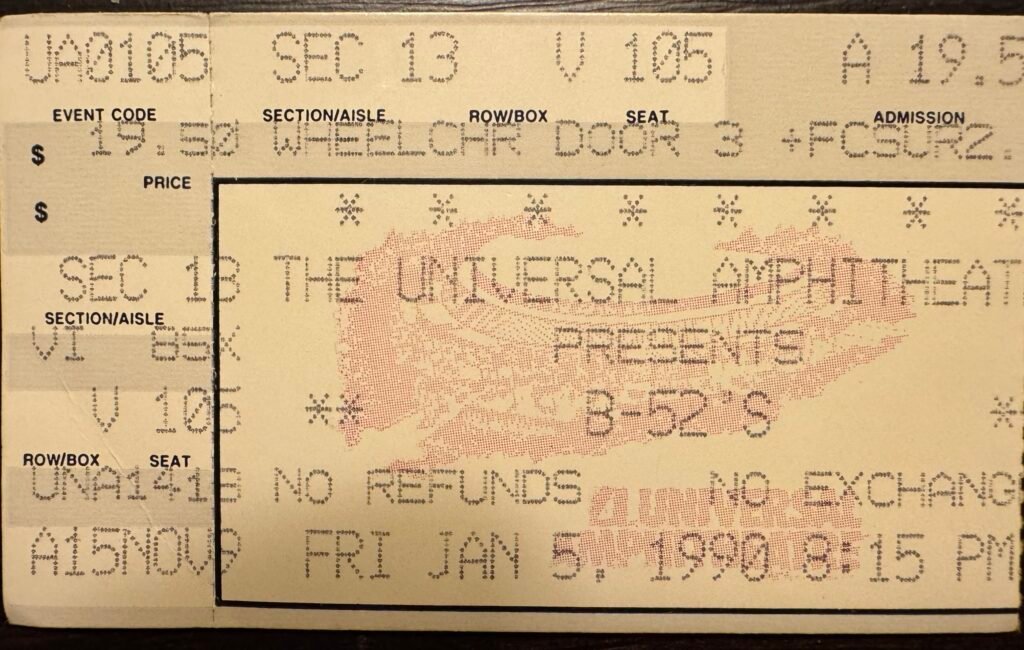
In 1990, it still felt like a cathedral of Southern California music culture, a place where my parents had once witnessed a future superstar at the piano and where I was now watching a beloved band step boldly into its next chapter after the loss of a brother/band member and several years of indifference after the promise of their first two albums.
Even if the specifics of that night have faded, the emotional imprint hasn’t. It was the beginning of a long, strange, joyful relationship with a band that has always felt like a celebration of being alive — and a reminder that reinvention is part of the journey for all of us.

2025: Austin’s Open‑Air Chaos — The B‑52’s vs. Texas Weather Whammy
Folks Lining Up Outside Just to Get Down
If my memories of 1990 have softened around the edges, my memories of B-52’s in Austin in 2025 are sharp enough to cut glass. Maybe that’s what happens when you see a band again after thirty‑five years — you pay attention differently. You’re not just watching a show; you’re watching time fold in on itself.
The Germania Insurance Amphitheater couldn’t have been more different from the Universal Amphitheatre I walked into as a teenager. Universal was enclosed, intimate, acoustically perfect. Austin was sprawling and wide open-in the middle of a racetrack. The Texas sky stretching above us like a giant dome — one that would crack open with lightning and halt everything before we even entered the venue.
Texas‑Sized Strobe Light
The storm rolled in just as we were lining up at the gates, and the venue delayed entry. We stood outside in the rain for a long stretch as they kept the gates locked, slowly getting drenched and laughing at the absurdity of it, before finally retreating to the car to wait it out once the lightning began.
In 1990, the venue had been rebuilt to keep the outside world out. In 2025, the outside world made sure we knew who was in charge.
Where’s My Umbrella
The weather tried its best to derail the night. Lightning delays, sideways rain, the full unpredictability of Texas weather in November. But the B‑52’s have always thrived in chaos.
When the band finally took the stage, the whole place snapped into Technicolor. The wigs, the outfits, the neon, Fred’s cornucopia of instruments, the camp — it was everything you want from the B‑52’s and everything you hope they’ll still be after four decades of doing this.
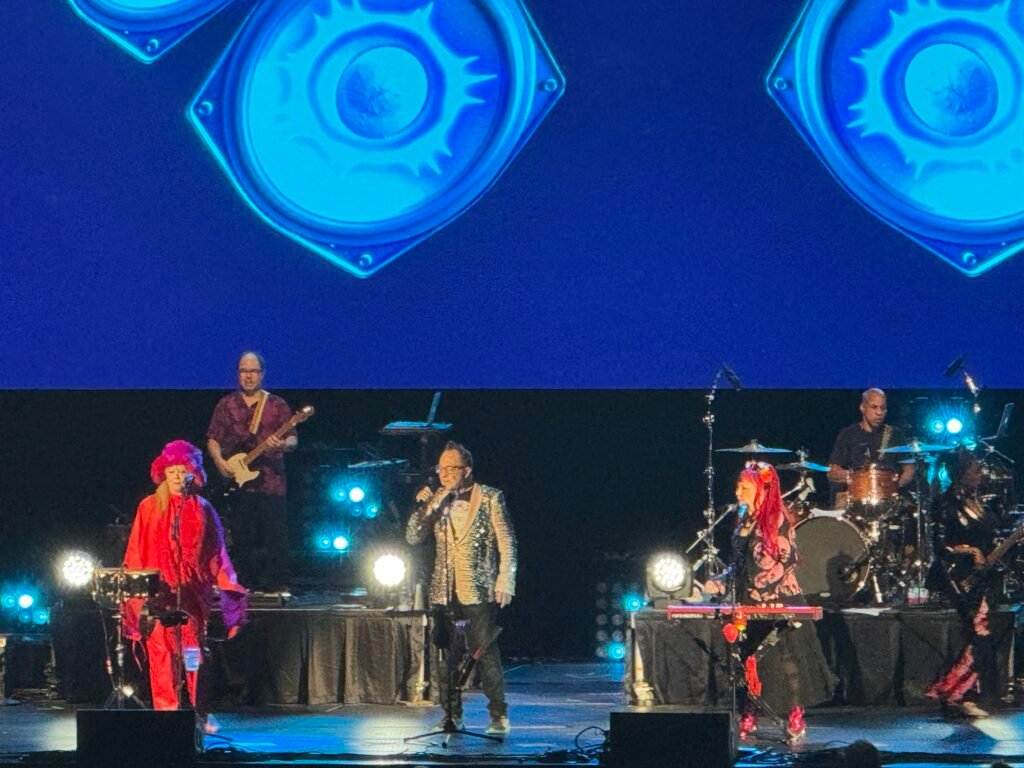
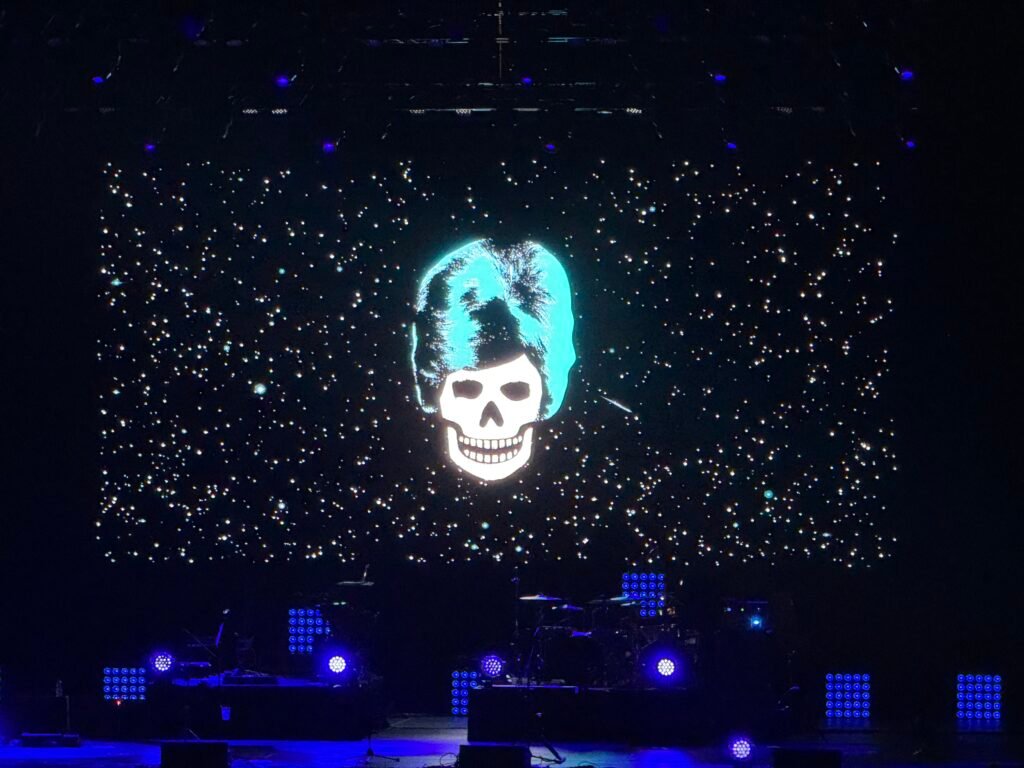
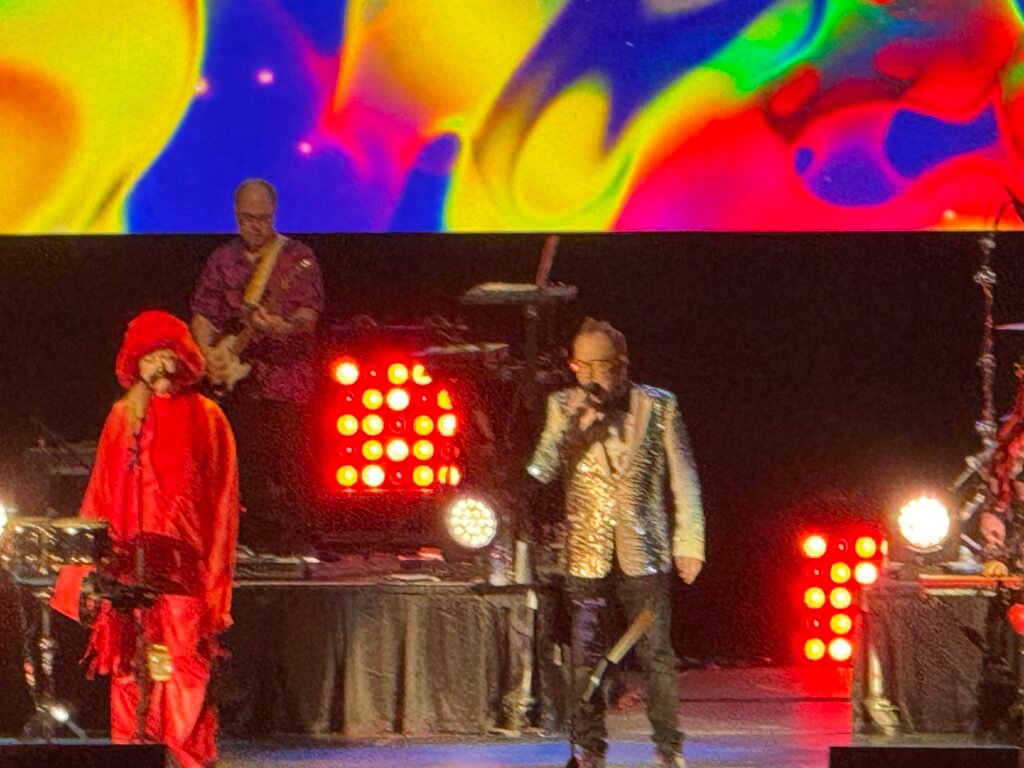
A Love Shack for Two
Seeing B-52’s in concert was a bucket list item for my wife. We missed out seeing them on their stop in North Texas on their final tour. We had originally bought three tickets, planning to make it a family outing, but my son’s theater commitments kept him away. So it became a night for just the two of us — me and my wife, my partner for over 30 years, my best friend.
There was something fitting about that. If the B‑52’s have always been about anything, it’s about chosen families, oddball tribes, and the people who stick with you through the weirdness. And that’s us. Always has been.
Dance This Mess Around
What struck me most wasn’t just how good they sounded, but how grounded they were in who they’ve always been. In 1990, I watched a band rediscover itself after loss and reinvention. In 2025, I watched a band fully at ease in its own legacy — no reinvention needed, no explanations offered. They weren’t chasing relevance or reinvention; they were simply inhabiting the strange, joyful universe they created decades ago. And the crowd, soaked and grateful, stepped right into it with them.
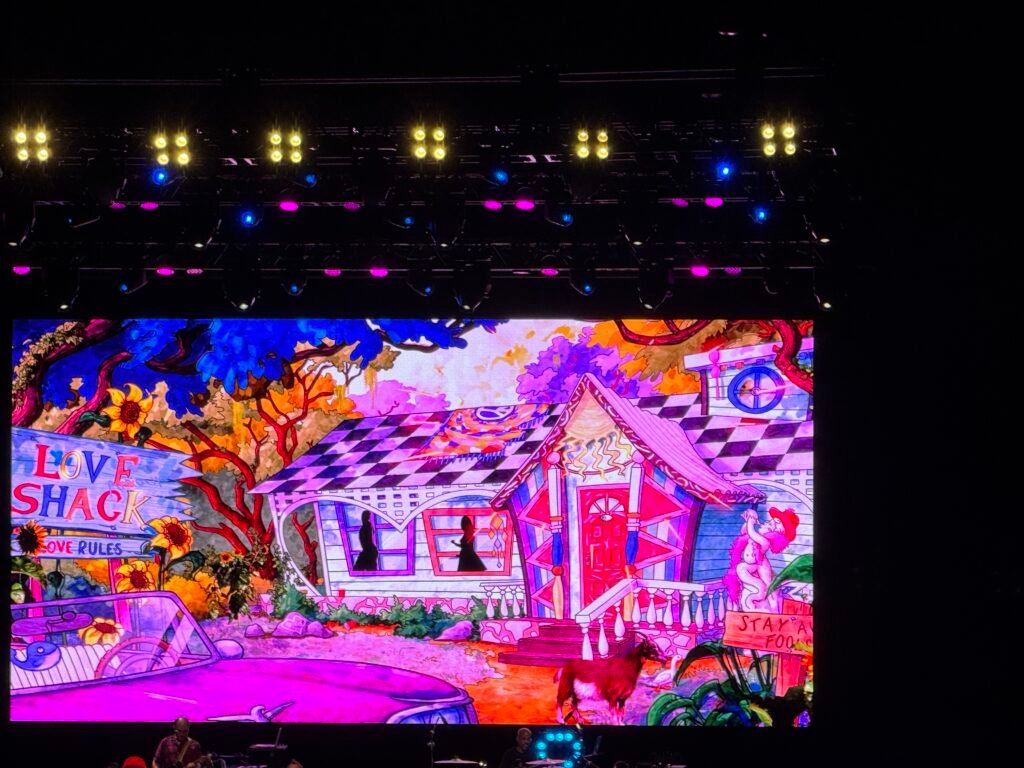
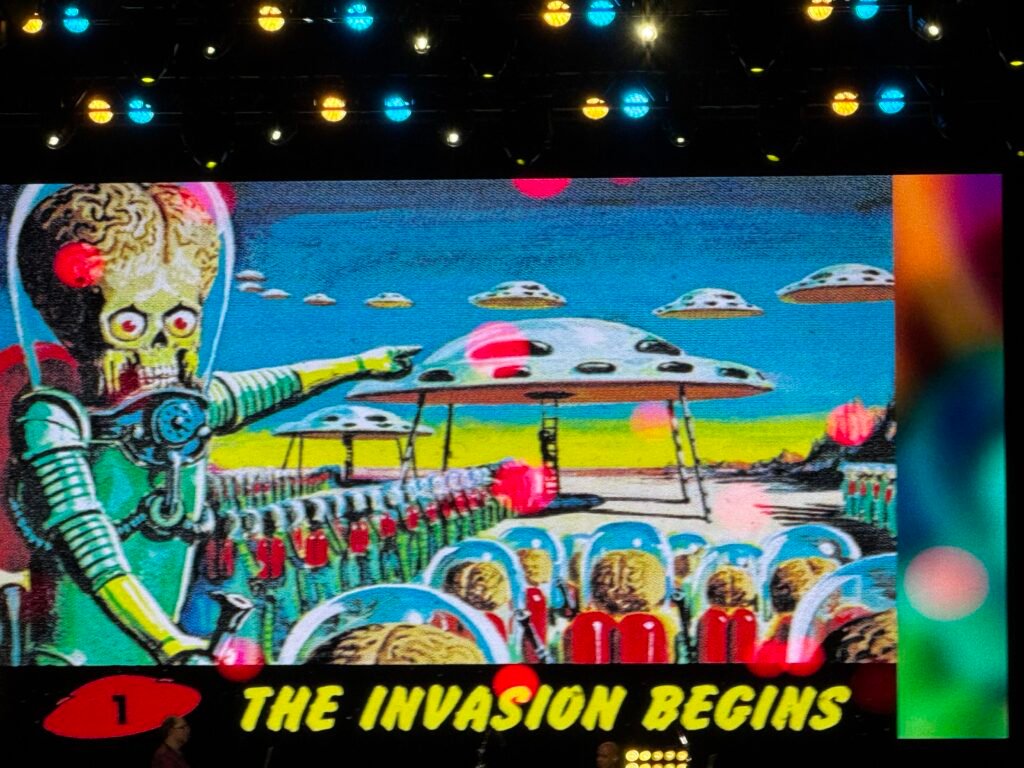
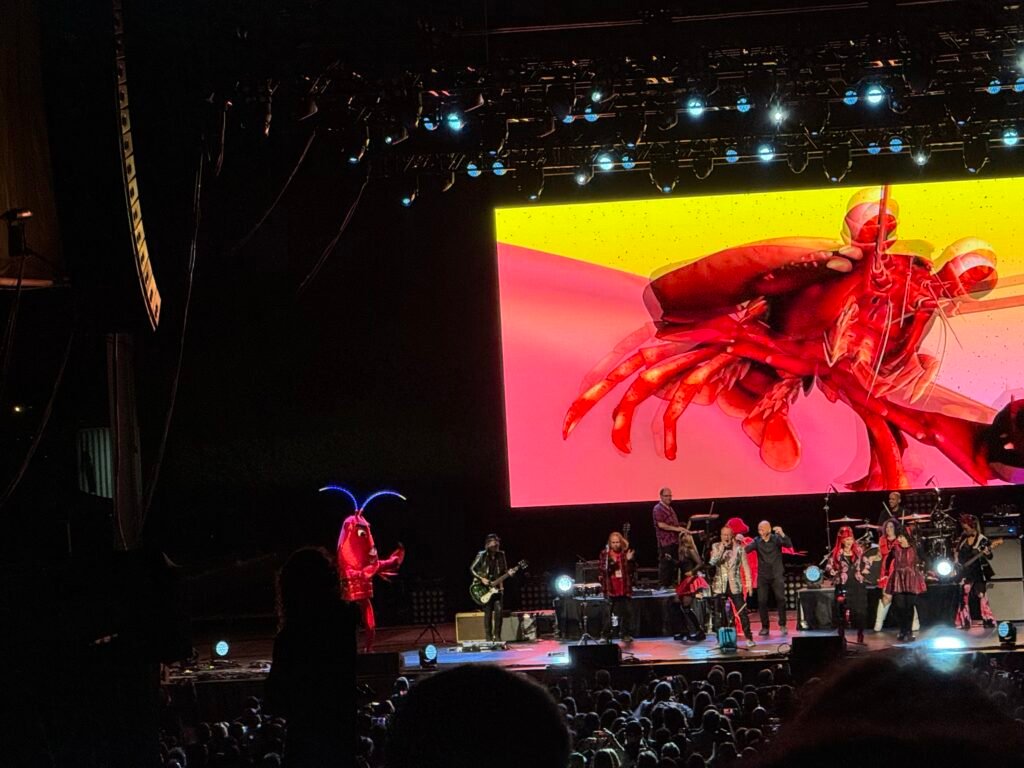
Still Members of the Deadbeat Club
And there we were, the two of us, finally inside the venue, finally dry(ish), sharing a night that felt both brand new and deeply familiar. We hit the merch booth first thing, and they had a B‑52’s hoodie on discount since this was the penultimate tour stop and they had too much stock left. My wife grabbed one, which meant she ended up a lot drier than I did.
Seeing the B‑52’s again wasn’t just a concert. It was a reminder of how many versions of ourselves we’ve lived through, and how lucky I am that she’s been beside me through most of them. We’ve been through so many eras together — jobs, moves, businesses, parenthood, the slow and steady evolution of a life-built side by side.
When the band launched into “Love Shack,” the whole amphitheater snapped into one body — shouting, dancing, shaking off the storm. It didn’t feel like nostalgia. We felt alive and certainly in moment. In 1990, I watched a band reclaim its joy. In 2025, I watched them share it — with the person who’s shared so much of my life.
And somewhere in that exchange — between the vanished indoor theater and the open‑air Texas night trying to wash us out — I realized the B‑52’s weren’t just part of my soundtrack. They’ve been my own little cosmic thing buzzing through the decades.
The Party Out of Bounds That Never Really Ends
Follow Your Bliss
The venues change. The cities change. The people beside us may change. But the feeling — that spark that shoots through a crowd when the first notes of “Rock Lobster” or “Planet Claire” hit — that part stays. It’s the constant in a life full of variables.
The B‑52’s have always understood something essential: that joy isn’t frivolous. It’s survival. Joy leads to connection. It’s the glue that holds our weird little human tribes together.
In 1990, I didn’t know I was collecting a memory I’d return to thirty‑five years later. In 2025, I knew exactly what I was doing. I was grateful — for the music, for the band, for the person standing next to me, for the strange and beautiful continuity of it all.
Good Good Stuff
The B‑52’s once sang about a place where everybody’s movin’, everybody’s groovin’. Turns out that place isn’t a shack or a venue or even a point on a map. It’s wherever the music finds you — and whoever you’re lucky enough to share it with.
Say Goodbye to Hollywood
The Universal Amphitheatre was never just a venue. It was part of the landscape of my childhood. It was a part of family lore. A place tucked into the hillside in San Fernando Valley where my parents saw shows long before I knew what a concert even was. They watched a young Billy Joel take the stage there in 1976, sensing his brilliance before he became a superstar. They saw The Carpenters too, back when the brother‑sister duo seemed full of promise, before tragedy reshaped their story.
By the time I walked in for the B‑52’s concert in 1990, the Amphitheatre had already reinvented itself once, enclosed and modernized, ready for the next era of Los Angeles music. It became the backdrop for my early concert memories — New Order, the B‑52’s, the Smithereens — and then, without me realizing it, it slipped out of my life. I never went back after that year.
Only the Good Die Young
Having moved away from Southern California over 20 years ago, I didn’t even know it had been torn down until I started writing this piece.
That hit harder than I expected. Maybe because I was born in the Valley. Perhaps its because my parents’ stories live there. Maybe because the B‑52’s show I saw in 1990 feels like a snapshot of a version of me that only existed for a moment. Or maybe because the Amphitheatre was one of those rare places where eras overlapped — Bowie’s legendary 1974 run, Oingo Boingo’s Halloween shows, KROQ’s endless parade of alternative shows. Artists who passed through before they became icons.
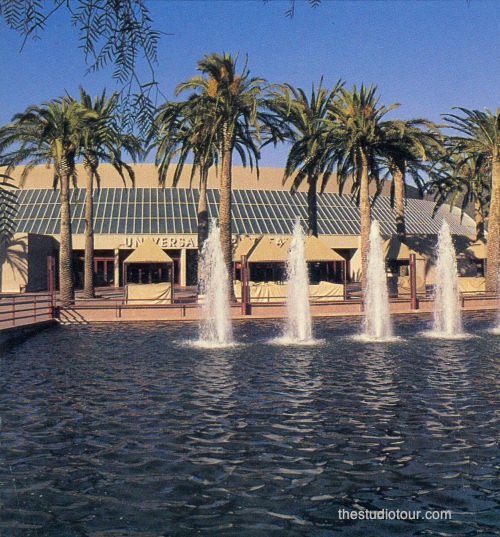
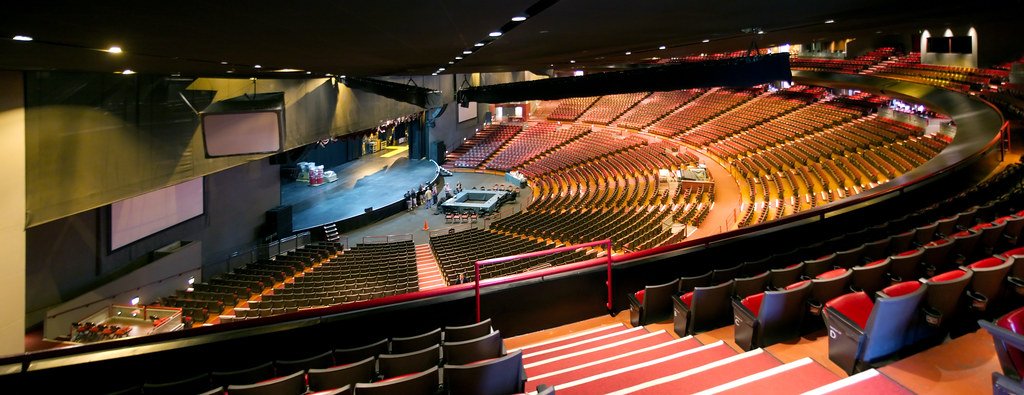
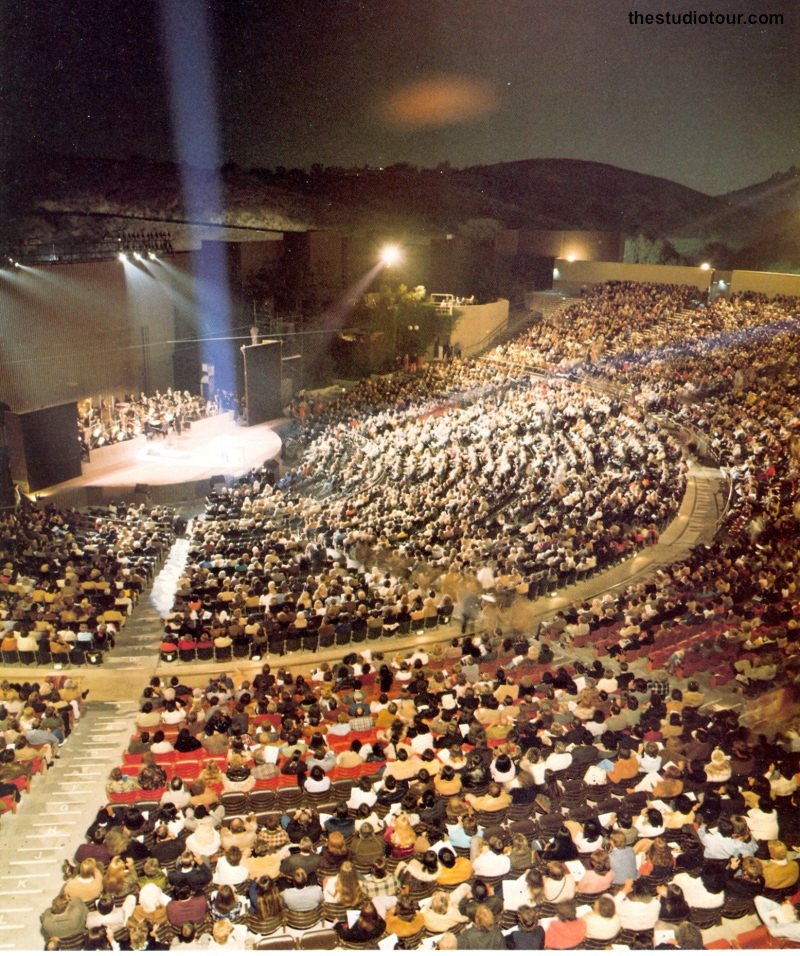
Places like that aren’t supposed to disappear — but they do. Some venues fade like old photographs, others fall to wrecking balls, yet the ones that meant something keep echoing long after the last chord has drifted away.
And yet the memories stay — the music, the people, the nights that felt bigger than they had any right to be. The Amphitheatre may be gone, replaced by a world of wands and wizard robes, but the imprint remains. It’s in my parents’ stories and in my own. It’s in the way a band like the B‑52’s can bridge decades and still feel like home.


This was such a beautiful piece. I love how you tied the concerts to different eras of your life and showed how music can act like a time machine. The way you described the B-52’s as a “permission slip to be joyfully weird” really stuck with me…that perfectly captures their spirit. You have such a gift for turning memories into stories people can feel.