A Question of Time
My history with Depeche Mode is bookended by two nights, thirty‑five years apart. The first was at the historic Rose Bowl in 1988, where Depeche Mode were closing out the last night of their 101‑show Music for the Masses tour, when everything in my life felt like it was just beginning. I was on the edge of adulthood myself, just months away from starting college. The second arrived decades later in Dallas, when I stood beside my son and realized how much life had unfolded between those two shows.
Leave in Silence
I stayed with the Boys from Basildon through Songs of Faith and Devotion in ’93. Through the brilliance, the chaos, and the exhaustion of that era—before life and their own hiatus pulled me away. For nearly two decades I drifted. I’d still hear their classics on First Wave and smile at the familiarity, but I wasn’t seeking out anything new. It wasn’t until Memento Mori arrived that I realized how long I’d been gone.
The band was older, wiser, shaped by loss and Andy Fletcher’s absence, and somehow exactly what I needed at this stage of my life. Seeing that tour with my son in 2023 felt like closing a circle—passing a baton I didn’t know I’d been carrying since that night at the Rose Bowl.
The Concert for the Masses (And It Really Was)
To understand how that first night took root, I have to go back to 1988, when I took a ride with my best friend, Paul, and we made our way to Pasadena for the biggest show Depeche Mode had ever played. We were fresh out of high school—literally days removed from graduation—and the whole night felt like part of the same rite of passage, a moment announcing that everything was about to change.
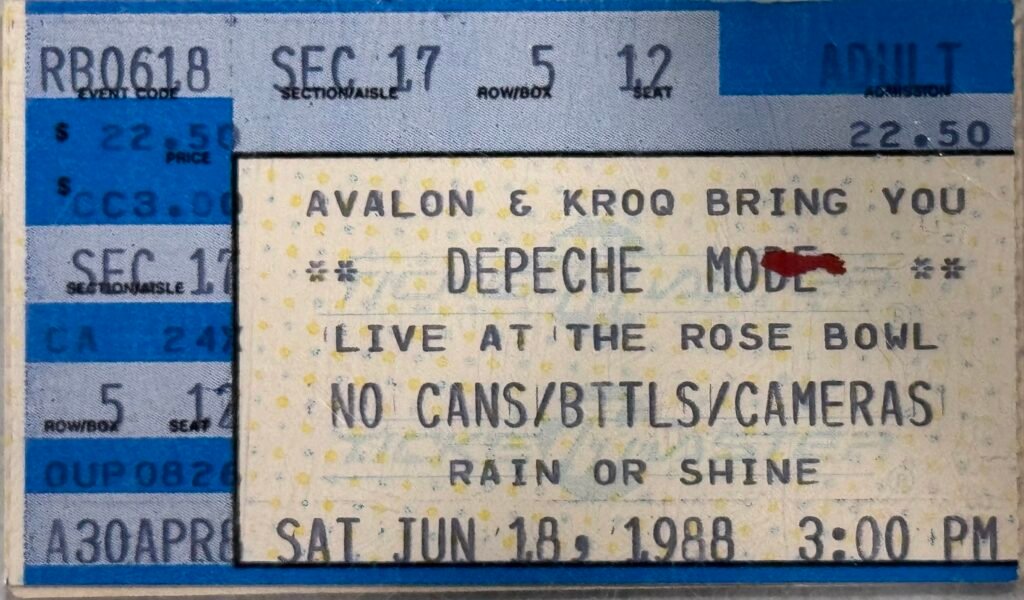
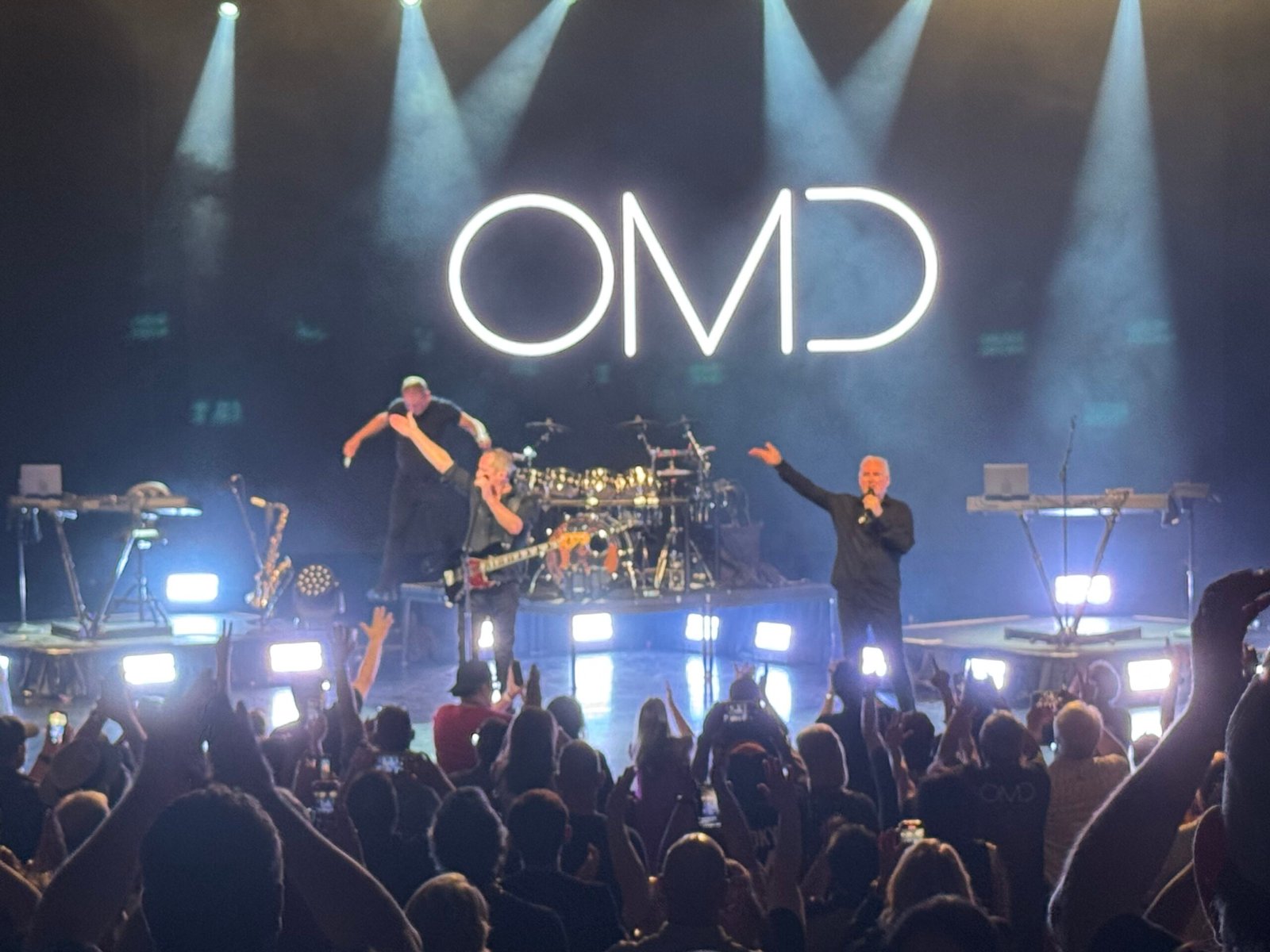
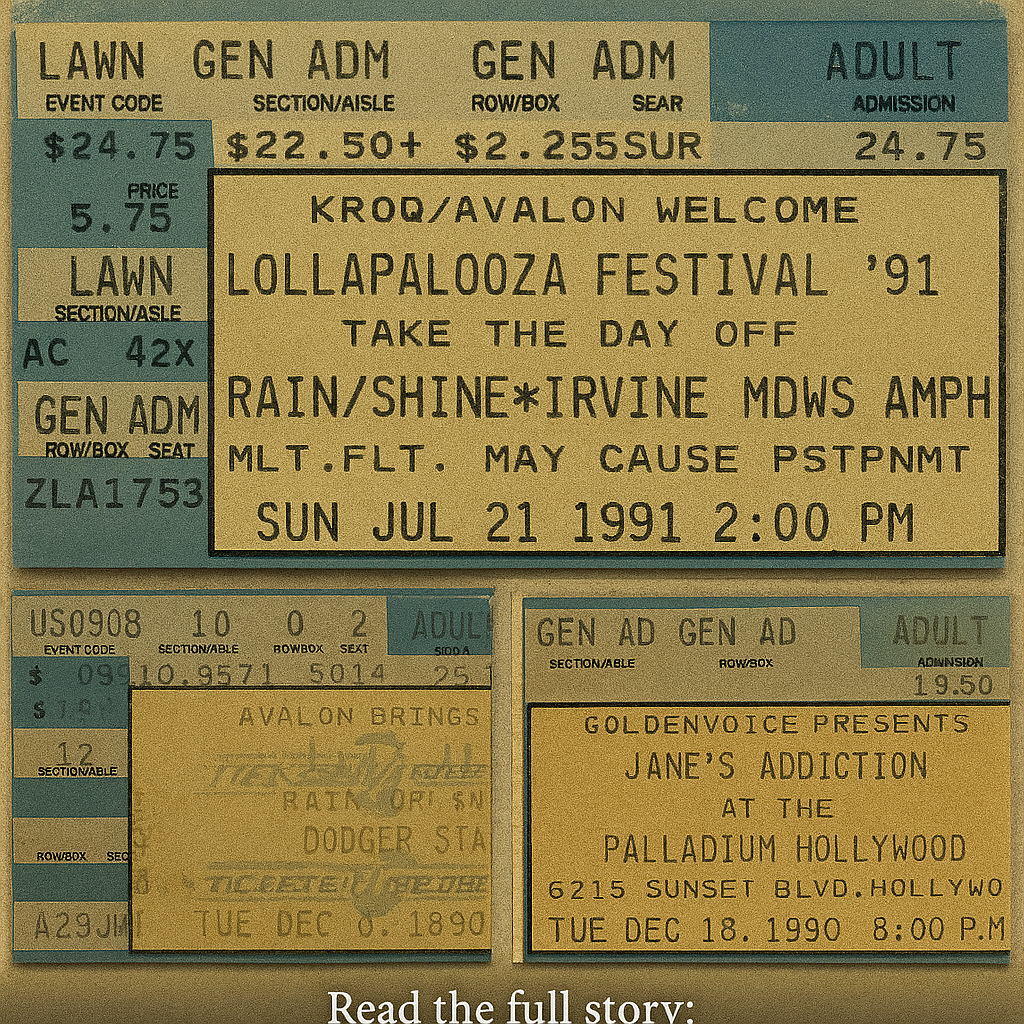
By the time Paul and I made it to Pasadena, the whole thing already felt mythic. KROQ and Avalon had been hyping it for weeks as the “Concert for the Masses”. A title that somehow felt both tongue‑in‑cheek and completely accurate. The lineup alone made it feel historic: Wire, Thomas Dolby, and OMD all on the same bill.
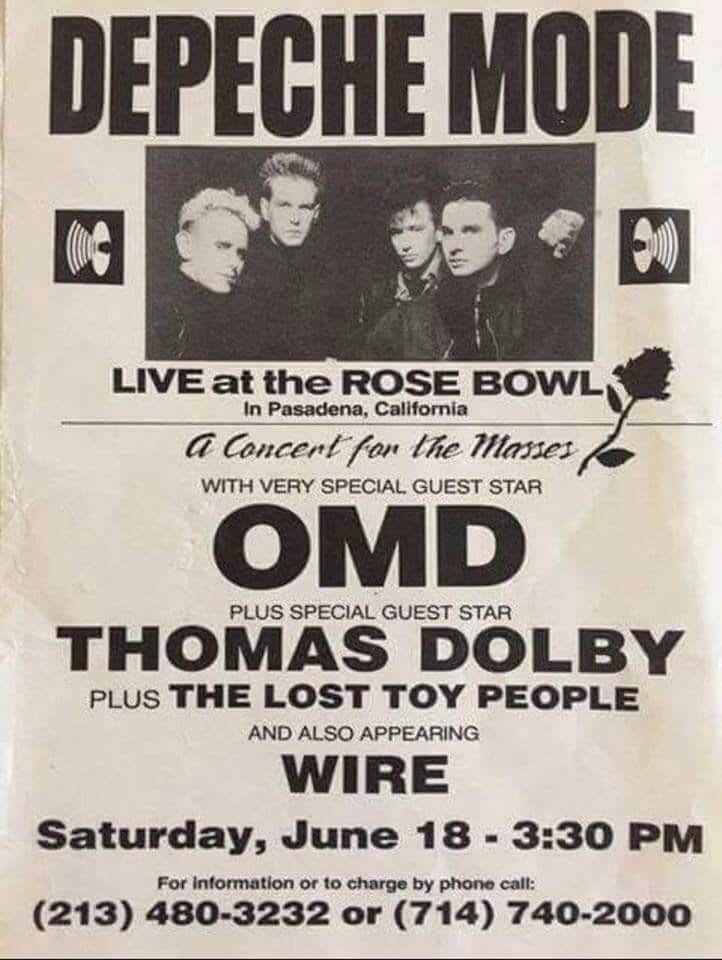
OMD were practically royalty in Southern California. Dolby had been an early MTV trailblazer with “She Blinded Me with Science”. Everything about the promotion, the buzz, and the opening acts pointed to one thing—this show was going to be epic. Having been too young to attend either year of the US Festival, this was the biggest concert for New Wave and KROQ fans since then.
Black Celebration
The stadium was already a madhouse by the time the lights went down for Depeche Mode. Sixty thousand young fans were shouting, sweating, throwing cardboard cup holders, begging for the band to finally take the stage. We’d sat through the openers, but the real reason we were there was still waiting in the dark.
When the first two drum hits of “Behind the Wheel” cracked through the air—crisp as gunshots—accompanied by bursts of white light, the entire Rose Bowl erupted. The driving synthesizer pushed the crowd forward in one massive wave. The bowl seemed to jump under our feet. For a moment it felt like sixty thousand people were moving as a single body.
Somewhere in the middle of all that noise and motion, the night revealed itself as a kind of ending. We didn’t know it then, but several songs on that setlist were being played live for the last time. Tracks that had carried the band through their formative years and defined the sound that made them a force on KROQ and across the alternative scene.
“People Are People,” “Nothing,” “Blasphemous Rumours,” “Sacred,” “Pleasure, Little Treasure,” even the instrumental “Pimpf”—songs from the era that built their following—were taking their final bow. We were too in the moment to see the significance then, but in hindsight it feels like we were watching Depeche Mode close the book on the first major chapter of their career. A few years later they would return with Violator and step into a darker, more mature era.

The Landscape Is Changing
During the show, a storm had been gathering quietly over the San Gabriels—an almost unheard‑of sight in Southern California. It finally announced itself with a single, horizon‑wide flash of white light that lit up the entire stadium. For a split second the music, the crowd, the heat—everything—fell away.
I turned my head toward the mountains, caught in a moment that felt bigger than the show itself. It wasn’t just weather; it felt like a cosmic interruption, a signal flare marking the end of something: the end of my high‑school life, the end of Depeche Mode’s early era, the end of the version of myself that had arrived in Pasadena that afternoon. I didn’t have the language for it then, but looking back across the decades, that lightning strike feels like the moment the universe quietly turned the page for all of us.
Ghosts Again
In the years after that night, the lightning flash settled into the background of my memory—never gone, just quiet. And I didn’t think about it as I followed Depeche Mode through Violator and Songs of Faith and Devotion. The band weathered their own storms and eventually stepped back from the spotlight for a while. And I didn’t think about it during the long stretch when I drifted away from them, when their songs shifted from a constant presence to something I only revisited now and then.
But when Memento Mori arrived, that old flash came back to me with surprising clarity.
The album felt like a message written from the far side of everything the band—and all of us—had survived. It was the first record Dave and Martin made as a duo after losing Andy Fletcher, the friend who had anchored them from the beginning. The songs carried that absence in their bones. They were reflective, haunted, strangely peaceful. Music made by men who understood time in a way they couldn’t have dreamed of in 1988.
Listening to it, I felt something shift in myself too. The themes of mortality, impermanence, and acceptance didn’t feel abstract; they felt earned. They felt familiar. And they made me realize how much of my own life had unfolded since that night at the Rose Bowl—how many eras had ended and begun without ceremony.
Walking in My Shoes
So when the tour came through Dallas thirty‑five years later, I didn’t go alone. I brought my teenage son.
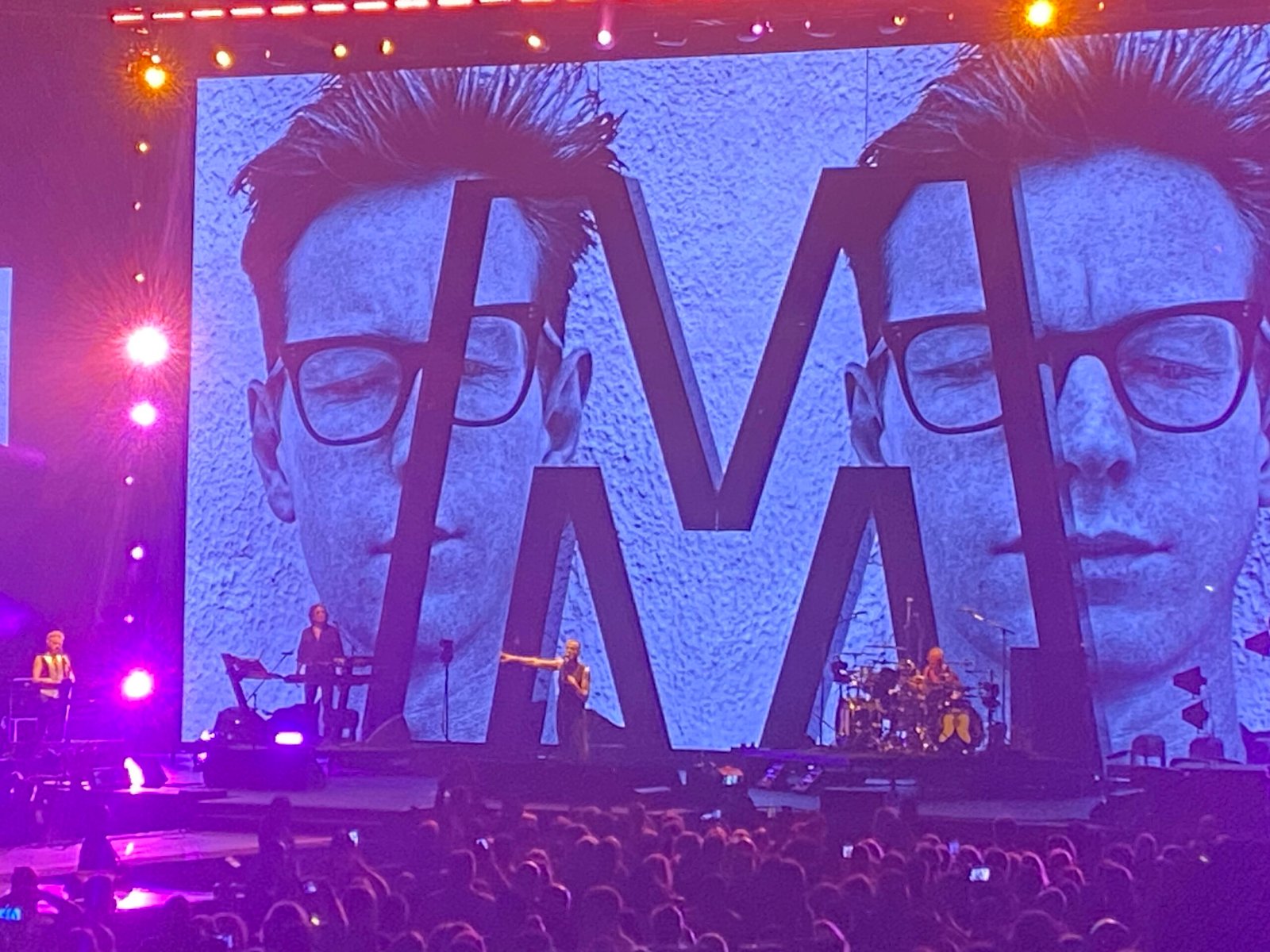
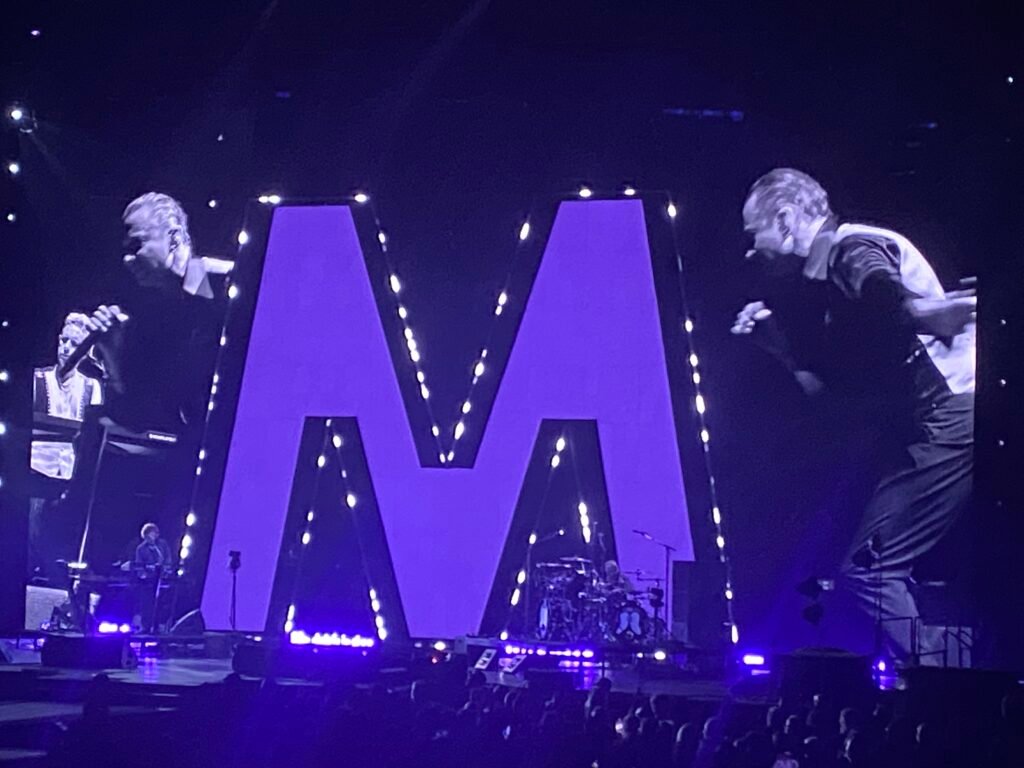
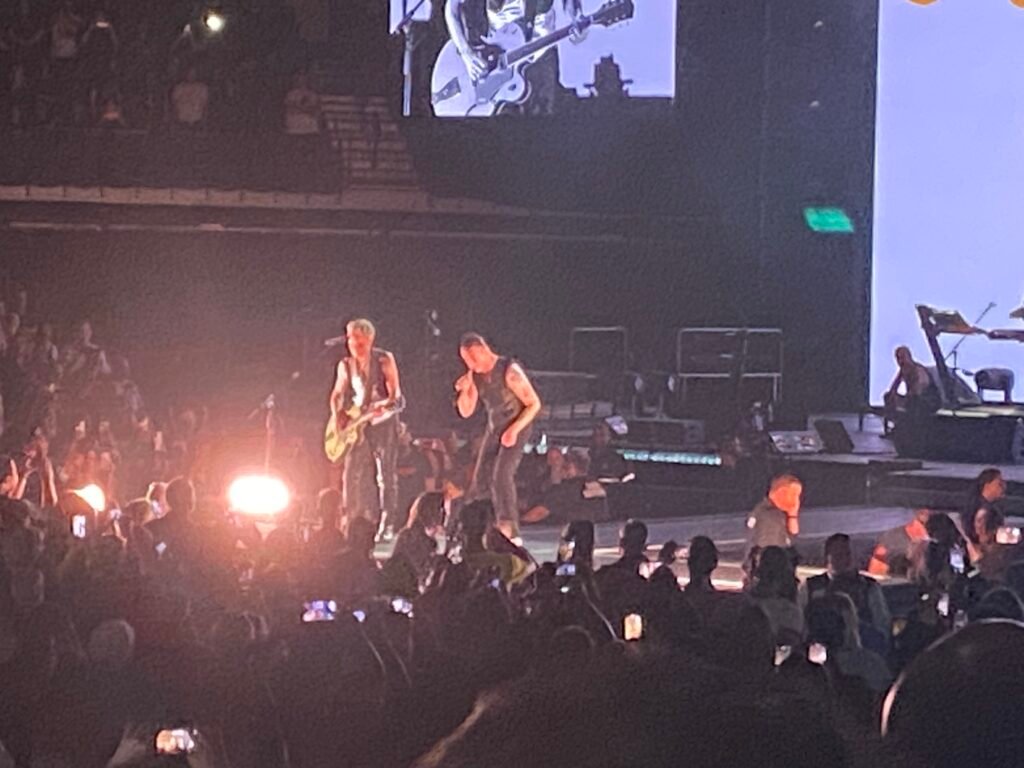
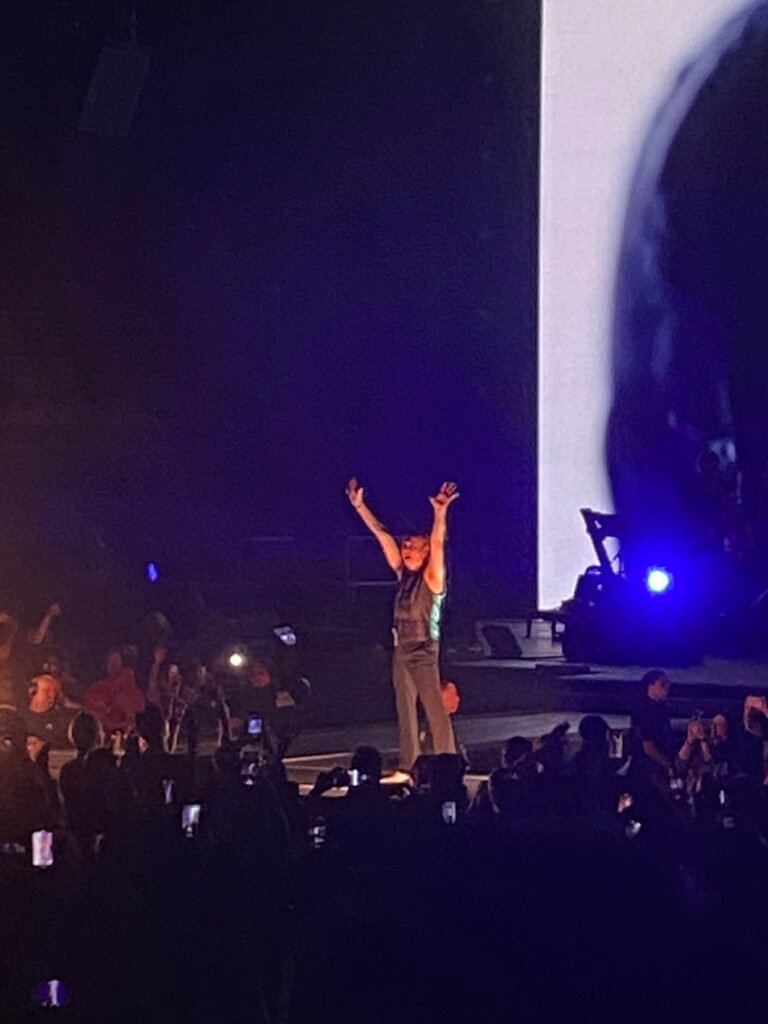
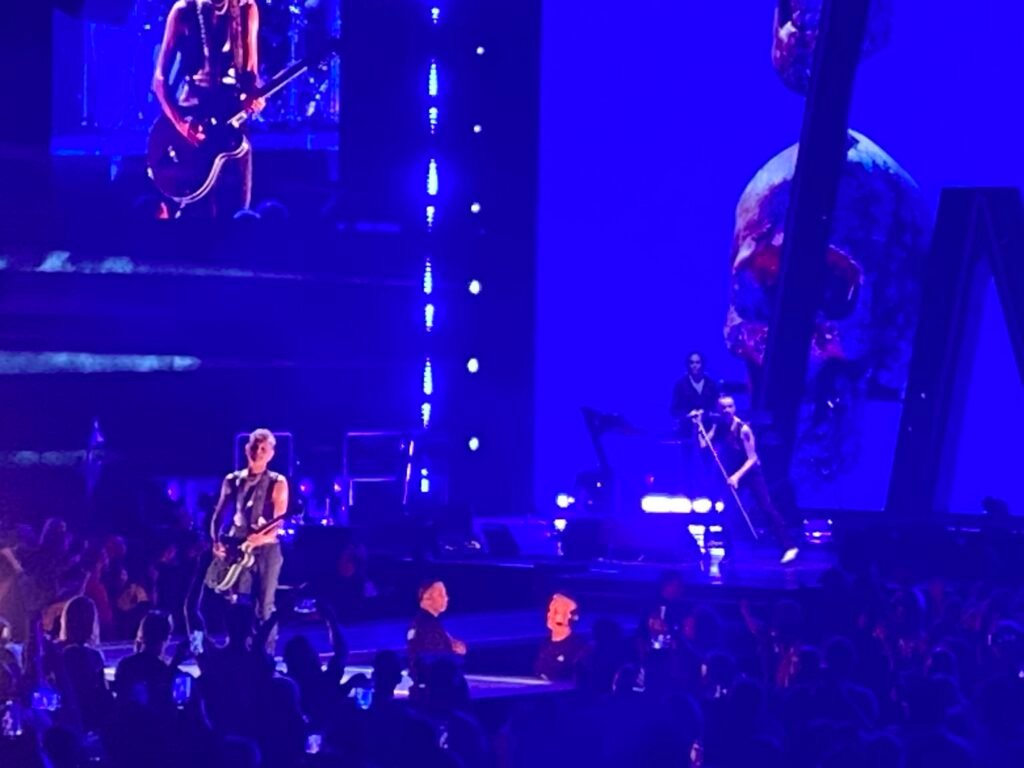
Walking into the American Airlines Center with him felt nothing like walking into the Rose Bowl with Paul, and yet there was a strange echo between the two moments. The crowd in Dallas skewed older—Gen X and older millennials who had grown up with the band—but there were plenty of younger faces too. Many were there with parents in tow. It felt like a gathering of people who had lived through multiple eras of Depeche Mode, all converging to see what Dave and Martin would do now that they were carrying the band forward as a duo.
The setlist made that transition unmistakable. Eight of the twenty‑three songs came from Memento Mori and Songs of Faith and Devotion. Two albums separated by thirty years but connected by tone and weight. Hearing them side by side made the through‑line obvious. The band that once sang about teenage angst and industrial gloom had grown into something older, wiser, and more reflective. And the crowd met them right there.
World in My Eyes
Three more songs came from Playing the Angel. I wasn’t familiar with the material, but “John the Revelator” hit me immediately. It had the same muscular, gospel‑tinged energy that defined Songs of Faith and Devotion, and the arena lit up like everyone had been waiting for it. The same thing happened with “Wrong” from Sounds of the Universe—a song I didn’t know at all but found myself pulled into instantly. There was something satisfying about discovering “new” Depeche Mode songs in real time, decades after I’d stopped keeping up.
The emotional peak of the night, though, was the tribute to Fletch. When the opening notes of “World in My Eyes” began and his image appeared on the screen, the arena erupted. It wasn’t polite applause—it was a roar, a thank‑you, a collective acknowledgement of the man who had been the band’s quiet center for forty years. It was the loudest moment of the night, rivaled only by the cheers for “Everything Counts” and “Just Can’t Get Enough,” songs that bridged generations and reminded everyone why they fell in love with this band in the first place.
Saints, Sinners, and Survivors
What struck me most that night in Dallas wasn’t just how the band had changed, but how everyone in the arena had changed with them. Depeche Mode’s story has never been a straight line. They evolved, lost members, nearly fell apart, and somehow survived long enough to become elder statesmen of a genre they helped invent. And the two men standing on that stage—Dave and Martin—carried all of that history in their voices and in the gravitas of their presence.
Dave’s journey alone could fill a book. The addiction, the overdose, the near‑death, the recovery, fatherhood, the cancer, the reinvention—each chapter felt etched into the way he moved and sang. Martin’s path was quieter but no less heavy. He had spent decades as the emotional core of the band, the songwriter who kept the whole thing from collapsing. And now, after losing Andy Fletcher, they were performing as a duo for the first time. Navigating grief and their own mortality in real time. You could feel that weight in the Memento Mori songs, but also in the older ones—tracks that once sounded like youthful angst now carried the resonance of hard‑earned wisdom.
Looking around the arena, I realized the crowd had lived through their own versions of that arc. Most of us were Gen‑Xers who had grown up with this band, maybe drifted away, built careers, raised families, lost people, survived our own storms, and somehow found our way back to this music. The younger fans weren’t just tagging along; they were inheriting something. A lineage. A soundtrack. A way of understanding the world.
Never Let Me Down Again (Again)
In that moment, the decades collapsed into each other. The Rose Bowl and Dallas felt like two points on the same line, the lightning flash and the tribute to Fletch tying it all together.
When the lights came up, I knew something had shifted again. The band had changed, I had changed, but the music still held. Walking out with my son, I understood I wasn’t just revisiting a memory—I was paying it forward.
Life 2.0
That night in Dallas re‑energized my love for Depeche Mode. Since then, I’ve built playlists, discovered and rediscovered deep cuts, and even earned a few monthly top‑listener badges along the way.
I never saw another concert at the Rose Bowl, but I spent many Saturdays there over the next fifteen years cheering on UCLA. Just a few months after the Depeche Mode show, I was back in the Rose Bowl watching one of the most unforgettable games in UCLA history as they upset #2 Nebraska. The Rose Bowl became a familiar place in my life, just never again in the way it had been that night in 1988.
Sadly, my friend Paul drifted out of my life several years later. We started our careers together, stood in each other’s weddings, and stumbled into adulthood side by side. Then, suddenly, he moved away. We lost touch. I still think fondly of the fun we had, the dreams we shared, the concerts and late‑night conversations that shaped those early years. I hope Depeche Mode is still one of his favorites. Maybe he caught them on the Memento Mori tour too.
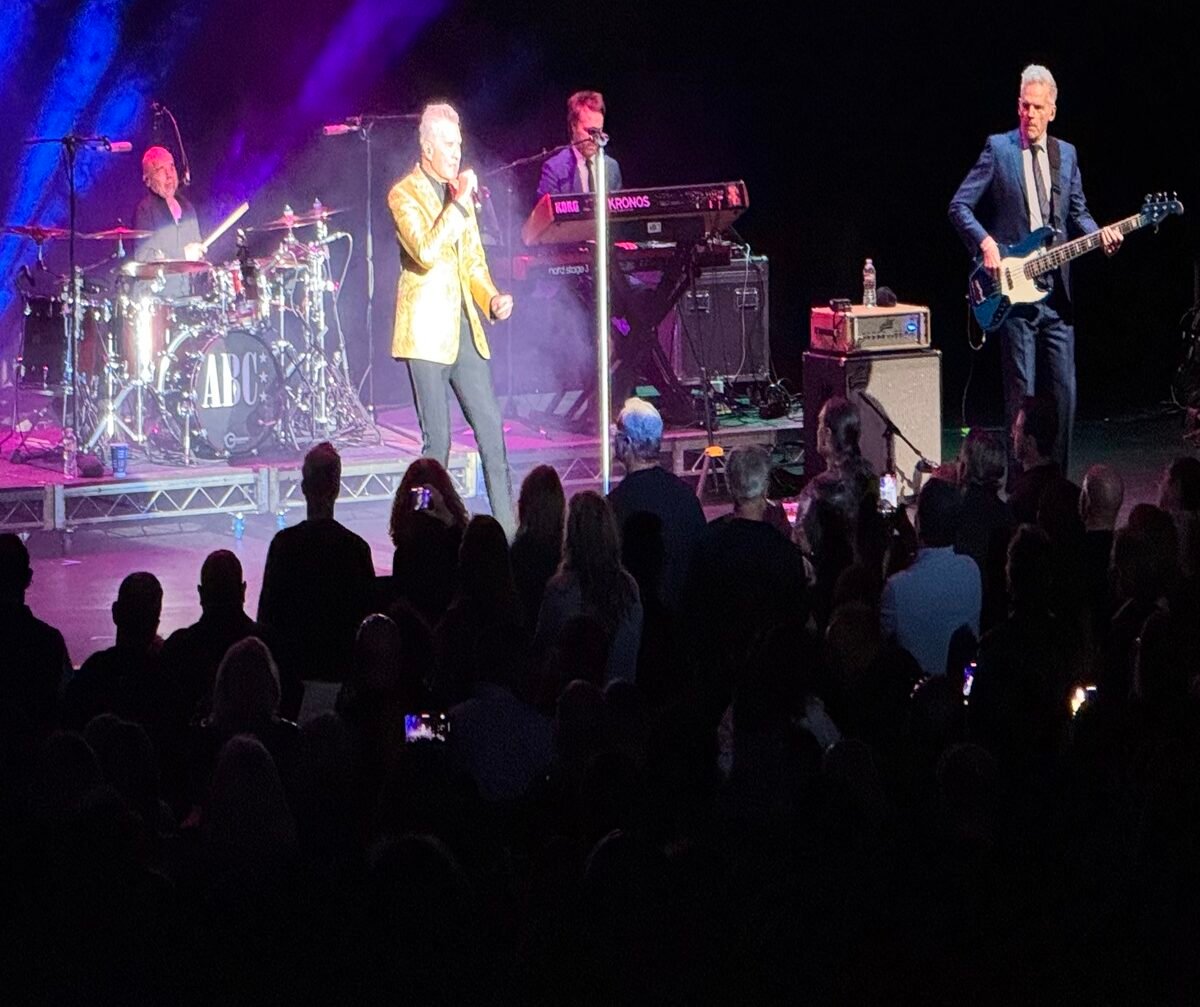
These days, my son is my concert buddy. Since the Memento Mori show, we’ve been to around twenty concerts together. I’ve passed the baton on a few occasions with bands I hadn’t seen in decades, like Orchestral Manoeuvres in the Dark and Nine Inch Nails. And I’ve shared firsts with him too — Adam Ant, Simple Minds, and others I somehow missed the first time around. He’ll be graduating in a few short years, so I’m wringing out every concert memory I can while this chapter lasts.