Walking Into Lucas Oil Live
Last December we saw Creed live at Winstar. From the moment we stepped into the theater, you could feel it — that charge in the air at Lucas Oil Live, the unmistakable anticipation of a Creed live show. They may have been away for a while, but their connection with fans hasn’t faded at all.
What genuinely surprised me was how many people showed up in tour shirts from across the band’s entire lifespan. Everything from shirts dating back to their millennium‑era peak to shirts from the last few years of reunion activity. It wasn’t just nostalgia; it was a reminder that Creed never fully disappeared from people’s personal rotation.
Walking into Lucas Oil Live also reminded me of a night a couple of years ago. I took my older son, Cade, to see Brooks & Dunn at Winstar. My wife was taking Colton to a musical in Fort Worth — which, mileage‑wise, is actually closer to our home. They even left 10–15 minutes before we did. Cade and I got stuck in UNT graduation traffic, stopped at a drive‑thru for dinner, and we still made it to our seats at Lucas Oil Live before they even parked in Fort Worth.
And Lucas Oil Live itself sets the tone before you ever reach your section. The lobby is wide and modern, with warm lighting and clean architectural lines that make it feel more like a performing arts center than a casino venue. Plentiful refreshment options line the concourse — everything from quick‑grab drinks to full bars. The free parking garage connected by an elevated bridge makes the entire arrival experience a breeze. It’s a space that’s designed for concerts, not a cavernous arena or stadium.
The room had that between‑holiday looseness. The kind of vibe where people were ready to get out of the house and start ramping up toward New Year’s Eve. Creed walked into a crowd that was ready to have a good time, and they delivered.
How Creed Live Soundtracked the Late ’90s and Early 2000s
After Creed broke through in the late ’90s, their first two albums — My Own Prison (1997) and Human Clay (1999) — were everywhere. Their songs ended up in steady rotation on my CD player. Even now, hearing those opening riffs brings back flashes of Southern California in the early 2000s.
One of the clearest memories from that time is the 2001 Dallas Cowboys Thanksgiving halftime show, which still stands as one of the most ambitious and memorable halftime performances I’ve ever seen. Scott Stapp came out in a Dallas Cowboys jersey with his own name across the back, and the field was packed with aerialists on massive white silks, costumed dancers, the Dallas Cowboys Cheerleaders, and a full gospel choir. There were ballroom or ballet dancers on the stage, and Stapp climbed a set of stairs to a raised platform where he belted out the chorus from above.
Coming just months after 9/11, the mix of spectacle, emotion, and the spiritual undercurrent in Creed’s music hit exactly the note America needed at that moment. It was dramatic, earnest, and completely committed — peak Creed.
So walking into the Creed show all these years later, there was a familiar thread running through it. I’d lived with these songs for more than two decades, but I’d never heard them live. I was finally seeing a band that had been part of the soundtrack of my life for so long that it felt overdue.
Hinder: Local Energy, a Surprising Cover, and One Very Honest Joke
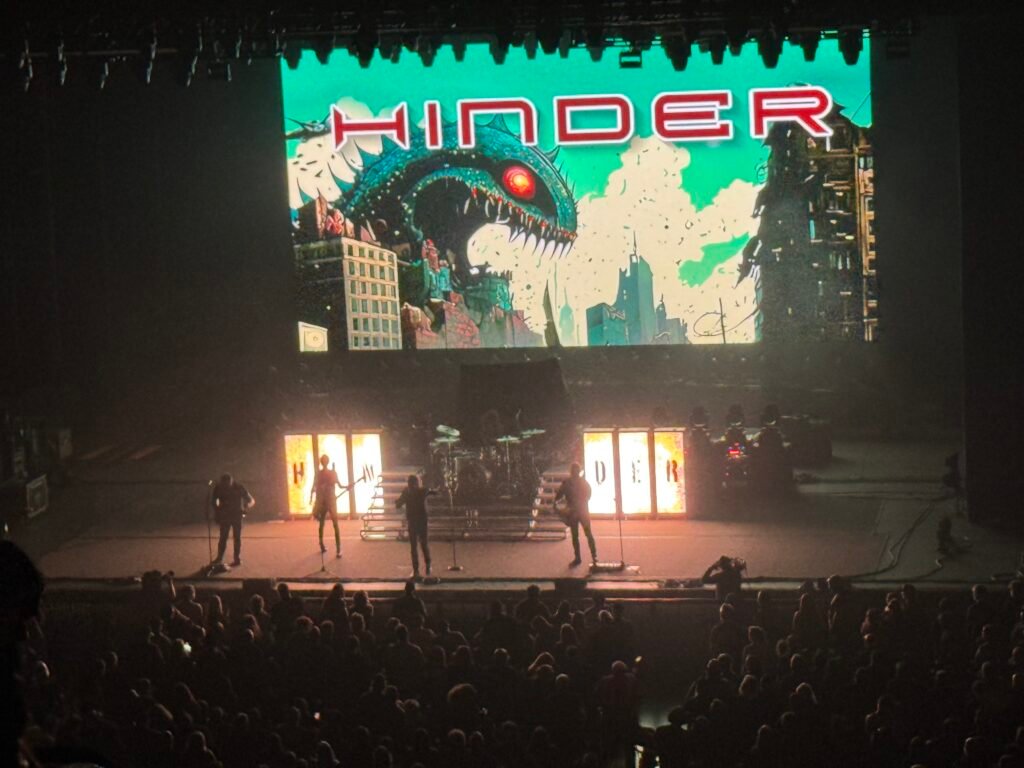
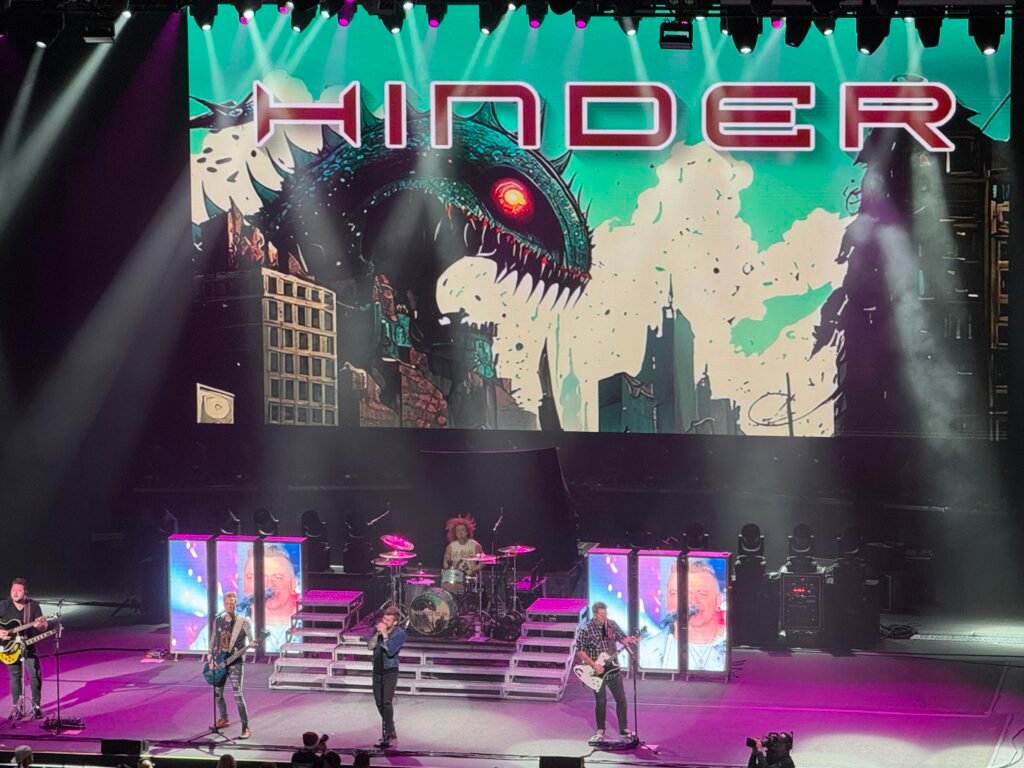
Hinder opened the night with the built‑in advantage of being from Oklahoma, and the crowd responded welcoming their own. The surprise highlight of their set was a cover of Collective Soul’s “Shine.” It fit their sound, the crowd knew every word, and it gave the set a jolt of energy that pushed it beyond a standard nostalgia warm‑up.
The biggest reaction, of course, came from “Lips of an Angel,” the 2006 hit that was everywhere for a solid year. Before they started it, the lead singer grinned and asked, “You guys want to do a song about infidelity?” Then he added a quick joke about how the song is played at weddings, which got a good laugh from the crowd. And then everyone sang it like it was 2006 again.
By the end of their set, the room had the right level of energy — loose, loud, and ready for Creed.
Creed Live Takes the Stage: All Black, All Business, Straight Into “Bullets”
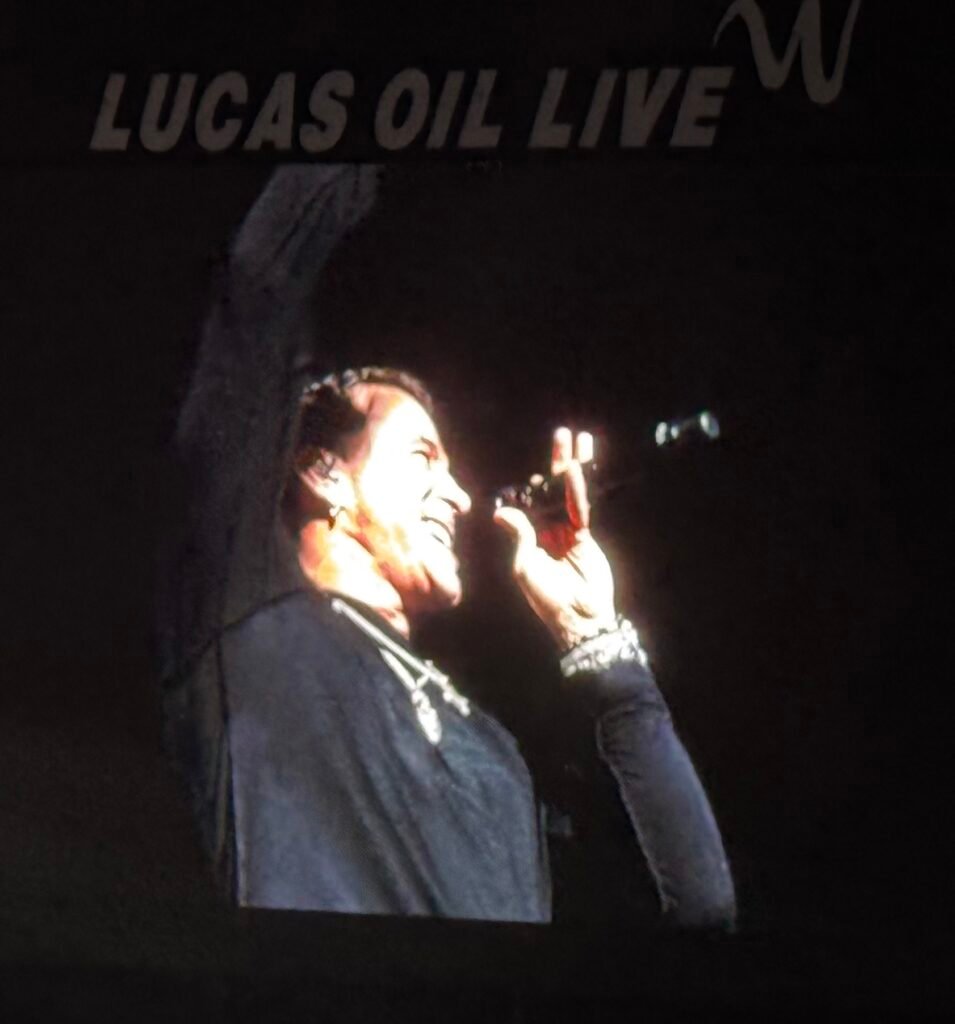
Between sets, the big screen cycled through the Creedmas logo, keeping the room in that low simmer of anticipation. When the house lights finally dropped, the reaction was immediate — a full‑volume surge from a crowd that had been waiting all night for this moment.
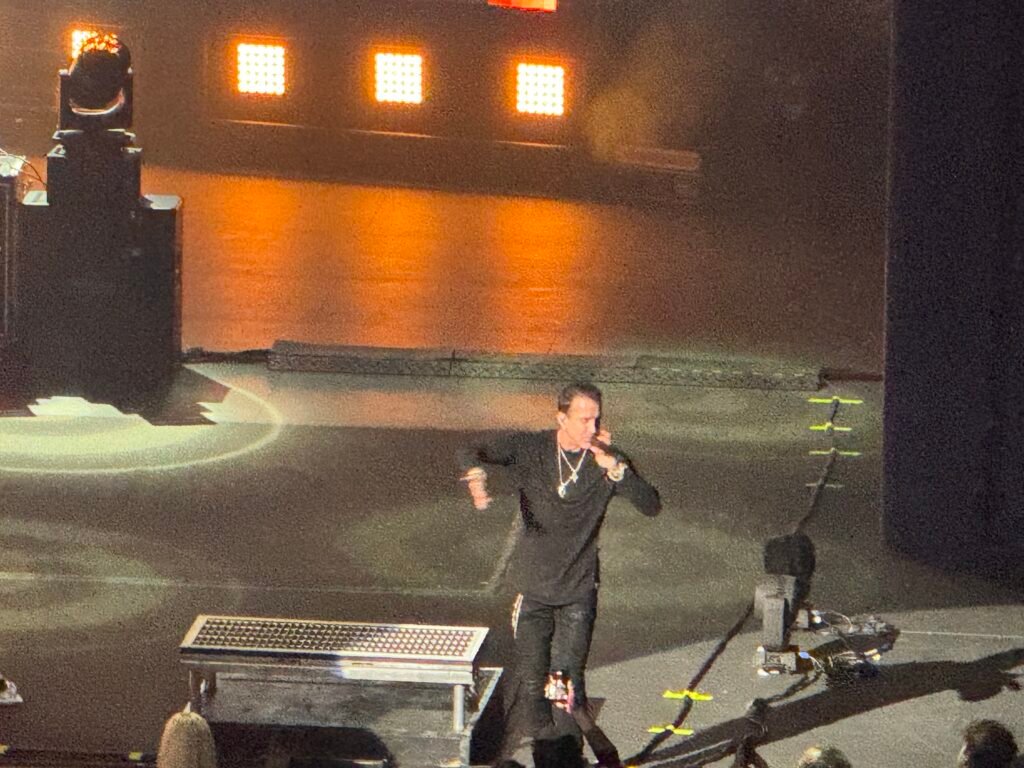
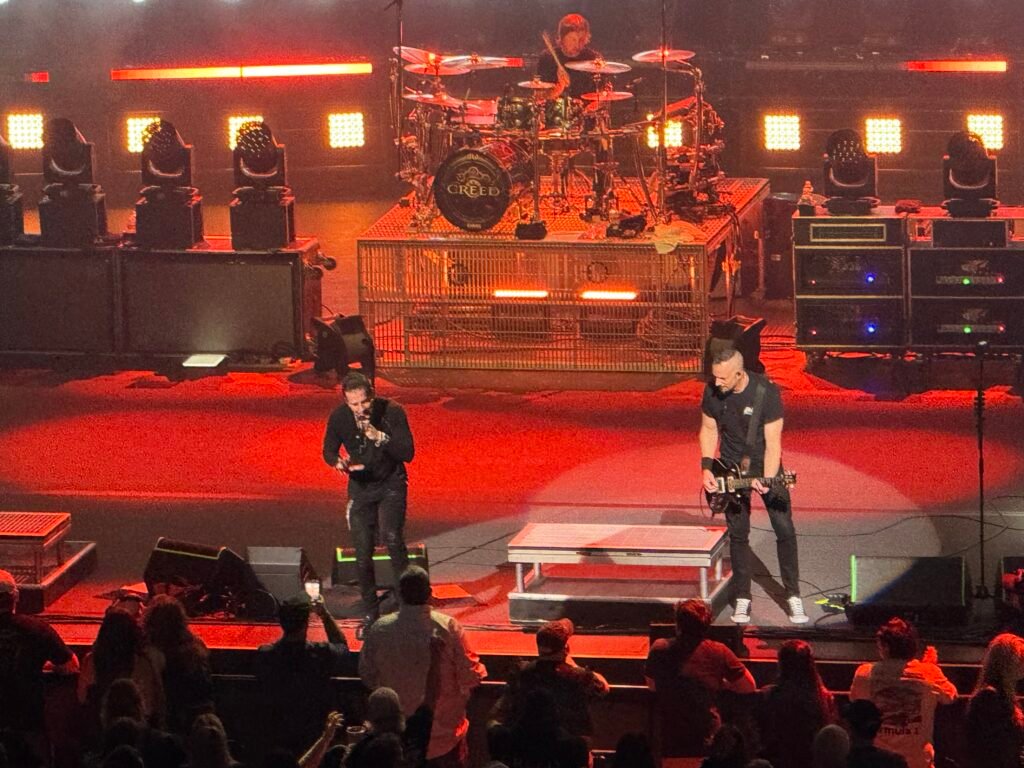
The band walked out dressed head‑to‑toe in black, all in long sleeves except for Mark Tremonti. A few moments later, Scott Stapp stepped into the lights, also in black, with a couple of necklaces catching the glow from the stage.
They wasted no time, launching straight into “Bullets,” the opener from their 2001 album Weathered. As soon as “Bullets” kicked in, the room shifted. No easing in, no slow build — just a crowd that went from anticipation to full participation in a single downbeat.
The Opening Run: Deep Cuts, Big Voices, and the First Real Surge
After the punch of “Bullets,” Creed kept the momentum high with a run of songs that leaned into the heavier, deeper‑cut side of their catalog: “Ode,” “Torn,” “Are You Ready?,” “Weathered,” and “Unforgiven.” Even if not every song in that early block was universally familiar, the crowd stayed fully engaged, and the band sounded tight and locked in.
The staging gave the set a sense of movement and impact. The two banks of lights behind the band rose and dropped in sharp, coordinated sweeps, shifting from deep blues to electric reds that cut through the fog like lightsabers. The video screen alternated between full‑frame live shots and a vertical CREED motif, giving the show a polished, arena‑level feel. Pyrotechnics popped at a few key moments — not overused, but enough to give the heavier songs some extra punch.
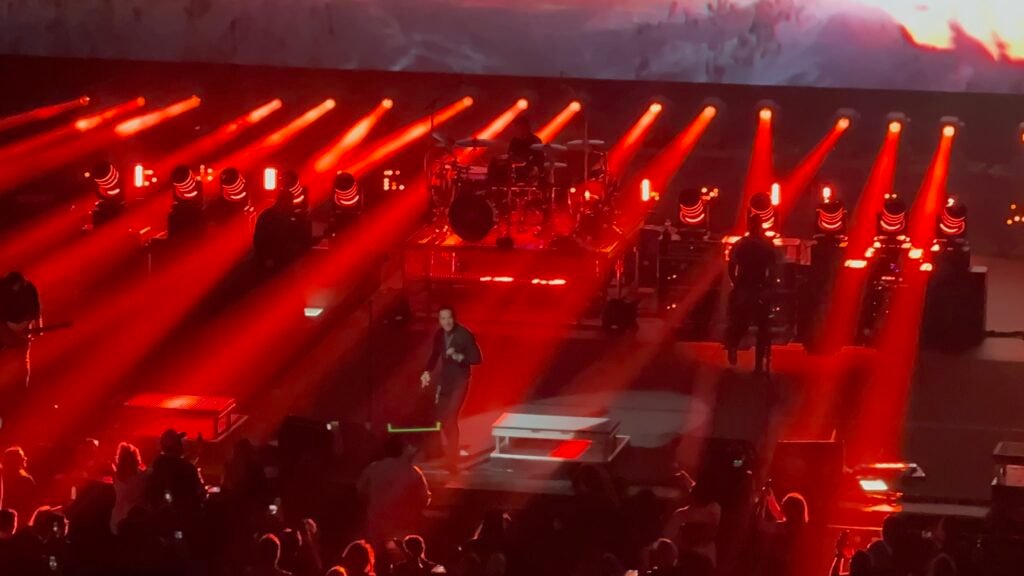
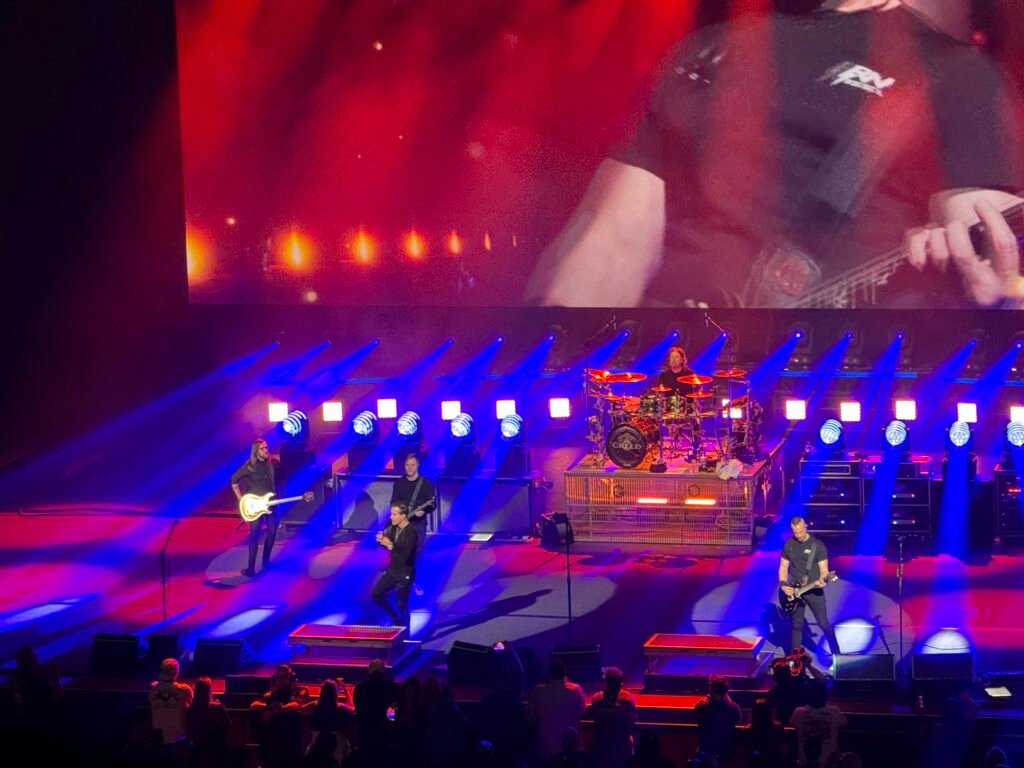
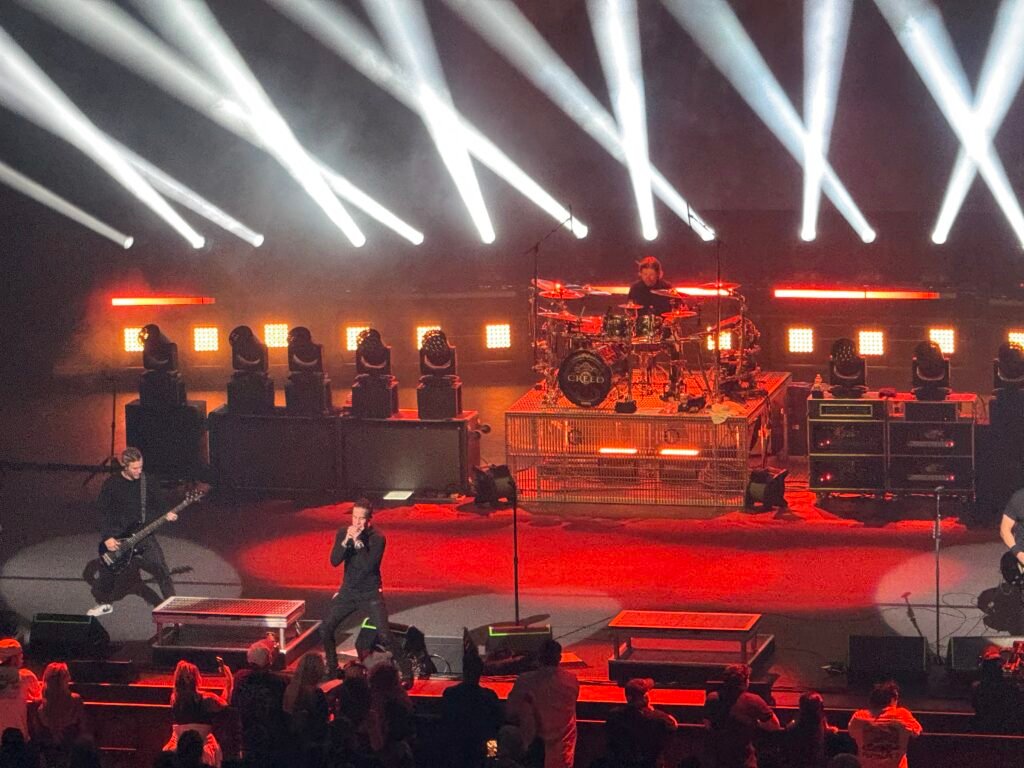
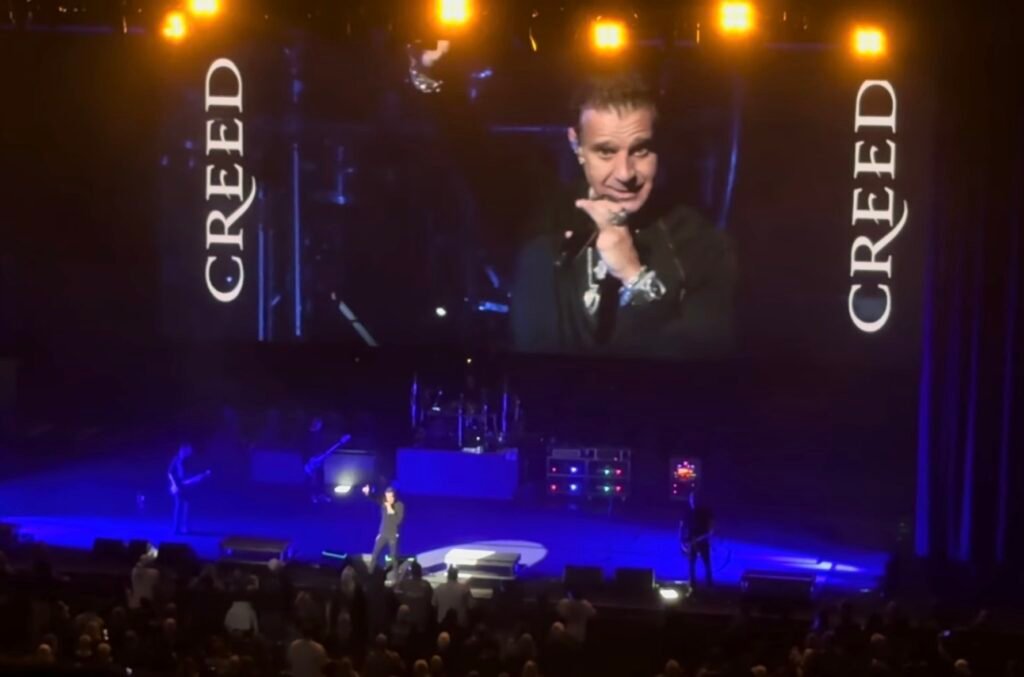
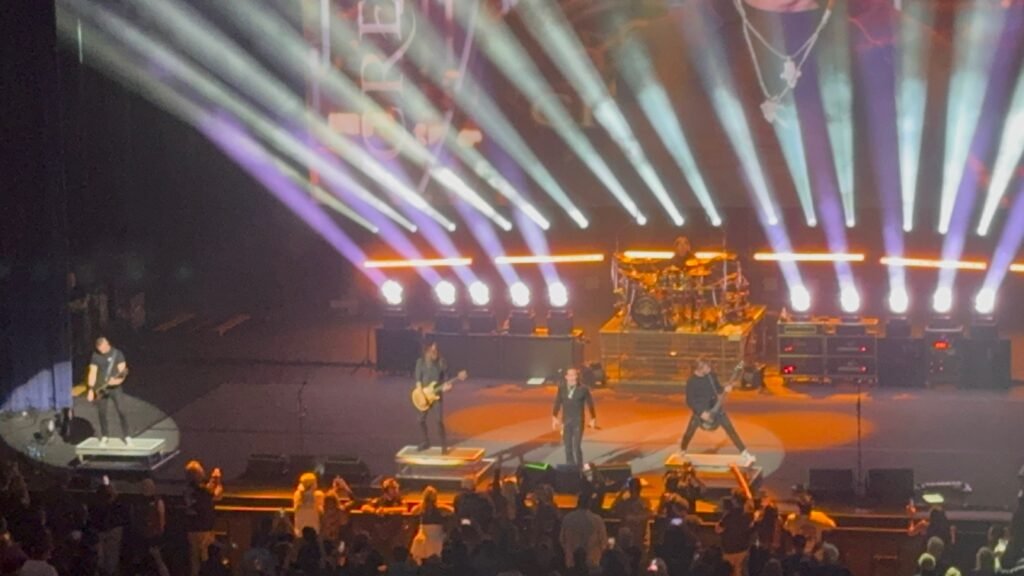
The first true eruption came with “My Own Prison”. It was the night’s first big sing‑along, and you could feel the shift in the room as thousands of voices jumped in on the chorus. Stapp leaned into it, stepping back from the mic and letting the crowd carry entire lines. It was one of those moments where nostalgia, familiarity, and sheer volume all clicked at once.
From there, the band moved into “Say I,” “What If,” and “Faceless Man,” keeping the energy high while giving the set a sense of progression. Stapp led a few call‑and‑response moments, pushing the audience to keep singing; they didn’t need much convincing.
The Late‑Set Crescendo: Stapp’s Message, God’s Love, and the Run Everyone Came For
The shift into the late‑set stretch felt immediate. After the heavier mid‑set run, the band eased into a different emotional register — the part of the night where the songs weren’t just loud or nostalgic, but meaningful in a way that only comes with time and distance.
That transition began with “One,” a personal favorite and one of the most powerful performances of the night. Tremonti locked in on guitar, Stapp paced the stage with purpose, and the crowd roared every chorus. It felt like the moment where the show crossed from great to special.
After “One,” Scott Stapp stepped forward and took a moment before “What’s This Life For” to speak directly to the crowd. He talked about the weight people carry, especially around the holidays — loneliness, depression, the feeling of being unseen or unsupported. He said so much of that pain comes from looking for validation in people who can’t always give it.
And then he pivoted into the heart of his message: that God’s love is unyielding, unconditional, and not dependent on our circumstances or our mistakes. He told anyone struggling not to give up, to “live to fight another day,” and reminded the room that nothing can separate us from the love of our Creator.
When the band launched into “What’s This Life For,” the crowd sang it like a release — loud, unified, and fully present.
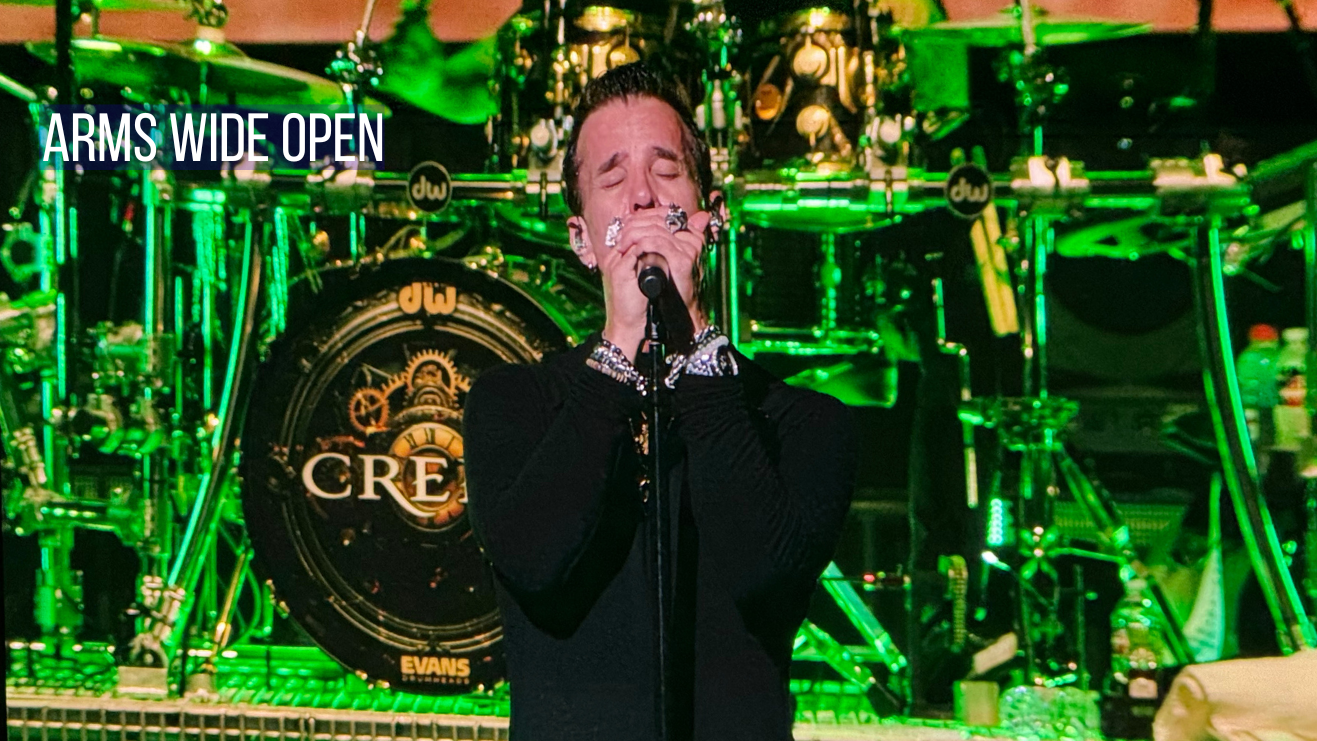
From there, the night moved into the run everyone knew was coming. “With Arms Wide Open” landed with the warm, unmistakable familiarity of a song that defined an era. The room swayed, phones rose, and the chorus rolled across the venue like a wave.
There’s no title I cherish more than “Dad,” and hearing “With Arms Wide Open” live with my son at my side— surrounded by thousands of people who’ve lived their own versions of that story — carried a weight I didn’t expect.
Then came “Higher,” the true ignition point of the entire night and the perfect capstone to the main set. The lights, the band, the crowd — everything snapped into alignment. Stapp pushed the audience into a full‑throated sing‑along; they didn’t need much encouragement. Thousands of voices rose before he even asked. It was the moment where nostalgia stopped being passive and became something alive and communal.
The encore delivered exactly what it needed to. “One Last Breath” opened the final stretch, its soaring chorus filling the room with a kind of collective catharsis. And then came “My Sacrifice,” the inevitable closer — the final release the entire night had been building toward. Thousands of people singing a song they’ve known for more than twenty years, arms up, the room unified in a way only a generational hit can pull off.
The last six songs were the emotional and musical peak of the night. Everything the show had been building toward landed here: the nostalgia, the musicianship, the staging, and the shared memory of a band that defined a specific moment in American rock.

Post‑Show Reflections: Fatherhood, Memory, and the Afterglow of Creed Live
Walking out of Lucas Oil Live after the final notes of “My Sacrifice,” people were still buzzing, still humming pieces of “Higher,” still talking about how loud the room got during the late‑set run. There were still long lines at the merch booth after the show. You don’t see that often. It was the kind of post‑show glow you only get when a band delivers exactly what people came for.
As we crossed the elevated bridge back to the parking garage, I kept thinking about how long these songs have been part of my life — and how differently they land now that I’m a father. I appreciated “With Arms Wide Open” back in the late ’90s, but once my wife was first pregnant, it took on a whole new meaning. Hearing it live now adds yet another layer.
A lot of why I take my boys to concerts is simple: it’s fun, it’s loud, it’s a shared experience. But underneath that, there’s something deeper — these are the moments that imprint. They think it’s just a good time, and it is, but it’s also something they’ll hopefully remember for the rest of their lives.
There’s something about singing along with a full concert hall — that communal lift when thousands of voices land on the same chorus — that makes the night feel bigger than the songs themselves.
Music has always been one of the threads running through my life’s story. My wife and I first met in passing at Lollapalooza in 1991 — nothing more than a quick hello — and didn’t reconnect until a year later, long before we ever went to a show together. But once we did, concerts became part of our rhythm. We went to the ill‑fated Jane’s Addiction reunion tour together decades after that first introduction, and later this year we’ll see They Might Be Giants again, the band we saw together for our very first concert in 1994. It’s funny how certain artists end up marking the timeline of a relationship.
That thread doesn’t stop with my wife and kids — it goes back even further.
There’s also the thread of family history that keeps surfacing. My parents were at the Universal Amphitheatre in its earliest years — they saw Billy Joel there when he was still a virtual unknown, they were at the venue’s opening production of Jesus Christ Superstar, and they caught acts like The Carpenters long before tragedy reshaped that story.
Years later, I saw the B‑52’s and New Order there myself, long before the place was demolished. And with me being born in the San Fernando Valley, that venue isn’t just a dot on a map — it’s part of the family lore. These shows, these artists, these moments… they end up becoming markers across generations.
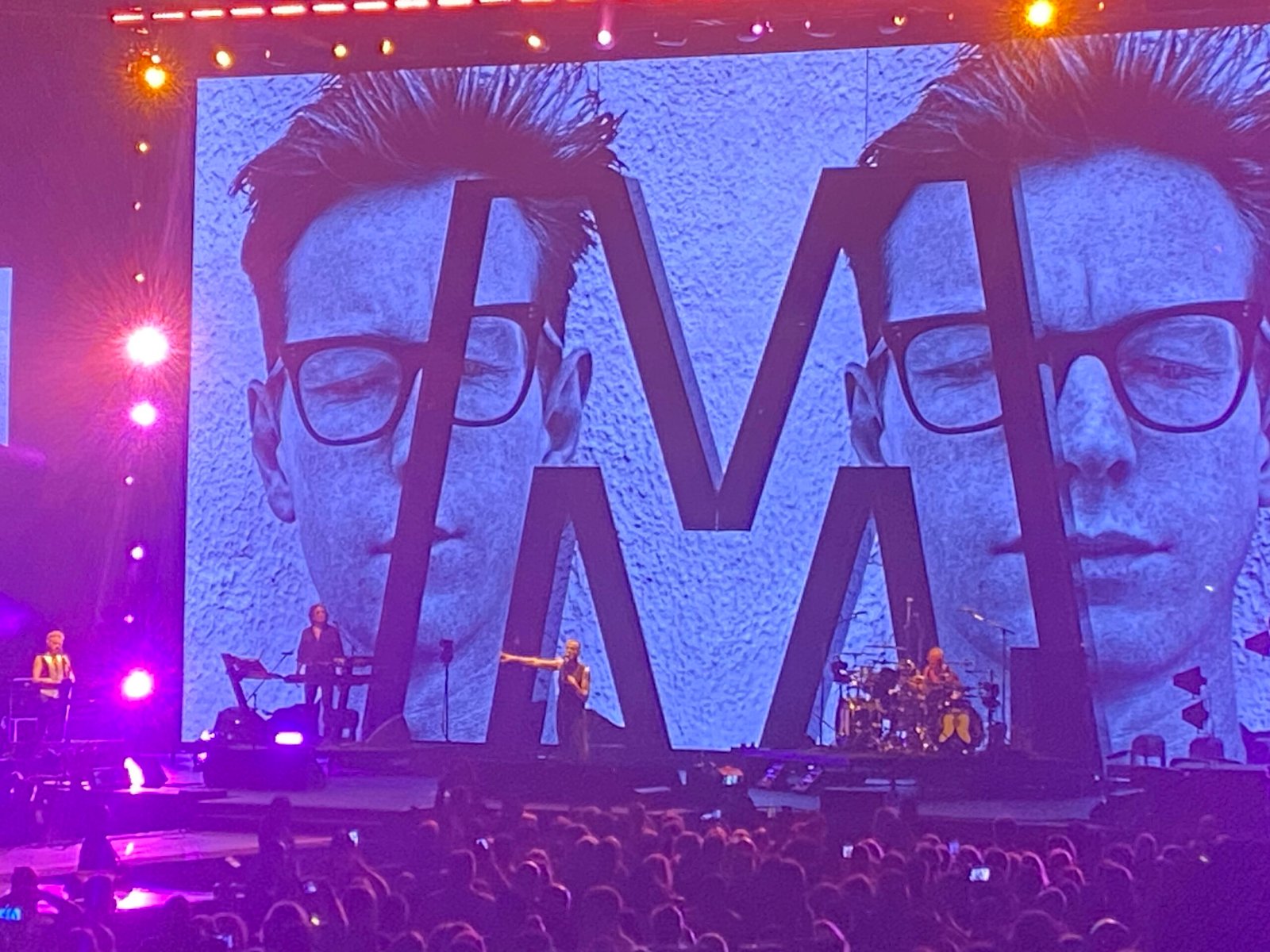
And then there are the parallels that sneak up on you — like my son seeing Depeche Mode as a teenager, just like I did. Two different decades, two different venues, the same formative moment. That baton‑passing isn’t symbolic; it’s literal. It’s happening in real time.
So seeing Creed now, after more than twenty years of hearing these songs, felt overdue in the best way. It wasn’t just checking a band off the list. It was another thread in a much larger tapestry — one that ties together music, memory, family, and the strange way certain songs follow you through every chapter of your life.
By the time we reached the car, the night had settled into that familiar post‑concert quiet — the kind where your ears ring a little, your voice is worn, and you’re replaying the best parts in your head. Creed didn’t reinvent anything. They didn’t need to. They showed up, played the songs people have lived with for twenty‑plus years, and delivered a stellar rock show.
For a band I’d never seen live before, it was the right night, the right venue, and the right moment. It was the kind of Creed live experience that stays with you long after the lights come up.